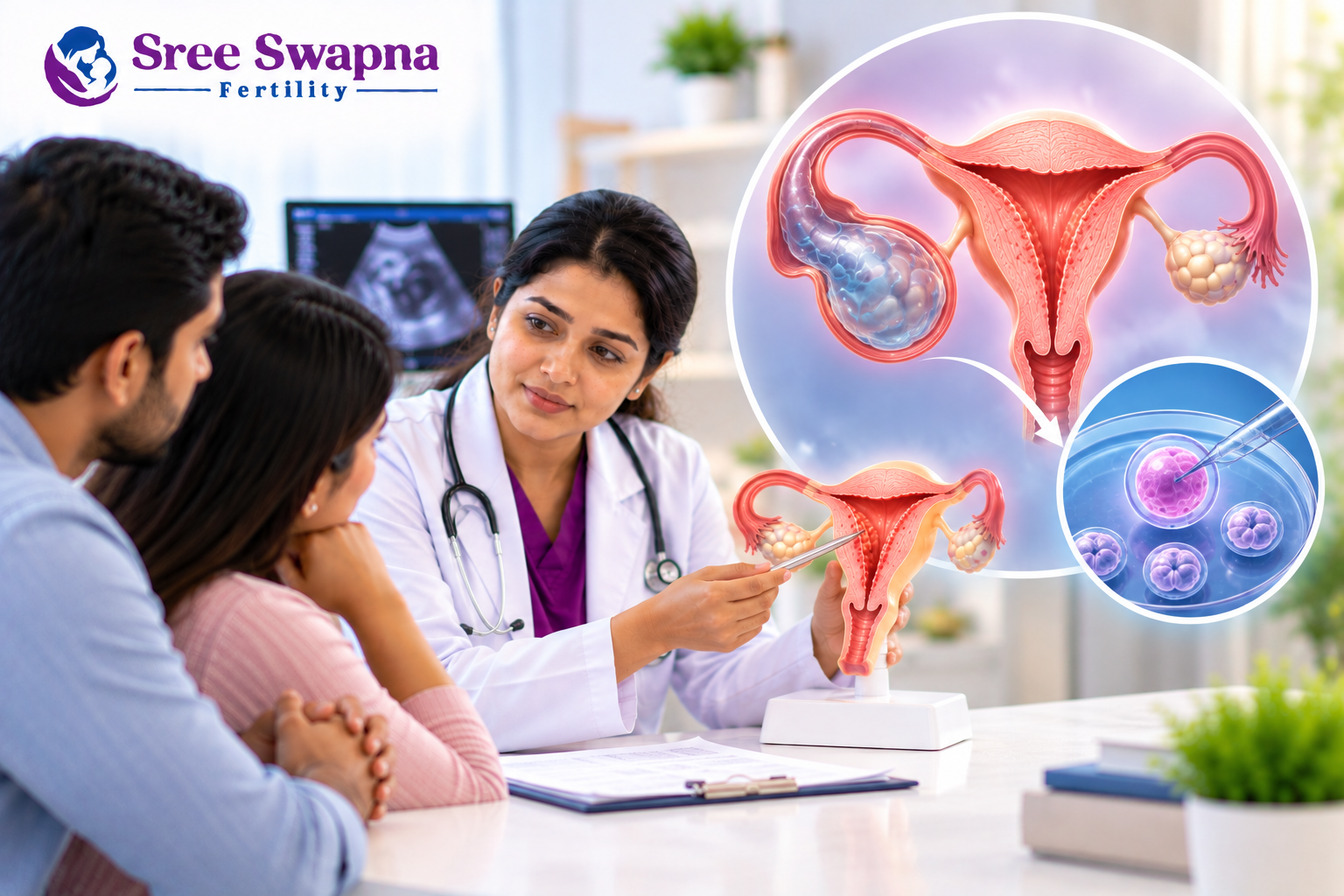
Best Fertility Centre – Dr. Swapna Naik

Author: Swapna

You’ve probably heard the AMH test called a “fertility test.” That’s not quite accurate.

The AMH test tells you something useful — but it doesn’t predict whether or when you’ll get pregnant. Understanding this difference matters before you book one.

This guide explains what AMH actually measures, what your result means, what affects the cost, and how to book a test in Hyderabad.

What Is AMH?

AMH stands for Anti-Müllerian Hormone. It’s produced by small follicles in your ovaries — the tiny sacs that each contain an immature egg.

The more small follicles you have, the higher your AMH level tends to be. This is why doctors use AMH as a marker of ovarian reserve — an estimate of how many eggs remain in your ovaries.

What AMH Does NOT Tell You

This is the part most people don’t hear enough about.

AMH measures egg quantity, not egg quality. It doesn’t tell you:

  • Whether you can get pregnant naturally
  • How long it will take to conceive
  • Your exact age of menopause
  • Whether your eggs are chromosomally healthy

Research reviewing fertility clinic information found that AMH is often marketed as a general fertility predictor, even though evidence doesn’t support using it that way for an individual woman’s natural conception chances. A low AMH doesn’t mean you can’t get pregnant. A high AMH doesn’t guarantee you will.

What Is AMH Actually Used For?

AMH is genuinely useful in a few specific clinical situations:

1. Planning IVF Treatment

AMH helps your fertility specialist estimate how your ovaries might respond to stimulation medication — guiding dosage and protocol choice before an IVF cycle.

2. Diagnosing PCOS

Women with polycystic ovary syndrome (PCOS) often have higher-than-average AMH levels, so it’s sometimes used alongside other tests to support a PCOS diagnosis.

3. Assessing Ovarian Reserve Trends

While AMH can’t predict an exact conception timeline, tracking it over time can help flag a faster-than-typical decline in ovarian reserve, which may be relevant if you’re planning fertility treatment or considering egg freezing.

How Is the AMH Test Done?

  • It’s a simple blood test — no special preparation needed
  • Unlike some hormone tests, AMH can be tested on any day of your menstrual cycle
  • Fasting isn’t required
  • Results are usually available within a few days

Understanding Your AMH Result

AMH levels naturally decline with age, and reference ranges vary between labs depending on the testing method used. Because of this, your result should always be interpreted by a specialist alongside your age, symptoms, and other test results — not read in isolation against a generic online chart.

A single low or high number, without clinical context, can cause unnecessary worry or false reassurance either way.

What Affects the Cost of an AMH Test in Hyderabad?

  • Lab and testing method used — different assay technologies can affect pricing
  • Standalone test vs. a fertility panel — AMH is sometimes bundled with other hormone tests (like FSH, LH, or TSH) as part of a broader fertility work-up
  • Clinic vs. independent lab — getting tested at your treating clinic can save a separate lab visit and reporting delay

For an exact cost, it’s best to confirm directly with the clinic, since pricing can vary based on whether it’s a standalone test or part of a larger diagnostic panel.

How to Book an AMH Test in Hyderabad

You can book an AMH test at Sree Swapna Fertility Centre in three simple steps:

  1. Call or WhatsApp us at +91 76708 04424 to schedule your test
  2. Visit either clinic — Kondapur or Attapur — at your scheduled time; no fasting or special preparation is needed
  3. Get your results reviewed by a specialist, who will explain what your number means in the context of your specific situation

AMH Testing at Sree Swapna Fertility Centre

Both our Kondapur (flagship) and Attapur clinics offer in-house AMH testing, so you don’t need to wait on results from an external lab before your consultation.

Our clinical director, Dr. Swapna Naik (MBBS, MS in Obstetrics & Gynaecology, Fellowship in Reproductive Medicine & IVF), has over 15 years of experience interpreting fertility hormone results in the context of real treatment decisions — not just numbers on a report. With more than 5,000 successful pregnancies guided, she understands how to explain what an AMH result genuinely means for your specific situation, whether you’re planning IVF, exploring egg freezing, or simply curious about your ovarian reserve.

We believe test results should come with clear explanation, not just a number and a worry.

Frequently Asked Questions

1. What does AMH stand for? 

AMH stands for Anti-Müllerian Hormone, produced by small follicles in the ovaries.

2. Can AMH predict if I’ll get pregnant naturally? 

No. AMH estimates egg quantity, not the likelihood or timeline of natural conception.

3. Is a low AMH the same as infertility? 

No. A low AMH suggests fewer remaining eggs, but many women with lower AMH still conceive naturally or with fertility treatment.

4. Does AMH testing require fasting? 

No, fasting isn’t required for an AMH blood test.

5. Can I test AMH on any day of my cycle? 

Yes, unlike some hormone tests, AMH levels don’t fluctuate significantly across the menstrual cycle.

6. How long does it take to get AMH results? 

Results are usually available within a few days, depending on the lab.

7. Is AMH testing only for women planning IVF? 

No, it’s also used to help diagnose PCOS, assess ovarian reserve trends, and guide decisions around egg freezing.

8. Does a high AMH mean I’m very fertile? 

Not necessarily. A high AMH is often linked to conditions like PCOS and doesn’t guarantee easier conception.

9. Can AMH tell me my exact age of menopause? 

No, AMH can suggest a general trend, but it can’t predict an exact menopause age for an individual.

10. Why do AMH reference ranges vary between labs? 

Different labs may use different testing methods, so results and normal ranges can vary. Interpretation should always be done by a specialist.

11. Is AMH used to diagnose PCOS? 

Yes, alongside other clinical findings, since AMH is often elevated in women with PCOS.

12. Should I get AMH tested before considering egg freezing? 

Yes, it’s commonly used to help assess ovarian reserve trends relevant to egg freezing decisions.

13. Can men get an AMH test? 

Yes, though its clinical use in men differs and is typically linked to specific reproductive health evaluations rather than general fertility testing.

14. Does age affect AMH levels? 

Yes, AMH levels generally decline with age as ovarian reserve naturally decreases.

15. Is AMH testing painful? 

No, it’s a standard blood draw, similar to any routine blood test.

16. Can stress affect AMH results? 

AMH is generally considered a relatively stable hormone, not significantly affected by short-term stress or lifestyle factors.

17. Is AMH testing covered by insurance in India? 

Coverage varies by insurer and policy. Check directly with your insurance provider for specifics.

18. Can I get AMH tested along with other fertility hormones in one visit? 

Yes, it’s often bundled with other hormone tests as part of a broader fertility evaluation panel.

19. Do I need a doctor’s prescription to get an AMH test done? 

Many clinics allow booking directly, though having a specialist review your result afterward is strongly recommended for proper interpretation.

20. Where can I get an AMH test done in Kondapur? 

Sree Swapna Fertility Centre offers in-house AMH testing at its Kondapur clinic, with results reviewed by a fertility specialist.

21. Can AMH results change over time? 

Yes, AMH generally declines gradually with age, and repeat testing over time can help track this trend if clinically relevant.

22. How do I book an AMH test appointment? 

Call or WhatsApp +917670804424, or book online through the Sree Swapna Fertility Centre website.

Conclusion

The AMH test is a useful tool for specific clinical decisions — like planning IVF, diagnosing PCOS, or assessing ovarian reserve trends. It isn’t, however, a crystal ball for your natural fertility. The real value comes from having your result explained by a specialist who understands the full clinical picture, not just the number on a lab report.

Book Your AMH Test in Hyderabad

Dr. Swapna Naik and the team at Sree Swapna Fertility Centre offer in-house AMH testing with clear, honest result explanation — not just a printout.

📞 Call: +91 76708 04424 / +91 40 4995 3719 💬 WhatsApp: Message us directly 📧 Email: sreeswapna.fertility@gmail.com 📍 Visit us at: Kondapur (flagship centre) or Attapur, Hyderabad 🌐 Book an appointment: sreeswapnaivf.com/contact-us

Author: Swapna

Surgery cost is often the first worry that comes up after an endometriosis or adenomyosis diagnosis.

It’s a fair concern. These surgeries involve pre-op tests, the procedure itself, anaesthesia, hospital stay, and follow-up care. Each of these adds to the final bill.

This guide explains what actually drives the cost, how you can plan for it, and how to avoid overpaying — without ever guessing at exact numbers that don’t apply to your case.

Why We Won’t Quote a Fixed Price Here

Every clinic’s pricing differs based on the surgeon, hospital, procedure complexity, and city. Any blog that gives you a fixed rupee figure is either outdated or oversimplified.

What we can do is explain exactly what makes up the cost — so when you do get a quote, you’ll know whether it’s reasonable for what’s included.

What Affects the Cost of Endometriosis or Adenomyosis Surgery?

1. Type of Procedure

  • Diagnostic laparoscopy (to confirm endometriosis) is usually less expensive than a treatment procedure
  • Laparoscopic excision surgery (removing endometriosis tissue) costs more due to longer operative time
  • Adenomyomectomy (removing localised adenomyosis tissue) varies based on how extensive the tissue removal is
  • Hysterectomy is typically the most extensive procedure, with cost varying by surgical approach (laparoscopic vs open)

2. Hospital Stay Duration

Minimally invasive (laparoscopic) procedures usually need a shorter hospital stay than open surgery, which directly reduces cost.

3. Pre-Surgery Diagnostics

Ultrasound, MRI, and blood work are needed before surgery. Getting these done at the same clinic performing your surgery, rather than an external lab, often works out more efficient.

4. Anaesthesia and Surgical Team

General anaesthesia and the experience level of the surgical and anaesthesia team can affect the total cost.

5. Post-Surgery Follow-Up

Follow-up visits, medication, and any additional scans are usually part of the overall treatment cost — ask if these are included upfront.

Ways to Make Treatment More Affordable

  • Ask for a itemised quote before committing, so you know exactly what’s covered
  • Check your health insurance policy — many policies cover laparoscopic gynaecological surgery, though coverage varies, so confirm directly with your insurer
  • Ask about EMI or flexible payment options, which many fertility and gynaecology clinics in Hyderabad now offer
  • Choose a clinic with in-house diagnostics, which can reduce the cost and hassle of running tests at multiple locations
  • Avoid unnecessary repeat testing by bringing existing reports to your consultation

Is “Cheapest” the Same as “Affordable”?

Not always. The lowest quoted price doesn’t always reflect the full cost, especially if follow-up visits, medication, or complications aren’t included upfront.

Affordable care means transparent pricing and no hidden costs — not necessarily the lowest number on paper.

Getting Treatment at Sree Swapna Fertility Centre

At Sree Swapna Fertility Centre, we believe cost transparency matters as much as clinical quality.

Our team, led by Dr. Swapna Naik (MBBS, MS in Obstetrics & Gynaecology, Fellowship in Reproductive Medicine & IVF, 15+ years of experience, 5,000+ successful pregnancies guided), reviews your diagnosis and gives a personalised cost estimate before any procedure  not a generic number pulled from a price list.

Both our Kondapur and Attapur clinics have in-house diagnostic facilities, so you’re not paying for repeat scans at multiple locations. We also offer flexible payment options, so cost doesn’t have to be a barrier to getting the right treatment.

We believe quality care should be accessible to every family. Our treatment packages are competitively priced, and we offer flexible payment options to suit your needs. For an exact quote, we recommend a consultation where your specific case — procedure type, severity, and any additional factors — can be properly assessed, so you get a detailed cost estimate based on your actual treatment plan rather than a generic figure.

Frequently Asked Questions

1. How much does endometriosis surgery cost in Hyderabad? 

Cost varies by procedure type, hospital stay, and severity. Contact the clinic directly for a personalised estimate based on your case.

2. Is laparoscopic surgery cheaper than open surgery? 

Generally yes, laparoscopic surgery often involves a shorter hospital stay, which can reduce overall cost, though this depends on the specific case.

3. Does insurance cover endometriosis or adenomyosis surgery? 

Many health insurance policies cover gynaecological surgery, but coverage varies by insurer and policy. Check directly with your provider.

4. Are EMI options available for surgery costs? 

Many clinics, including Sree Swapna Fertility Centre, offer flexible payment options. Ask directly during your consultation.

5. What’s included in a typical surgery quote? 

A proper quote should include the procedure, hospital stay, anaesthesia, and follow-up visits. Always ask what’s excluded.

6. Is a cheaper clinic always a worse choice? 

Not necessarily, but it’s worth asking what’s included in a low quote, since missing follow-up care or diagnostics can add hidden costs later.

7. Does adenomyomectomy cost more than a hysterectomy? 

It depends on the extent of tissue involvement and surgical complexity, not simply the name of the procedure. Get a case-specific estimate.

8. Can I get a cost estimate before confirming my diagnosis? 

A rough estimate may be possible, but an accurate quote usually requires imaging and diagnosis first, since procedure choice depends on your specific findings.

9. Do pre-surgery tests add significantly to the total cost? 

They can, especially if done at multiple locations. Getting them done at the treating clinic can reduce redundant costs.

10. Is diagnostic laparoscopy expensive? 

It’s typically less costly than a treatment procedure, since it’s primarily used to confirm diagnosis rather than remove tissue.

11. How long is the hospital stay for laparoscopic surgery? 

It’s usually shorter than open surgery, often a day or two, though this varies by individual case and recovery.

12. Does follow-up care cost extra? 

Follow-up visits and medication are often part of the overall treatment package. Confirm this when getting your quote.

13. Can I negotiate surgery costs at a clinic? 

Clinics generally have set pricing structures, but it’s reasonable to ask about payment plans or what’s included before committing.

14. Are there government schemes covering these surgeries in India? 

Coverage varies by scheme and eligibility. Check with your specific insurer or scheme provider for current details.

15. Does surgery cost differ between Kondapur and Attapur clinics? 

No, both clinics follow the same treatment and pricing standards under the same clinical team.

16. What’s the benefit of in-house diagnostics for cost? 

It avoids paying separately at external labs and reduces delays between diagnosis and treatment.

17. Is a second opinion worth the extra cost before surgery? 

For major surgical decisions, a second opinion is often worthwhile, especially for procedures affecting fertility.

18. Can adenomyosis be treated without surgery to avoid cost altogether? 

In many mild cases, yes — hormonal treatment can manage symptoms without surgery. Discuss this option with your specialist first.

19. Does the surgeon’s experience affect the price?

Yes, more experienced surgical teams may charge differently, though this should be weighed against safety and outcome quality, not cost alone.

20. How do I get an accurate cost estimate for my case? 

Book a consultation with your diagnostic reports (if available) so the specialist can assess your specific situation and provide a personalised quote.

21. Can I ask for an itemised cost breakdown? 

Yes, and you should — a transparent clinic will provide this without hesitation.

22. Where can I get affordable, quality endometriosis or adenomyosis surgery in Hyderabad? 

Sree Swapna Fertility Centre offers transparent quotes, in-house diagnostics, and flexible payment options at both our Kondapur and Attapur clinics.

Conclusion

Surgery cost shouldn’t be a mystery, and it shouldn’t be the reason you delay getting treated. Understanding what actually drives the price helps you ask the right questions — and choose a clinic that’s upfront about what you’re paying for, not just the lowest number on a page.

Get a Transparent Cost Estimate

Dr. Swapna Naik and the team at Sree Swapna Fertility Centre will walk you through your diagnosis, treatment options, and an honest cost estimate — no guesswork involved.

📞 Call: +91 76708 04424 / +91 40 4995 3719 💬 WhatsApp: Message us directly 📧 Email: sreeswapna.fertility@gmail.com 📍 Visit us at: Kondapur (flagship centre) or Attapur, Hyderabad 🌐 Book an appointment: sreeswapnaivf.com/contact-us
Author: Swapna

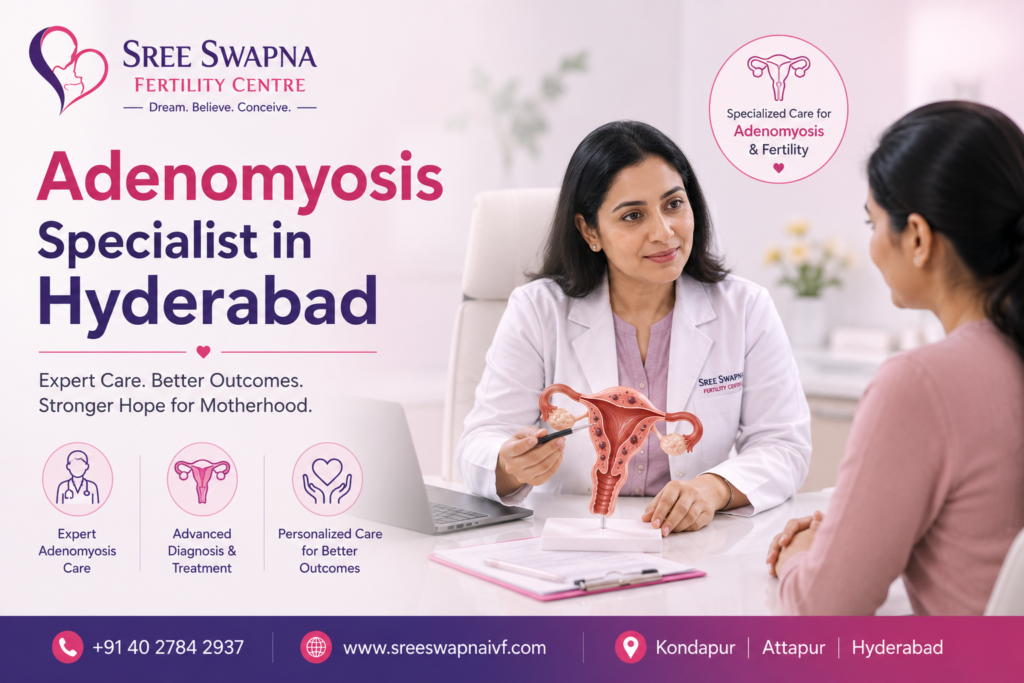
Not every adenomyosis case looks the same on a scan report. Some women have a small, localised patch. Others have widespread changes across the entire uterine wall.

This difference matters. It affects your symptoms, your fertility outlook, and the treatment your specialist recommends.

This guide explains how adenomyosis is classified by severity, how each level typically affects fertility, and what that means for your treatment plan.

How Is Adenomyosis Classified?

Unlike some conditions with a strict numbered staging system, adenomyosis is generally classified by two main factors:

1. Extent: Focal vs. Diffuse

  • Focal adenomyosis — a localised patch of affected tissue, sometimes called an adenomyoma. It behaves somewhat like a fibroid in terms of being a defined area.
  • Diffuse adenomyosis — widespread involvement across the uterine wall, without one clear boundary.

2. Depth: Inner vs. Outer Myometrium

Doctors also look at how deep the affected tissue extends into the muscle wall:

  • Inner myometrium involvement — closer to the uterine cavity, generally associated with more classic symptoms like heavy bleeding
  • Outer myometrium involvement — deeper into the muscle wall, sometimes linked to different symptom patterns and clinical outcomes

Severity Grading on Ultrasound

Radiologists increasingly use a standardised checklist (known as MUSA — Morphological Uterus Sonographic Assessment) to describe adenomyosis features on ultrasound. This includes noting uterine size, the extent of tissue involvement, and specific structural changes. This standardisation helps specialists communicate severity consistently, rather than relying on subjective descriptions.

How Does Severity Affect Fertility?

Research consistently points to one pattern: more extensive adenomyosis tends to have a greater impact on fertility than mild or focal cases.

Mild or Focal Adenomyosis

  • Often has minimal impact on natural conception
  • May still allow reasonably normal IVF outcomes with standard protocols
  • Sometimes treatable with surgical removal (adenomyomectomy) if fertility is a priority

Diffuse or Extensive Adenomyosis

  • More strongly associated with reduced IVF pregnancy rates in research studies
  • Often linked to more disrupted uterine contractility and endometrial receptivity
  • Usually requires more intensive treatment protocols before attempting conception

Depth of Involvement

Some research suggests that adenomyosis affecting the inner myometrium (closer to the uterine lining) may have a more direct effect on implantation than adenomyosis confined to the outer muscle layers, though this remains an active area of research.

It’s worth repeating: these are patterns seen across research studies, not predictions for any individual case. Two women with similar-looking scans can have very different fertility outcomes.

How Is Severity Diagnosed?

  • Transvaginal Ultrasound — the first-line tool, now often using MUSA criteria for standardised reporting
  • MRI — provides more precise detail on the extent and depth of involvement, especially useful when planning fertility treatment
  • Correlation with symptoms — severity on imaging doesn’t always match symptom intensity, so both are considered together

Getting a detailed, well-documented scan report — not just a “yes, you have adenomyosis” diagnosis — genuinely changes how your treatment is planned.

Treatment Approaches Based on Severity

For Mild or Focal Cases

  • Hormonal treatment (birth control pills, hormonal IUD, or dienogest) to manage symptoms
  • Adenomyomectomy, if the adenomyoma is well-defined and fertility is a priority
  • Standard IVF protocols, if trying to conceive

For Diffuse or Severe Cases

  • Extended GnRH agonist downregulation before IVF, aimed at improving the uterine environment
  • Closer monitoring throughout the treatment cycle
  • In select cases, frozen embryo transfer (FET) rather than a fresh transfer, allowing more time to prepare the uterus
  • For women not planning pregnancy, more definitive options like uterine artery embolisation or hysterectomy may be discussed

No treatment plan should be decided purely from a text report. Reviewing your actual scan images with a specialist experienced in adenomyosis makes a real difference to the plan you’re offered.

Why Getting the Right Specialist Matters More With Severe Cases

Milder adenomyosis often responds predictably to standard treatment. Severe or diffuse cases need more nuanced decision-making — balancing symptom control, fertility timelines, and realistic expectations about IVF success.

This is where experience matters. A specialist who has managed many adenomyosis cases across different severity levels is better placed to judge which protocol adjustments are worth making for your specific scan findings.

How Sree Swapna Fertility Centre Approaches Adenomyosis Staging

Dr. Swapna Naik, Clinical Director at Sree Swapna Fertility Centre, brings over 15 years of experience in reproductive medicine and has guided more than 5,000 successful pregnancies — including patients across the full spectrum of adenomyosis severity.

Every case starts with detailed transvaginal ultrasound imaging at our Kondapur or Attapur clinics, giving a clear picture of whether adenomyosis is focal or diffuse, and how deep it extends. This assessment directly shapes the treatment plan — whether that’s straightforward hormonal management, a discussion around adenomyomectomy, or a more extended protocol before an IVF cycle.

For patients with severe or diffuse adenomyosis, we take extra time to walk through realistic expectations, since research clearly shows outcomes can be more variable in these cases. Our goal is always an honest, personalised plan — not a generic one applied to every patient regardless of severity.

Frequently Asked Questions

1. Is there an official staging system for adenomyosis like cancer stages? 

No, adenomyosis doesn’t have a universal numbered staging system, but it’s classified by extent (focal vs. diffuse) and depth of involvement.

2. What is focal adenomyosis? 

A localised area of adenomyosis tissue, sometimes called an adenomyoma, rather than widespread involvement.

3. What is diffuse adenomyosis? 

Widespread adenomyosis changes across the uterine wall, without one clearly defined boundary.

4. Does mild adenomyosis affect fertility? 

Mild or focal adenomyosis generally has a smaller impact on fertility compared to diffuse or severe cases.

5. Can severe adenomyosis still allow successful IVF? 

Yes, though research suggests outcomes may be more variable, and treatment protocols are often adjusted to improve chances.

6. What is MUSA in adenomyosis diagnosis? 

MUSA (Morphological Uterus Sonographic Assessment) is a standardised checklist used on ultrasound to describe adenomyosis features consistently.

7. Is MRI always needed to determine adenomyosis severity? 

Not always — ultrasound is often sufficient for diagnosis, but MRI may be recommended for more detailed staging, especially before fertility treatment.

8. Does the depth of adenomyosis in the uterine wall matter for fertility? 

Some research suggests inner myometrium involvement may affect implantation more directly, though this is still being studied.

9. Can focal adenomyosis be surgically removed? 

Yes, a well-defined adenomyoma can sometimes be surgically removed through adenomyomectomy, particularly when fertility is a priority.

10. Is diffuse adenomyosis treated differently from focal adenomyosis? 

Yes, diffuse cases usually require more comprehensive hormonal or IVF protocol adjustments rather than a single localised surgical fix.

11. Does adenomyosis severity always match symptom severity? 

Not necessarily — some women with extensive adenomyosis on imaging have mild symptoms, and vice versa.

12. Can adenomyosis severity change over time? 

Adenomyosis can progress in some women, particularly as they age, though the rate of progression varies.

13. Does adenomyosis staging affect which IVF protocol is used? 

Yes, more severe or diffuse cases often warrant extended downregulation protocols or closer cycle monitoring.

14. Is frozen embryo transfer better than fresh transfer for severe adenomyosis? 

Some specialists prefer FET in severe cases, as it allows extra time to prepare the uterine environment, though the right approach depends on the individual case.

15. Can I ask for a detailed report on my adenomyosis severity? 

Yes, and it’s worth requesting one — a detailed report helps your specialist plan treatment more precisely than a general diagnosis alone.

16. Does severity affect miscarriage risk? 

Some studies suggest more extensive adenomyosis may carry a higher associated risk, though this varies by individual case and should be discussed with your specialist.

17. Can adenomyosis staging help predict how many IVF cycles I might need? 

It can inform expectations, but it can’t predict an exact number, since fertility outcomes depend on multiple factors beyond adenomyosis alone.

18. Should every adenomyosis patient get an MRI? 

Not necessarily — MRI is generally reserved for cases needing more detailed staging, particularly before fertility treatment planning.

19. Is adenomyosis staging available at Sree Swapna Fertility Centre? 

Yes, both our Kondapur and Attapur clinics offer detailed diagnostic ultrasound to assess adenomyosis extent and severity.

20. Can two women with the same adenomyosis stage have different fertility outcomes?

Yes, staging shows patterns and tendencies, not guarantees — individual outcomes depend on multiple additional fertility factors.

21. Does severity affect treatment cost? 

More severe cases may require additional imaging, extended protocols, or surgical options, which can affect overall treatment planning. Discuss specifics with the clinic directly.

22. What’s the first step if I want my adenomyosis severity properly assessed? 

Book a consultation for a detailed transvaginal ultrasound, ideally with a specialist experienced in both gynaecology and fertility treatment.

Conclusion

Adenomyosis isn’t a single, uniform condition — its extent and depth genuinely shape both symptoms and fertility outlook. A detailed, well-documented diagnosis is the foundation for the right treatment plan, whether that’s simple hormonal management or a carefully adjusted IVF protocol.

Get Your Adenomyosis Properly Assessed

Dr. Swapna Naik and the team at Sree Swapna Fertility Centre can give you a clear picture of your adenomyosis severity and what it means for your fertility plans.

📞 Call: +91 76708 04424 / +91 40 4995 3719 💬 WhatsApp: Message us directly 📧 Email: sreeswapna.fertility@gmail.com 📍 Visit us at: Kondapur (flagship centre) or Attapur, Hyderabad 🌐 Book an appointment: sreeswapnaivf.com/contact-us
Author: Swapna

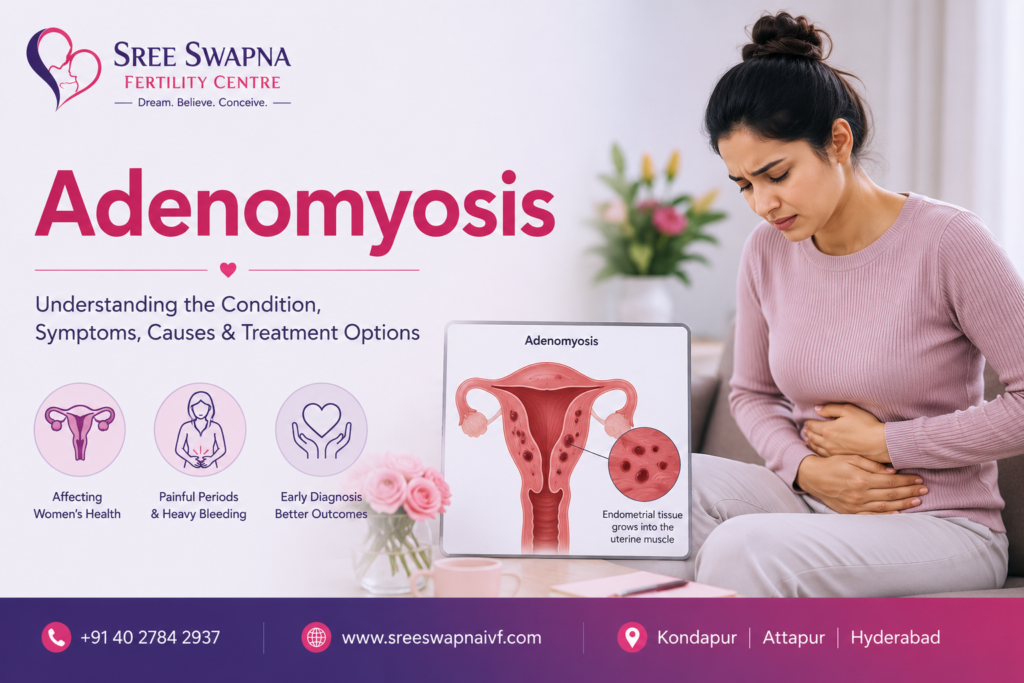
Already diagnosed with adenomyosis? The next big question is usually simple: what’s the actual treatment plan?

Adenomyosis doesn’t have one single fix. Some women manage it well with medication. Others need a surgical approach. The right path depends on your symptoms, your age, and whether you’re planning a pregnancy.

This guide breaks down every treatment option — non-surgical and surgical — so you know what to expect before you walk into a consultation.

Non-Surgical Treatment for Adenomyosis

Most specialists start here first. Non-surgical treatment aims to control symptoms without removing any tissue or organs.

Pain Management

NSAIDs (anti-inflammatory painkillers) are usually the first line of defence. They reduce cramping and inflammation during periods.

Hormonal Treatment

This is the core of non-surgical management. It works by reducing the hormonal stimulation that makes adenomyosis tissue bleed and swell each month.

Common options include:

  • Combined oral contraceptive pills — regulate cycles and reduce bleeding
  • Hormonal IUD (levonorgestrel-releasing) — placed directly in the uterus, often significantly reduces bleeding and pain
  • Dienogest — a progestin specifically studied for adenomyosis symptom control
  • GnRH agonists — temporarily suppress hormone production, shrinking adenomyosis tissue for a defined treatment window

Who Non-Surgical Treatment Suits Best

  • Women with mild to moderate symptoms
  • Women not currently trying to conceive, or planning pregnancy in the near future
  • Women who want to avoid surgery or preserve their uterus

Non-surgical treatment manages symptoms — it doesn’t remove the underlying tissue. This means symptoms can return if treatment is stopped.

Surgical Treatment for Adenomyosis

Surgery is usually considered when non-surgical options haven’t worked, or when symptoms are severe.

Adenomyomectomy

This procedure removes localised adenomyosis tissue (called an adenomyoma) while preserving the uterus. It’s an option for women who want future fertility, though it’s technically demanding and not suitable for diffuse (widespread) adenomyosis.

Uterine Artery Embolisation (UAE)

A minimally invasive procedure that blocks blood supply to the affected uterine tissue, causing it to shrink. It’s less invasive than major surgery, though its effect on future fertility is still an area of ongoing research.

Hysterectomy

The surgical removal of the uterus. This is the only treatment that eliminates adenomyosis completely. It’s typically reserved for women who have completed their families or aren’t planning future pregnancy, given that it ends the possibility of carrying a pregnancy.

Who Surgical Treatment Suits Best

  • Women with severe symptoms unresponsive to medication
  • Women with a localised adenomyoma suitable for removal
  • Women who have completed childbearing and want a definitive solution

Non-Surgical vs Surgical: Quick Comparison

FactorNon-SurgicalSurgical
InvasivenessLowModerate to high
Preserves fertilityUsually yesDepends on procedure
PermanenceSymptoms may returnAdenomyomectomy/UAE: partial; Hysterectomy: complete
Recovery timeMinimalDays to weeks, depending on procedure
Best forMild-moderate symptomsSevere or treatment-resistant symptoms

How a Specialist Decides Your Treatment Plan

A good specialist doesn’t jump straight to surgery, or assume medication will work for everyone. The decision is usually based on:

  1. Severity of symptoms — how much pain and bleeding is affecting your daily life
  2. Imaging findings — whether adenomyosis is diffuse or localised, mild or extensive
  3. Fertility plans — whether you want to conceive now, later, or not at all
  4. Response to prior treatment — if you’ve already tried medication without success
  5. Age and overall health — which affects both risk and the urgency of treatment

This is why a proper diagnostic work-up should always come before a treatment recommendation — not the other way around.

What to Look for in an Adenomyosis Specialist

Not every gynaecologist has deep, hands-on experience managing adenomyosis, especially when fertility is also part of the picture. When choosing a specialist in Hyderabad, look for:

  • In-house diagnostic imaging, so you’re not shuffled between clinics for scans and reports
  • Experience with both gynaecology and reproductive medicine, especially if fertility is a concern
  • A clear explanation of all options — not just the one the clinic happens to prefer
  • Transparent guidance on realistic outcomes, since no treatment offers guaranteed results

Adenomyosis Treatment at Sree Swapna Fertility Centre

Dr. Swapna Naik, Clinical Director at Sree Swapna Fertility Centre, has over 15 years of experience in reproductive medicine and has guided more than 5,000 successful pregnancies. Her approach to adenomyosis treats both symptom relief and fertility planning as equally important — not one at the expense of the other.

Every patient starts with a full diagnostic evaluation, including in-house transvaginal ultrasound, available at both our Kondapur (flagship) and Attapur clinics. From there, treatment is personalised — whether that means hormonal management, a discussion around surgical options, or coordinating adenomyosis treatment alongside an IVF plan.

We don’t push one treatment path for every patient. Your specific symptoms, imaging results, and fertility goals shape the recommendation — explained clearly, with realistic expectations, at every step.

Frequently Asked Questions

1. What is the best treatment for adenomyosis? 

There’s no single “best” treatment — it depends on symptom severity, fertility plans, and how you respond to initial management.

2. Can adenomyosis be treated without surgery? 

Yes, many women manage adenomyosis effectively with hormonal therapy and pain management alone.

3. When is surgery necessary for adenomyosis? 

Surgery is usually considered when non-surgical treatment hasn’t controlled symptoms, or when a woman has completed childbearing and wants a definitive solution.

4. Is a hysterectomy the only permanent cure for adenomyosis? 

Yes, hysterectomy is currently the only treatment that removes adenomyosis completely.

5. Does hormonal IUD help with adenomyosis? 

Yes, a levonorgestrel-releasing IUD often significantly reduces bleeding and pain associated with adenomyosis.

6. Can adenomyosis be treated while trying to conceive? 

Yes, but the treatment approach differs — options are chosen to support fertility rather than just manage symptoms, usually under a fertility specialist’s guidance.

7. What is an adenomyomectomy? 

It’s a surgical procedure that removes localised adenomyosis tissue while preserving the uterus, mainly used for women wanting to retain fertility.

8. Is uterine artery embolisation safe? 

It’s generally considered a minimally invasive option, though its long-term effect on fertility is still being studied, so it’s typically recommended for women not planning pregnancy.

9. How long does non-surgical treatment take to show results? 

Many women notice symptom improvement within a few months of starting hormonal treatment, though individual response varies.

10. Can adenomyosis symptoms come back after stopping medication? 

Yes, since non-surgical treatment manages symptoms rather than removing the tissue, symptoms can return once treatment stops.

11. Is GnRH agonist therapy a long-term treatment? 

No, it’s typically used for a limited period due to its effect on hormone levels, often as preparation before another treatment or procedure.

12. Does age affect which treatment is recommended? 

Yes, age and fertility plans strongly influence whether a specialist recommends conservative management or more definitive surgical options.

13. Can adenomyosis be misdiagnosed as fibroids? 

Yes, the two conditions can present with similar symptoms, which is why accurate imaging is essential for correct diagnosis and treatment planning.

14. Is dienogest effective for adenomyosis? 

Dienogest has been studied specifically for adenomyosis symptom control and is one of the hormonal options a specialist may consider.

15. What tests are needed before deciding on treatment? 

Typically a transvaginal ultrasound, and sometimes an MRI, along with a review of symptom history and fertility plans.

16. Can I get both diagnosis and treatment at the same clinic? 

Yes, at Sree Swapna Fertility Centre, in-house imaging means diagnosis and treatment planning happen in the same visit, without external referrals.

17. Does adenomyosis treatment differ between Kondapur and Attapur clinics? 

No, both clinics follow the same treatment protocols and diagnostic standards under Dr. Swapna Naik’s guidance.

18. Is recovery from adenomyomectomy long? 

Recovery time varies by individual and surgical approach, and your specialist will walk you through what to expect for your specific case.

19. Can non-surgical treatment fail? 

Yes, for some women, symptoms don’t respond adequately to hormonal treatment, which is when surgical options are usually discussed.

20. Should I get a second opinion before choosing surgery? 

It’s reasonable to seek a second opinion for any major surgical decision, especially one involving reproductive organs.

21. Does insurance typically cover adenomyosis treatment in India? 

Coverage varies by insurer and policy. It’s best to check directly with your insurance provider and clinic regarding your specific treatment plan.

22. How do I book a consultation with an adenomyosis specialist in Hyderabad? 

You can call, WhatsApp, or book online through Sree Swapna Fertility Centre’s Kondapur or Attapur clinic.

Conclusion

Adenomyosis treatment isn’t one-size-fits-all. Non-surgical options work well for many women, while others need a surgical approach for lasting relief. The right choice comes down to your symptoms, your fertility goals, and a specialist who takes time to explain every option clearly.

Consult an Adenomyosis Specialist in Hyderabad

Dr. Swapna Naik and the team at Sree Swapna Fertility Centre can help you understand your options and choose the right treatment path.

📞 Call: +91 76708 04424 / +91 40 4995 3719 💬 WhatsApp: Message us directly 📧 Email: sreeswapna.fertility@gmail.com 📍 Visit us at: Kondapur (flagship centre) or Attapur, Hyderabad 🌐 Book an appointment: sreeswapnaivf.com/contact-us
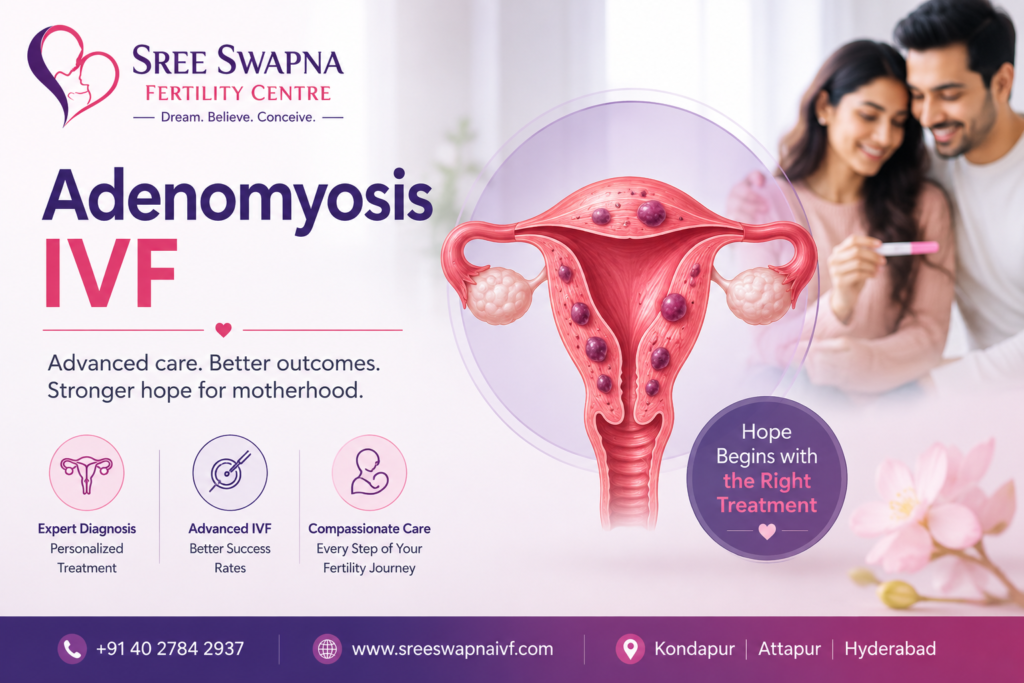
Author: Swapna

For many women, period pain is treated as something to simply push through — a monthly inconvenience managed with a hot water bag and a painkiller. But when the pain becomes severe enough to interfere with work, sleep, or daily life, and gets worse rather than better over the years, it’s worth asking whether something more specific is going on.

Adenomyosis is one of the most commonly overlooked causes of severe, worsening period pain. It’s a condition that often goes undiagnosed for years, simply because “bad periods” are so normalised that women rarely think to ask if there’s an underlying medical explanation.

This article walks through what adenomyosis is, how to recognise it, and what treatment options are available — including where to get an accurate diagnosis if you’re based in Kondapur, Hyderabad, or nearby areas.

What Is Adenomyosis?

Adenomyosis occurs when tissue similar to the lining of the uterus (the endometrium) grows into the muscular wall of the uterus (the myometrium) instead of staying confined to the uterine cavity. Each month, this misplaced tissue continues to respond to hormonal changes just like normal endometrial tissue — thickening, breaking down, and bleeding — but because it’s trapped inside the muscle wall, it has nowhere to go.

This trapped bleeding and inflammation is what leads to an enlarged, tender uterus and, in many cases, significantly more painful and heavier periods than before.

Adenomyosis is sometimes confused with endometriosis, but the two are distinct conditions. Endometriosis involves endometrial-like tissue growing outside the uterus — on the ovaries, fallopian tubes, or pelvic lining. Adenomyosis, by contrast, stays within the uterus itself, embedded in its muscular wall.

Why Does Adenomyosis Cause Painful Periods?

Several mechanisms contribute to the pain associated with adenomyosis:

  • Trapped menstrual blood within the muscle wall causes localised pressure and inflammation
  • Uterine wall thickening stretches surrounding tissue and nerve endings
  • Increased uterine contractions, as the uterus tries to expel the trapped tissue, similar to labour-like cramping
  • Chronic inflammation in the affected area, which sensitises pain receptors over time

This combination often explains why adenomyosis-related period pain tends to be described as deep, cramping, and progressively worse — rather than the milder, more predictable pain many women experience with typical periods.

Common Symptoms of Adenomyosis

  • Severe menstrual cramps (dysmenorrhea) that worsen over months or years
  • Heavy menstrual bleeding, sometimes with clots
  • Periods that last longer than usual
  • Chronic pelvic pain, not limited to menstruation
  • A feeling of pressure or bloating in the lower abdomen
  • Pain during intercourse
  • In some cases, no noticeable symptoms at all — adenomyosis can be found incidentally during a scan for other reasons

If you’re experiencing several of these symptoms together, especially if the pain has been getting progressively worse, it’s worth getting evaluated rather than assuming it’s “just how your periods are.”

What Causes Adenomyosis?

The exact cause of adenomyosis isn’t fully understood, but several factors are associated with a higher likelihood of developing it:

  • Prior uterine surgery, including C-sections, fibroid removal, or D&C procedures, which may disrupt the natural barrier between the endometrium and myometrium
  • Childbirth, particularly multiple pregnancies
  • Age, as adenomyosis is most commonly diagnosed in women in their 30s and 40s, though it can occur earlier
  • Hormonal factors, since the condition is oestrogen-dependent and tends to improve after menopause

How Is Adenomyosis Diagnosed?

  • Transvaginal Ultrasound: The first-line diagnostic tool, which can identify uterine wall thickening and other characteristic changes
  • MRI: Used when a more detailed picture is needed, or to help distinguish adenomyosis from fibroids, which can present with overlapping symptoms
  • Pelvic Examination: A gynaecologist may note an enlarged, tender uterus during a routine exam, prompting further imaging

A proper diagnosis usually requires more than symptom description alone — imaging is essential to confirm adenomyosis and rule out other conditions like fibroids or endometriosis, which can present similarly.

Treatment Options for Adenomyosis-Related Period Pain

Treatment is chosen based on the severity of symptoms, your age, and whether you’re currently trying to conceive.

For Symptom Management

  • Pain relief medication, such as NSAIDs, to manage cramping during periods
  • Hormonal therapy, including birth control pills, hormonal IUDs, or other hormone-regulating treatments, which can reduce bleeding and pain by limiting the hormonal stimulation of the misplaced tissue

For More Severe or Persistent Cases

  • GnRH agonist therapy, which temporarily suppresses hormone production to shrink adenomyosis tissue and reduce symptoms
  • Uterine artery embolisation, a less invasive procedure that reduces blood supply to the affected area in some cases
  • Surgical options, including removal of localised adenomyoma tissue where feasible, or in cases where fertility preservation isn’t a priority, a hysterectomy may be discussed as a definitive treatment

If You’re Trying to Conceive

Adenomyosis can affect fertility and IVF outcomes in some cases, so if you’re planning pregnancy, treatment should be coordinated with a fertility specialist rather than approached purely as pain management. The right protocol often differs depending on whether the primary goal is symptom relief or preparing the uterus for conception.

It’s important to know that no single treatment works identically for everyone — what helps one woman manage her symptoms may not be the right approach for another, depending on severity and future fertility plans.

Getting an Accurate Diagnosis in Kondapur, Hyderabad

If you’ve been dealing with worsening period pain and suspect it might be more than “normal,” getting a proper evaluation is the first step — and where you go for that evaluation matters.

At Sree Swapna Fertility Centre’s Kondapur clinic, our flagship centre is equipped with in-house transvaginal ultrasound and diagnostic facilities, allowing for same-visit imaging rather than being referred elsewhere and waiting for results. Our clinical director, Dr. Swapna Naik (MBBS, MS in Obstetrics & Gynaecology, Fellowship in Reproductive Medicine & IVF), brings over 15 years of experience in gynaecology and reproductive medicine, and has guided more than 5,000 successful pregnancies — giving her deep familiarity with how conditions like adenomyosis present and progress in real patients.

Whether your primary concern is managing painful periods or you’re also thinking about future fertility, our team takes time to understand your specific situation before recommending a treatment path — rather than defaulting to a one-size-fits-all approach. The Kondapur clinic is easily accessible from Gachibowli, Madhapur, HITEC City, Miyapur, and Kukatpally, and is open Monday to Saturday, 9:00 AM to 7:00 PM, with Sunday consultations available by appointment.

Frequently Asked Questions

1. Is adenomyosis the same as endometriosis? 

No. Adenomyosis involves endometrial-like tissue growing within the uterine muscle wall, while endometriosis involves similar tissue growing outside the uterus.

2. Can adenomyosis be cured completely? 

There’s no guaranteed cure short of hysterectomy, but symptoms can often be effectively managed with hormonal therapy, other medical treatments, or in some cases, targeted surgery.

3. At what age does adenomyosis typically occur? 

It’s most commonly diagnosed in women in their 30s and 40s, though it can occur at other ages too.

4. Does adenomyosis go away after menopause? 

Since adenomyosis is hormone-dependent, symptoms typically improve significantly or resolve after menopause, when oestrogen levels drop.

5. Can adenomyosis affect fertility? 

Yes, adenomyosis can affect fertility and IVF outcomes in some patients, though the extent varies based on severity and individual factors.

6. How is adenomyosis different from fibroids? 

Fibroids are distinct, usually well-defined muscular growths in or on the uterus, while adenomyosis involves diffuse tissue changes within the uterine wall itself. Imaging can help distinguish between the two.

7. Is heavy bleeding always a sign of adenomyosis? 

Not necessarily — heavy bleeding has multiple possible causes, including fibroids and hormonal imbalances, which is why proper diagnostic imaging is important.

8. Can a pelvic exam alone diagnose adenomyosis? 

A pelvic exam can suggest adenomyosis if the uterus feels enlarged or tender, but imaging like ultrasound or MRI is needed for confirmation.

9. What painkillers are typically recommended for adenomyosis pain? 

NSAIDs are commonly used for symptom management, though the right medication and dosage should be discussed with your doctor based on your health history.

10. Can birth control pills help with adenomyosis symptoms? 

Yes, hormonal birth control is often used to reduce bleeding and pain by limiting hormonal stimulation of the affected tissue.

11. Is surgery always necessary for adenomyosis? 

No, many women manage symptoms successfully with medication or hormonal therapy without needing surgery.

12. What is a hysterectomy, and when is it considered for adenomyosis? 

A hysterectomy is the surgical removal of the uterus. It’s considered a definitive treatment for severe adenomyosis, typically in women who have completed childbearing or aren’t planning future pregnancy.

13. Can adenomyosis come back after treatment? 

Non-surgical treatments manage symptoms rather than eliminate the underlying tissue, so symptoms can return if hormonal treatment is stopped. Hysterectomy is the only treatment that removes the condition entirely.

14. Does adenomyosis increase the risk of other health problems? 

Adenomyosis itself is not cancerous, but persistent heavy bleeding can sometimes lead to anaemia if left unmanaged, which is another reason to seek treatment.

15. Can lifestyle changes help manage adenomyosis symptoms? 

While lifestyle changes alone won’t resolve adenomyosis, some women find that heat therapy, anti-inflammatory diets, and regular exercise help manage pain alongside medical treatment.

16. How long does it take to get a diagnosis? 

With in-house ultrasound facilities, a preliminary diagnosis can often be made in a single visit, though further imaging like MRI may be recommended in some cases.

17. Is adenomyosis common in India? 

Adenomyosis is increasingly recognised in Indian gynaecological practice, though it has historically been under-diagnosed due to normalisation of period pain.

18. Can adenomyosis cause pain outside of periods? 

Yes, some women experience chronic pelvic pain throughout the month, not just during menstruation.

19. Should I see a gynaecologist or a fertility specialist for adenomyosis? 

If you’re not currently trying to conceive, a gynaecologist can manage symptoms. If fertility is a concern, a specialist who handles both gynaecology and reproductive medicine — like at Sree Swapna Fertility Centre — can address both aspects together.

20. Can adenomyosis be mistaken for other conditions? 

Yes, its symptoms overlap with fibroids, endometriosis, and even some pelvic infections, which is why accurate imaging-based diagnosis is essential.

21. Does Sree Swapna Fertility Centre treat adenomyosis at the Kondapur clinic? 

Yes, our Kondapur clinic offers diagnostic evaluation and treatment planning for adenomyosis, whether your primary concern is pain management or future fertility.

22. What should I bring to my first appointment for suspected adenomyosis? 

It helps to bring a record of your period patterns (cycle length, bleeding duration, pain severity) and any previous scan reports, if available, though these aren’t mandatory for your first visit.

Conclusion

Severe, worsening period pain is never something you have to simply accept as normal. Adenomyosis is a real, diagnosable, and manageable condition — and getting an accurate diagnosis is the first step toward relief, whether your goal is pain management, planning a pregnancy, or both. The sooner it’s identified, the more treatment options are typically available to you.

Book a Consultation at Our Kondapur Clinic

If period pain has been affecting your daily life, don’t wait it out. Dr. Swapna Naik and the team at Sree Swapna Fertility Centre, Kondapur, are here to help you get answers and a treatment plan that fits your needs.

📞 Call: +91 76708 04424 / +91 40 4995 3719 💬 WhatsApp: Message us directly 📧 Email: sreeswapna.fertility@gmail.com 📍 Visit us at: 2nd Floor, GT/5, 1-51/192, Masjid Banda Rd, above Ratnadeep Building, Kondapur, Hyderabad – 500084 🌐 Book an appointment: sreeswapnaivf.com/contact-us

Author: Swapna

Agar aapko recently pata chala hai ki aapko adenomyosis hai, aur aap IVF ki taiyaari kar rahe hain, toh sabse pehla sawaal jo dimaag mein aata hai woh yehi hota hai — “kya ismein meri pregnancy ke chances kam ho jaayenge?”

Yeh ek bilkul valid concern hai. Adenomyosis ek aisi condition hai jo directly uterus ko affect karti hai — aur uterus hi woh jagah hai jahan embryo implant hota hai. Toh naturally, is condition ka IVF outcomes par asar padna makes sense.

Lekin yahan ek achi baat bhi hai — adenomyosis hone ka matlab yeh bilkul nahi ki aapki IVF journey mushkil ho jayegi ya successful nahi ho sakti. Sahi diagnosis, sahi protocol, aur ek experienced fertility specialist ke saath, adenomyosis ko manage karke IVF success ke chances ko meaningfully improve kiya ja sakta hai.

Is article mein hum discuss karenge ki adenomyosis exactly kya hota hai, yeh IVF success rate ko kaise affect karta hai, aur Sree Swapna Fertility Centre mein hum is condition ko kaise approach karte hain.

Adenomyosis Kya Hota Hai?

Adenomyosis ek gynaecological condition hai jismein endometrium (uterus ki andar wali lining) ke tissue, uterus ki muscle wall — jise myometrium kehte hain — ke andar ghusna shuru kar dete hain. Normally endometrium sirf uterus ki cavity ke andar rehta hai, lekin adenomyosis mein yeh tissue muscle layer ke andar bhi grow karne lagta hai.

Iska result yeh hota hai ki uterus ki wall thick, swollen, aur kabhi-kabhi tender ho jaati hai. Yeh condition endometriosis se related toh hai, lekin dono alag hain — endometriosis mein endometrial tissue uterus ke bahar (jaise ovaries ya pelvis mein) grow karta hai, jabki adenomyosis mein yeh uterus ki apni muscle wall ke andar hota hai.

Adenomyosis Ke Common Symptoms

  • Heavy ya prolonged periods (menorrhagia)
  • Severe period pain (dysmenorrhea) jo samay ke saath badh sakta hai
  • Pelvic pain jo periods ke alawa bhi ho
  • Uterus ka size normal se bada feel hona
  • Painful intercourse
  • Kai baar bilkul koi symptoms na hona — condition sirf infertility investigation ke dauraan discover hoti hai

Adenomyosis IVF Success Rate Ko Kaise Affect Karta Hai?

Research studies ne consistently yeh dikhaya hai ki adenomyosis, IVF cycles mein pregnancy rates ko kam kar sakta hai. Iske peeche kuch specific biological reasons hain:

1. Uterine Contractility Mein Badlaav

Adenomyosis wale uterus mein abnormal muscle contractions ho sakti hain, jo embryo ko implant hone mein disturb kar sakti hain — jaise ek uneven surface par kuch stick karne ki koshish karna.

2. Endometrial Receptivity Par Asar

Implantation ke liye endometrium ka “receptive” hona zaroori hota hai — yaani embryo ko accept karne ke liye sahi hormonal aur structural condition mein hona. Adenomyosis is receptivity ko disturb kar sakta hai.

3. Local Inflammation

Adenomyosis se judi chronic inflammation, uterine environment ko embryo implantation ke liye less favourable bana sakti hai.

Ek widely-cited 2017 meta-analysis (Younes & Tulandi) ne paya ki adenomyosis wale patients mein IVF ke dauraan clinical pregnancy rates comparatively kam thi un patients ke muqable jinhe adenomyosis nahi tha. Isi tarah, ek earlier study (Salim et al., 2012) ne bhi similar findings report ki thi.

Yahan yeh samajhna zaroori hai — yeh studies trends dikhati hain, guarantees nahi. Har patient ka case alag hota hai, aur adenomyosis ki severity, location, aur overall fertility profile ke hisaab se outcomes vary karte hain.

Adenomyosis Ka Diagnosis Kaise Hota Hai?

  • Transvaginal Ultrasound — sabse common aur first-line diagnostic tool, jismein uterus ki wall thickening aur other characteristic signs dekhe jaate hain
  • MRI (Magnetic Resonance Imaging) — jab zyada detailed ya confirmatory imaging ki zaroorat ho, especially agar adenomyosis aur fibroids ke beech differentiate karna ho
  • Clinical History — heavy periods, severe pain, aur infertility history bhi diagnosis mein contribute karte hain

IVF Se Pehle Adenomyosis Ka Treatment: Kya Options Hain?

Achi khabar yeh hai ki research ne kuch treatment approaches identify kiye hain jo IVF outcomes ko improve karne mein madad kar sakte hain:

1. Long GnRH Agonist Downregulation Protocol

Kai studies suggest karti hain ki IVF cycle shuru karne se pehle, ek extended GnRH agonist protocol ke through uterus ko “down-regulate” karna — yaani temporarily suppress karna — endometrial environment ko better bana sakta hai aur success rates improve kar sakta hai.

2. Low-Dose Letrozole

Ek pilot randomized controlled trial (Sharma et al., 2023) ne suggest kiya ki low-dose letrozole, symptomatic adenomyosis wale patients ke liye IVF se pehle ek effective option ho sakta hai. Yeh abhi bhi evolving research area hai, aur treatment decision hamesha ek specialist ki guidance mein hona chahiye.

3. Surgical Management (Selected Cases)

Agar ek localized adenomyoma present hai (adenomyosis ka focal form), toh kuch cases mein surgical removal consider kiya ja sakta hai — lekin yeh decision case-by-case basis par liya jaata hai, kyunki surgery uterus ki integrity ko bhi affect kar sakti hai.

4. Personalised Embryo Transfer Timing

Kuch specialists frozen embryo transfer (FET) ko prefer karte hain fresh transfer ke bajaye, taaki uterus ko adequately prepare karne ka time mile — especially jab pre-treatment protocols use kiye ja rahe hon.

Yeh zaroori hai samajhna ki koi bhi treatment 100% guaranteed result nahi de sakta — har protocol ka goal hota hai chances ko improve karna, based on current available evidence.

Adenomyosis Aur IVF: Sree Swapna Fertility Centre Ka Approach

Sree Swapna Fertility Centre mein, humari clinical director Dr. Swapna Naik (MBBS, MS in Obstetrics & Gynaecology, Fellowship in Reproductive Medicine & IVF) 15+ saal ka experience rakhti hain reproductive medicine mein, aur 5,000+ successful IVF cycles mein directly involved rahi hain.

Jab bhi koi patient adenomyosis ke saath IVF ke liye aati hai, humara approach hota hai ek thorough diagnostic evaluation se shuru karna — transvaginal ultrasound ke through uterus ki detailed picture lena, aur zaroorat padne par further imaging recommend karna. Uske baad, treatment protocol ko individually personalise kiya jaata hai — chahe woh GnRH-based downregulation ho, timing adjustments ho, ya frozen embryo transfer ka approach.

Humare dono centres — Kondapur (flagship) aur Attapur — mein CLIA-certified embryology lab aur advanced ultrasound facilities available hain, jisse diagnosis se lekar treatment tak sab kuch ek hi jagah, ek hi coordinated team ke through possible hai. Har patient ko ek dedicated counsellor bhi assign kiya jaata hai, taaki treatment ke har step ko clearly samjha ja sake — bina kisi confusion ya anxiety ke.

Agar aapko adenomyosis diagnose hua hai aur aap IVF plan kar rahe hain, toh sabse important step hai ek specialist se milna jo aapki specific situation ko evaluate kare — kyunki generic advice kabhi bhi individualised care ki jagah nahi le sakti.

Frequently Asked Questions

1. Kya adenomyosis ke saath natural pregnancy possible hai? 

Haan, mild adenomyosis wale kaafi patients naturally conceive kar sakte hain, lekin severity aur individual factors ke hisaab se chances vary karte hain.

2. Kya adenomyosis aur endometriosis same cheez hai? 

Nahi, dono alag conditions hain. Adenomyosis mein endometrial tissue uterus ki muscle wall ke andar grow karta hai, jabki endometriosis mein yeh uterus ke bahar grow karta hai.

3. Adenomyosis ka pata kaise chalta hai? 

Mostly transvaginal ultrasound se, aur zaroorat padne par MRI ke through confirm kiya jaata hai.

4. Kya adenomyosis IVF success rate ko hamesha kam karta hai? 

Research studies mein average trend yehi dikhta hai ki success rates thodi kam ho sakti hain, lekin yeh guarantee nahi hai — severity aur treatment approach ke hisaab se outcomes different ho sakte hain.

5. Kya adenomyosis ka ilaaj possible hai? 

Adenomyosis ko “cure” karna mushkil hai, lekin symptoms aur fertility outcomes ko medical ya surgical management ke through improve kiya ja sakta hai.

6. Kya adenomyosis ke saath IVF se pehle surgery zaroori hai? 

Nahi, sirf kuch specific cases mein — jaise localized adenomyoma — surgery consider ki jaati hai. Zyada cases mein medical management se hi kaam chal jaata hai.

7. GnRH agonist downregulation protocol kya hota hai? 

Yeh ek hormonal treatment approach hai jo IVF cycle se pehle uterus ko temporarily suppress karta hai, taaki endometrial environment implantation ke liye better ho sake.

8. Kya adenomyosis ki wajah se miscarriage risk badhta hai? 

Kuch studies suggest karti hain ki adenomyosis miscarriage risk se associated ho sakta hai, lekin yeh individual case par depend karta hai aur specialist consultation zaroori hai.

9. Kya adenomyosis sirf older women ko hota hai? 

Adenomyosis zyada commonly 30s-40s ki women mein diagnose hota hai, lekin younger women mein bhi ho sakta hai, especially agar unhe infertility investigation ke dauraan detect kiya jaaye.

10. Kya fresh embryo transfer ya frozen embryo transfer (FET) better hai adenomyosis ke liye? 

Kuch specialists FET ko prefer karte hain kyunki isse uterus ko prepare karne ka additional time milta hai, lekin yeh decision individual case ke hisaab se liya jaata hai.

11. Kya adenomyosis heavy periods ka reason ho sakta hai? 

Haan, heavy aur prolonged periods adenomyosis ke sabse common symptoms mein se ek hain.

12. Kya adenomyosis ke symptoms hamesha visible hote hain? 

Nahi, kai patients mein adenomyosis asymptomatic hota hai aur sirf infertility ya imaging investigation ke dauraan pata chalta hai.

13. Adenomyosis ka IVF protocol normal IVF protocol se kaise alag hota hai? 

Adenomyosis ke case mein, protocol mein additional steps jaise extended downregulation ya specific medication add ki ja sakti hai, jo standard protocol se differ karta hai.

14. Kya letrozole IVF outcomes improve karta hai adenomyosis mein? 

Kuchh initial research (pilot studies) promising results dikhati hai, lekin yeh abhi bhi evolving area hai aur specialist guidance ke saath hi consider kiya jaana chahiye.

15. Kya adenomyosis genetic hota hai? 

Iska exact cause clearly established nahi hai, lekin hormonal aur uterine trauma factors (jaise previous surgeries) ka role suspect kiya jaata hai.

16. Kya adenomyosis pregnancy ke baad improve ho sakta hai? 

Kuch women mein symptoms pregnancy ya menopause ke baad improve hote dekhe gaye hain, lekin yeh guaranteed nahi hai.

17. Kya adenomyosis ke saath multiple IVF cycles ki zaroorat padti hai? 

Yeh individual case par depend karta hai — kuch patients pehle hi cycle mein success achieve karte hain, jabki kuch ko additional cycles ki zaroorat pad sakti hai.

18. Adenomyosis diagnosis ke baad sabse pehla step kya hona chahiye? 

Ek experienced fertility specialist se consultation, jo aapki condition ko evaluate karke ek personalised treatment plan bana sake.

19. Kya Sree Swapna Fertility Centre mein adenomyosis diagnosis facility available hai? 

Haan, humare dono centres mein transvaginal ultrasound aur diagnostic facilities available hain, jo adenomyosis ki evaluation mein use hoti hain.

20. Kya adenomyosis ke saath ICSI ki zaroorat padti hai? 

Adenomyosis primarily uterus ko affect karta hai, sperm ko nahi — toh ICSI ki zaroorat depend karti hai male factor infertility jaise separate factors par, na ki sirf adenomyosis par.

21. Kya adenomyosis endometriosis ke saath bhi ho sakta hai? 

Haan, kuch patients mein dono conditions saath mein present ho sakti hain, jo overall treatment plan ko thoda more comprehensive bana deta hai.

22. IVF start karne se pehle kitna time lagta hai adenomyosis treatment mein? 

Yeh treatment approach par depend karta hai — kuch protocols mein few weeks lagte hain, jabki extended downregulation protocols mein zyada time lag sakta hai. Specialist hi exact timeline guide kar sakte hain.

Conclusion

Adenomyosis definitely IVF outcomes ko influence kar sakta hai, lekin yeh journey ke end ka matlab bilkul nahi hai. Sahi diagnosis, evidence-based treatment approach, aur ek experienced fertility team ki guidance ke saath, adenomyosis ko effectively manage karke parenthood ke sapne ko reality banaya ja sakta hai. Sabse important cheez hai — jaldi diagnosis aur personalised care.

Apni Fertility Journey Ke Liye Sahi Guidance Lein

Agar aapko adenomyosis diagnose hua hai aur aap IVF consider kar rahe hain, toh Dr. Swapna Naik aur Sree Swapna Fertility Centre ki team aapke saath, aapki poori journey mein hai.

📞 Call करें: +91 76708 04424 / +91 40 4995 3719 💬 WhatsApp करें: Message us directly 📧 Email: sreeswapna.fertility@gmail.com 📍 हमसे मिलें: Kondapur (flagship centre) या Attapur, Hyderabad 🌐 Appointment Book करें: sreeswapnaivf.com/contact-us

Author: Swapna

Getting a semen analysis report back with the word “teratozoospermia” or “abnormal morphology” circled in red can be alarming — especially when everything else about the report looks normal. Many men come across this term for the first time only after months of trying to conceive without success, and the medical language doesn’t make it any less confusing.

Here’s the reassuring part: abnormal sperm morphology is one of the most common — and most treatable — causes of male infertility. It rarely means “no chance of biological fatherhood.” It simply means the path to conception may need a more targeted approach.

At Sree Swapna Fertility Centre in Hyderabad, we work with couples facing exactly this diagnosis every week. This guide explains what abnormal sperm morphology actually means, what causes it, how it’s diagnosed, and the treatment options available — including where low sperm morphology treatment in India typically starts, and when advanced techniques like ICSI become the better path forward.

What Is Sperm Morphology, and What Counts as “Abnormal”?

Sperm morphology refers to the size and shape of sperm cells — specifically the head, midpiece, and tail. A “normal” sperm has an oval head, a well-defined midpiece, and a single straight tail, all of which help it swim efficiently and penetrate an egg.

According to WHO 2021 laboratory guidelines, a semen sample is classified as having teratozoospermia (abnormal morphology) when fewer than 4% of sperm show normal shape under strict microscopic evaluation. This threshold often surprises people — even fertile men typically have a large proportion of abnormally shaped sperm, since sperm production is a naturally imperfect process. What matters clinically is whether the percentage of normal forms falls below this reference range.

Common structural abnormalities include:

  • Head defects — large, small, tapered, or double heads
  • Midpiece defects — bent or thickened midpieces
  • Tail defects — coiled, short, or multiple tails

What Causes Abnormal Sperm Morphology?

In many cases, the exact cause remains unidentified — this is termed idiopathic teratozoospermia. However, several known contributing factors include:

  • Varicocele — enlarged veins in the scrotum, one of the most common correctable causes of poor sperm morphology
  • Oxidative stress — excess reactive oxygen species in semen have been linked to a higher proportion of abnormal sperm forms
  • Infections — including untreated urogenital infections
  • Lifestyle factors — smoking, alcohol use, prolonged heat exposure (tight underwear, laptop use on the lap, frequent sauna/steam use), and obesity
  • Environmental toxin exposure — pesticides, heavy metals, and certain occupational chemical exposures
  • Hormonal imbalances — including issues with testosterone or thyroid function
  • Genetic factors — rare inherited conditions can cause more severe, uniform morphology defects

How Is Abnormal Sperm Morphology Diagnosed?

Diagnosis begins with a semen analysis, evaluated against WHO reference criteria. If morphology is found to be abnormal, your fertility specialist may recommend additional tests to identify an underlying cause and guide treatment, such as:

  • Scrotal ultrasound, to check for varicocele
  • Hormonal blood tests, to assess testosterone, FSH, LH, and thyroid function
  • Sperm DNA fragmentation testing, since morphology abnormalities are sometimes associated with higher DNA fragmentation, which can affect embryo development
  • Infection screening, if there are signs of a urogenital infection

It’s worth noting that morphology is just one of three parameters assessed in a semen analysis, alongside sperm count and motility. A diagnosis is always made in the context of the full report, not morphology in isolation.

Treatment Options for Abnormal Sperm Morphology

Treatment is tailored to the identified cause and the couple’s overall fertility profile. Options generally fall into three categories:

1. Lifestyle and Medical Management

For mild cases, especially where lifestyle factors are contributing, doctors often recommend:

  • Quitting smoking and reducing alcohol intake
  • Avoiding prolonged heat exposure to the scrotal area
  • Weight management, where relevant
  • Antioxidant supplementation, which some studies suggest may improve sperm parameters over a 3-month cycle (the approximate time needed for new sperm to mature)
  • Treating any underlying infection with appropriate medication

2. Surgical Correction

If a varicocele is identified as a contributing factor, varicocele repair (varicocelectomy) may improve sperm morphology and other semen parameters over subsequent months. This is typically considered when the varicocele is clinically significant and correlates with the semen analysis findings.

3. Assisted Reproductive Technology (ART)

When lifestyle changes and medical management aren’t enough, or when morphology is severely abnormal, ART becomes the most effective route to conception:

  • IUI (Intrauterine Insemination) may be considered for mild cases, particularly when combined with ovulation induction in the female partner, though success depends on morphology severity and other sperm parameters.
  • IVF (In Vitro Fertilisation) allows embryologists to select the best-available sperm for fertilisation in a lab setting.
  • ICSI (Intracytoplasmic Sperm Injection) is generally the preferred and most effective option for moderate-to-severe teratozoospermia. In ICSI, a single, carefully selected sperm is injected directly into an egg — bypassing the natural barriers that abnormal morphology would otherwise make difficult to overcome.

It’s important to set realistic expectations: no fertility treatment guarantees a specific outcome, and success depends on multiple factors beyond sperm morphology alone, including the female partner’s fertility profile and overall reproductive health.

Why the Right Diagnosis Matters Before Choosing Treatment

One of the most common mistakes couples make is jumping straight to “the strongest treatment” without first understanding the underlying cause. A varicocele-related morphology issue may respond well to surgical correction, avoiding the need for ART altogether. On the other hand, idiopathic or severe cases usually benefit more from moving directly to ICSI rather than spending months on treatments unlikely to make a meaningful difference. This is why a thorough diagnostic work-up — not just a single semen report — should always guide the treatment plan.

How Sree Swapna Fertility Centre Approaches Male Factor Infertility

At Sree Swapna Fertility Centre, male factor infertility — including abnormal sperm morphology — is evaluated as thoroughly as female fertility factors, rather than being treated as a footnote. Under the guidance of Dr. Swapna Naik (MBBS, MS in Obstetrics & Gynaecology, Fellowship in Reproductive Medicine & IVF), with over 15 years of experience and involvement in more than 5,000 successful IVF cycles, our approach starts with a complete diagnostic picture — semen analysis, hormonal assessment, and imaging where needed — before recommending a treatment path.

Both our Kondapur (flagship) and Attapur centres are equipped with an in-house andrology lab, allowing semen analysis and sperm preparation to be conducted on-site rather than through an external, disconnected lab. For couples requiring ART, we offer the full spectrum of options — IUI, IVF, and ICSI — along with advanced sperm retrieval techniques (TESA/PESA) for cases involving obstructive or severe male factor infertility. Every treatment plan is personalised, explained clearly, and supported by dedicated counsellors who help couples understand each step and what to realistically expect.

If a varicocele or other surgically correctable issue is identified, our team can also guide you through that pathway before considering ART, ensuring you’re not moved toward more intensive treatment than necessary.

Frequently Asked Questions

1. What is considered abnormal sperm morphology? 

Under WHO 2021 criteria, a semen sample with fewer than 4% normal-shaped sperm is classified as teratozoospermia.

2. Can abnormal sperm morphology be cured? 

It depends on the cause. Lifestyle-related or infection-related cases can often improve with treatment, while idiopathic or severe cases are usually managed through ART rather than “cured” outright.

3. Can men with poor sperm morphology still conceive naturally?

Yes, particularly in mild cases, though the chances are generally lower than with normal morphology, especially if other semen parameters are also affected.

4. How long does it take to improve sperm morphology?

Since sperm take about 74 days to mature, any lifestyle or medical intervention typically needs at least 3 months before improvement can be assessed on a repeat semen analysis.

5. Does age affect sperm morphology? 

Yes, sperm morphology can decline gradually with age, though the effect is generally less pronounced than the age-related decline seen in female fertility.

6. What is teratozoospermia? 

Teratozoospermia is the medical term for a semen sample containing a higher-than-normal proportion of abnormally shaped sperm.

7. Is teratozoospermia the same as low sperm count? 

No. Morphology (shape), count (concentration), and motility (movement) are three separate semen parameters, though they can occur together or independently.

8. Can varicocele cause abnormal sperm morphology? 

Yes, varicocele is one of the most common correctable causes of poor sperm morphology and other semen abnormalities.

9. Is ICSI necessary for abnormal sperm morphology? 

ICSI is often recommended for moderate-to-severe cases because it allows direct selection and injection of the best available sperm, but it isn’t automatically necessary for milder cases.

10. Can lifestyle changes alone fix abnormal sperm morphology? 

In mild, lifestyle-related cases, yes — quitting smoking, reducing heat exposure, and weight management can meaningfully improve parameters over a few months.

11. Do antioxidant supplements help sperm morphology? 

Some studies suggest antioxidants may support sperm parameters, but they should be taken under medical guidance rather than self-prescribed, and results vary between individuals.

12. How is sperm morphology tested? 

Through a semen analysis, where sperm are stained and evaluated under a microscope against strict WHO criteria.

13. Can stress affect sperm morphology? 

Chronic stress has been associated with changes in semen parameters in some studies, though it’s rarely the sole cause of teratozoospermia.

14. What is the difference between IUI, IVF, and ICSI for male factor infertility? 

IUI places prepared sperm directly into the uterus and works best for milder cases; IVF fertilises eggs with sperm in a lab dish; ICSI injects a single selected sperm directly into an egg, making it the most direct option for significant morphology issues.

15. Can obesity affect sperm morphology? 

Yes, obesity is associated with hormonal changes and increased scrotal temperature, both of which can negatively affect sperm shape and other parameters.

16. Should I get a second semen analysis before starting treatment? 

Yes, semen parameters can vary between samples, so most specialists recommend at least two analyses, a few weeks apart, before finalising a treatment plan.

17. Can smoking really affect sperm shape? 

Yes, smoking is one of the most well-documented lifestyle factors linked to abnormal sperm morphology and reduced fertility potential.

18. Is surgery always needed if a varicocele is found? 

Not always — treatment depends on the varicocele’s size, its correlation with semen parameters, and the couple’s overall fertility goals.

19. Can abnormal morphology affect embryo quality in IVF? 

Yes, since fertilisation and early embryo development depend partly on sperm quality, which is why ICSI is often preferred in significant morphology cases to select the healthiest available sperm.

20. How soon can treatment start after diagnosis? 

This depends on the recommended pathway — lifestyle changes may run for a few months before reassessment, while ART can often begin within the same or following treatment cycle after diagnostic work-up is complete.

21. Does Sree Swapna Fertility Centre treat male infertility along with female fertility issues? 

Yes, our team evaluates and treats both partners together, since fertility outcomes often depend on addressing both male and female factors.

22. Where can I get a semen analysis done in Hyderabad? 

Sree Swapna Fertility Centre offers in-house semen analysis and andrology testing at both our Kondapur and Attapur clinics.

Conclusion

An abnormal sperm morphology diagnosis can feel overwhelming, but it’s one of the most manageable causes of male infertility when addressed with the right diagnostic approach and treatment plan. Whether the path forward involves lifestyle changes, surgical correction, or assisted reproductive technology like ICSI, the key is getting a clear, personalised evaluation rather than guessing at the cause.

Talk to Our Fertility Specialists in Hyderabad

If you or your partner have received a teratozoospermia diagnosis, Dr. Swapna Naik and the team at Sree Swapna Fertility Centre are here to guide you through a clear, judgment-free treatment plan.

📞 Call: +91 76708 04424 / +91 40 4995 3719 💬 WhatsApp: Message us directly 📧 Email: sreeswapna.fertility@gmail.com 📍 Visit us at: Kondapur (flagship centre) or Attapur, Hyderabad 🌐 Book an appointment: sreeswapnaivf.com/contact-us
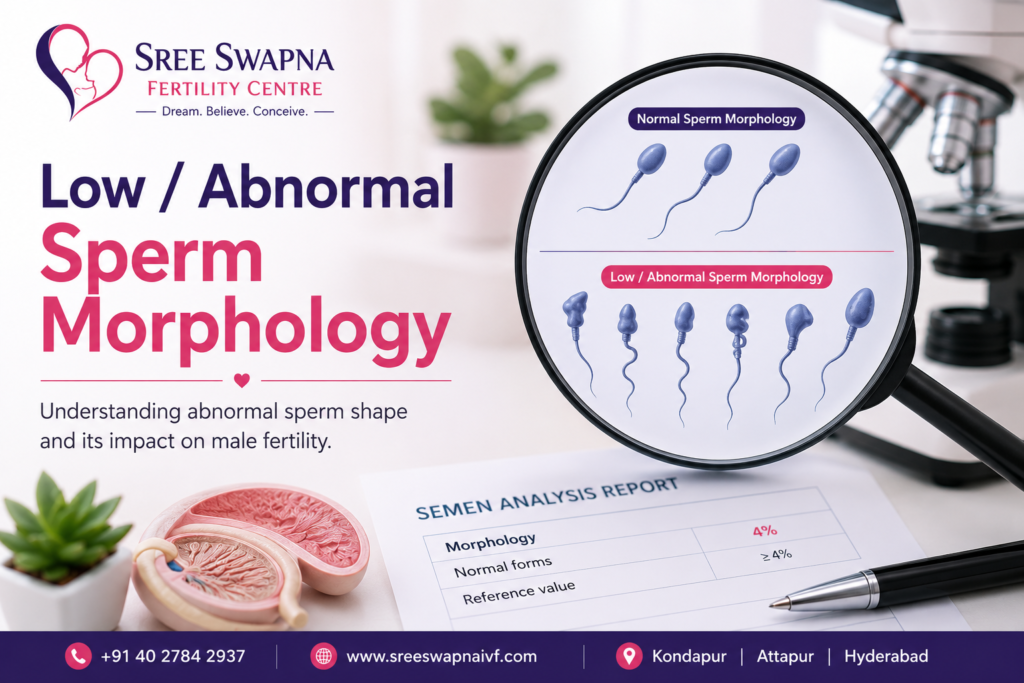
Author: Swapna

If you’ve spent any time on Instagram or YouTube lately, you’ve probably come across the “2-hour urine hold” trend — the idea that holding your urine for two hours before taking a home pregnancy test gives you a clearer, more reliable result. For anyone trying to conceive, even a slightly more trustworthy line on that little plastic stick feels like a big deal.

But does holding your urine for two hours actually change anything scientifically? Or is this just another well-meaning myth circulating among women trying to conceive?

At Sree Swapna Fertility Centre, we get asked variations of this question almost every week — usually by women in the two-week wait, refreshing their search bar at midnight. So let’s break down what the science actually says about the 2 hour urine hold pregnancy test in India, how it compares to the standard first morning urine approach, and when it’s time to stop testing at home and get a clinical answer instead.

What Is the “2-Hour Urine Hold” Method?

The 2-hour urine hold method involves avoiding urination for at least two hours before taking a home pregnancy test, with the goal of allowing urine to become more concentrated. The theory is simple: a more concentrated urine sample should, in principle, contain a higher concentration of the pregnancy hormone — human chorionic gonadotropin (hCG) — making a faint line easier to detect.

This is a variation of the more established “first morning urine” advice that comes printed on almost every home pregnancy test box.

The Science Behind Urine Concentration and hCG Detection

Home pregnancy tests work by detecting hCG, a hormone produced by the placenta shortly after a fertilised egg implants in the uterus. In early pregnancy, hCG levels are still low, and test strips need enough hormone concentration in the sample to trigger a visible line.

Two factors affect how “concentrated” your urine is:

  • How much fluid you’ve had recently. Drinking a lot of water dilutes urine and can lower hCG concentration, occasionally masking a true positive.
  • How long urine has been sitting in the bladder. The longer urine collects, the more concentrated it generally becomes — because the kidneys keep filtering out waste products (including hCG) even while you’re not urinating.

This is why the science does support urine concentration mattering for test sensitivity. Where the “2-hour” specificity gets shaky is that there’s no clinical consensus that exactly two hours is a magic number. Longer holds (like first-thing-in-the-morning urine, often 6–8 hours of overnight buildup) are generally more concentrated than a 2-hour daytime hold — which is exactly why manufacturers recommend morning urine for pregnancy test accuracy rather than a specific daytime interval.

Morning Urine vs. 2-Hour Hold: Which Is More Reliable?

FactorFirst Morning Urine2-Hour Daytime Hold
Typical concentration time6–8 hours2 hours
hCG concentrationHighestModerate
ConvenienceRequires testing right on wakingCan be done anytime during the day
Manufacturer recommendationYes, standard advice on most kitsNot officially specified on most kits

In short: if you can test first thing in the morning, that remains the gold standard for pregnancy test first morning urine accuracy. The 2-hour hold is a reasonable second option if you’ve missed your morning window or need to retest later in the day, but it isn’t a scientifically superior shortcut — it’s a practical compromise.

Step-by-Step: How to Do a 2-Hour Urine Hold Test Correctly

  1. Avoid urinating for at least 2 hours before your planned test time.
  2. Limit fluid intake during this window — don’t overcompensate by drinking excess water, as this dilutes the sample.
  3. Use a clean, dry container or test directly midstream, following your test kit’s instructions.
  4. Read the result within the time window specified on the pack (usually 3–5 minutes). Results read after this window can show false evaporation lines.
  5. Test again in 48 hours if the result is negative but your period still hasn’t arrived, since hCG levels roughly double every 48–72 hours in early pregnancy.

Common Mistakes That Affect Accuracy

  • Testing too early. Even a perfectly held urine sample won’t show hCG that isn’t there yet. Testing before your missed period significantly increases the chance of a false negative.
  • Overhydrating before the test. This is the single most common reason for a falsely faint or negative line, regardless of hold time.
  • Reading results after the recommended window. Evaporation lines can appear and be mistaken for a faint positive.
  • Using an expired or improperly stored test kit. Heat and humidity (common in Indian summers) can degrade test strip sensitivity.
  • Ignoring medication interference. Certain fertility medications containing hCG (used in ovulation induction or IVF cycles) can cause false positives for up to 10–14 days after the injection.

When a Home Test Isn’t Enough: Why Clinical Confirmation Matters

Home urine tests are a helpful first indicator, but they have real limitations — especially for women who are actively undergoing fertility treatment, have irregular cycles, or have a history of pregnancy loss. A urine test only tells you “yes” or “no.” It can’t tell you how a pregnancy is progressing, whether hCG levels are rising appropriately, or whether the pregnancy is developing in the right location.

This is where Dr. Swapna Naik, Clinical Director and Chief IVF Consultant at Sree Swapna Fertility Centre, and her team step in. With over 15 years of experience in reproductive medicine and having guided more than 5,000 successful pregnancies, Dr. Naik’s approach goes beyond a single test result.

For patients undergoing ovulation induction, IUI, or IVF at either of our Hyderabad centres, a home urine test is never the final word. We rely on quantitative serum beta-hCG blood tests, which measure the exact hormone level in your blood — far more sensitive and precise than any urine strip, and able to confirm pregnancy several days earlier. Follow-up testing 48 hours later helps us track whether hCG levels are rising appropriately, an important early indicator of a healthy, viable pregnancy.

Both our Kondapur (flagship) and Attapur clinics are equipped with in-house diagnostic facilities and a CLIA-certified embryology and diagnostic lab, so patients don’t have to wait anxiously for outside lab reports — results and next steps are handled by the same team guiding your treatment.

If you’ve had a faint or unclear home test result, or you’re managing a fertility treatment cycle and need a definitive answer, we recommend booking a same-week consultation rather than repeatedly testing at home.

Frequently Asked Questions

1. Does holding urine for 2 hours really improve pregnancy test accuracy? 

It can help slightly by increasing urine concentration, but the effect is smaller than testing with first morning urine, which has a much longer concentration window.

2. Is first morning urine always more accurate than a 2-hour hold? 

Generally yes, because urine has typically been concentrating for 6–8 hours overnight compared to just 2 hours during the day.

3. How many hours should I hold urine before a pregnancy test? 

There’s no universally agreed exact number, but longer holds (within reason) tend to produce more concentrated, easier-to-read samples.

4. Can drinking water before the test affect the result? 

Yes. Excess fluid dilutes urine and can weaken or mask a faint positive line.

5. How soon after a missed period should I test? 

Testing on the day of your missed period, using first morning urine, gives the most reliable result.

6. Can I test before my missed period? 

You can, but hCG levels may still be too low to detect, increasing the risk of a false negative.

7. What does a very faint line mean? 

A faint line often indicates early pregnancy with lower hCG levels. Retesting after 48 hours with first morning urine usually gives a clearer result.

8. How accurate are home pregnancy tests in general? 

Most kits claim over 99% accuracy when used correctly on or after the day of a missed period, though real-world accuracy is often lower due to testing errors.

9. Can fertility medications cause a false positive? 

Yes. Injections containing hCG, sometimes used in ovulation induction or IVF cycles, can cause false positives for 10–14 days after administration.

10. Should I test again if I get a negative result but still haven’t gotten my period? 

Yes — wait 48 hours and retest using first morning urine, or consult your fertility specialist for a blood test.

11. How long after implantation can hCG be detected in urine? 

Typically hCG becomes detectable in urine around 3–4 days after implantation, though this varies between individuals.

12. Is a blood test more accurate than a urine test? 

Yes. Quantitative serum beta-hCG blood tests are more sensitive and can detect pregnancy earlier and more precisely than urine tests.

13. Can I use any container to collect urine for the 2-hour hold method? 

Use a clean, dry container, or follow your specific test kit’s instructions for midstream collection.

14. Does the brand of pregnancy test matter for accuracy? 

Sensitivity varies by brand. Digital tests and higher-sensitivity strips can detect lower hCG concentrations earlier.

15. Can stress or irregular cycles affect when I should test? 

Irregular cycles make it harder to know your exact “missed period” date, which is why cycle tracking or a clinical consultation is more reliable for these cases.

16. What if I get different results from two different test brands? 

This can happen due to sensitivity differences. A blood test at a clinic is the best way to resolve conflicting results.

17. How long should I wait to read the test result? 

Follow the manufacturer’s window, usually 3–5 minutes. Reading later can show inaccurate evaporation lines.

18. Can heat affect pregnancy test accuracy in India’s climate? 

Yes, storing test kits in high heat or humidity can degrade the strip and affect reliability. Store kits in a cool, dry place.

19. Is it necessary to see a doctor after a positive home test?

Yes. A clinical visit confirms the pregnancy, checks hCG levels, and helps assess if the pregnancy is progressing normally, especially important if you’re undergoing fertility treatment.

20. Can PCOS or hormonal imbalances affect pregnancy test results? 

PCOS doesn’t directly affect hCG detection, but irregular cycles common with PCOS can make timing your test correctly more difficult.

21. What should I do if I’ve been trying to conceive for a while with repeated negative tests? 

If you’ve been trying for over a year (or 6 months if over age 35) without success, it’s worth consulting a fertility specialist for a full evaluation rather than relying only on home testing.

22. Does Sree Swapna Fertility Centre offer pregnancy confirmation blood tests? 

Yes, both our Kondapur and Attapur centres offer quantitative beta-hCG blood testing as part of routine fertility monitoring and pregnancy confirmation.

Conclusion

The 2-hour urine hold can offer a modest boost in test sensitivity, but it isn’t a scientific guarantee — first morning urine remains the more reliable choice whenever possible, and a single line (or lack of one) is never the complete picture, especially if you’re actively trying to conceive or undergoing fertility treatment. When you need a definitive, clinically accurate answer, a quantitative blood test and the guidance of an experienced fertility specialist matter far more than any home test timing trick.

Get a Definitive Answer, Not Just a Guess

If you’re unsure about a test result, going through the two-week wait, or currently undergoing fertility treatment, Dr. Swapna Naik and the team at Sree Swapna Fertility Centre are here to help you get clarity — quickly and compassionately.

📞 Call: +91 76708 04424 / +91 40 4995 3719 💬 WhatsApp: Message us directly 📧 Email: sreeswapna.fertility@gmail.com 📍 Visit us at: Kondapur (flagship centre) or Attapur, Hyderabad 🌐 Book an appointment: sreeswapnaivf.com/contact-us
Author: Swapna

IVF Treatment Explained: A Complete Beginner’s Guide to the IVF Journey

Trying to conceive should be a time of hope and excitement, but for many couples, it turns into a heartbreaking cycle of negative pregnancy tests and silent frustration. If you have been struggling to build your family, you are not alone. Millions of couples face infertility, and modern medicine offers powerful solutions.

IVF treatment is one of the most successful and trusted pathways to parenthood. At Sree Swapna Fertility Centre, we understand the emotional and physical toll this journey takes on you. This comprehensive guide will walk you through everything you need to know about In Vitro Fertilization (IVF)—from the initial signs you might need help, to the final joyful moment of a positive test.

What is IVF Treatment? (Featured Snippet)

In Vitro Fertilization (IVF) is an advanced assisted reproductive technology where a woman’s egg is retrieved and combined with sperm in a specialized laboratory. Once a healthy embryo forms, it is carefully transferred into the uterus to establish a successful pregnancy. IVF treatment offers the highest success rates for couples struggling with various forms of infertility.

Signs You Might Need to Consider IVF (Symptoms of Infertility)

Infertility itself is a condition, and its primary “symptom” is the inability to get pregnant after 12 months of unprotected, regular intercourse (or 6 months if you are a woman over 35). However, there are several underlying signs that indicate you might need advanced reproductive assistance:

  • Irregular or Absent Menstrual Cycles: Suggests ovulation issues like Polycystic Ovary Syndrome (PCOS).

  • Severe Pelvic Pain: Often a sign of endometriosis, which can severely impact fertility.

  • Recurrent Miscarriages: Experiencing two or more miscarriages may require IVF with genetic testing (PGT-A).

  • Male Factor Issues: Difficulty with ejaculation, low sex drive, or a previous diagnosis of low sperm count.

Common Causes of Infertility

Understanding the root cause of your fertility struggles is the first step toward overcoming them. IVF treatment is highly effective at bypassing many of these common physical barriers:

  1. Blocked or Damaged Fallopian Tubes: Prevents the egg and sperm from meeting naturally.
  2. Endometriosis: Uterine tissue growing outside the uterus, causing inflammation and scarring.
  3. Ovulation Disorders: Conditions like PCOS prevent the regular release of mature eggs.
  4. Male Factor Infertility: Poor sperm motility, low sperm concentration, or abnormal sperm morphology.
  5. Unexplained Infertility: Sometimes, standard testing cannot pinpoint a cause, but IVF still provides a viable pathway to pregnancy.

Risk Factors Affecting Fertility

Certain lifestyle and biological factors can decrease your chances of natural conception and make IVF a necessary step:

  • Advanced Maternal Age: A woman’s ovarian reserve (egg quantity and quality) declines rapidly after age 35.
  • Weight Extremes: Being significantly underweight or overweight can disrupt hormone production.
  • Smoking and Alcohol: Both heavily damage egg and sperm quality.
  • Chronic Stress: High cortisol levels can interfere with reproductive hormones.

How is Infertility Diagnosed?

Before starting the IVF journey, your fertility specialist will conduct a thorough assessment to tailor the treatment specifically to your body.

  • Ovarian Reserve Testing: Blood tests to measure AMH (Anti-Mullerian Hormone) levels to estimate your egg supply.
  • Transvaginal Ultrasound: To examine the health of the uterus, ovaries, and fallopian tubes.
  • Semen Analysis: A critical test for the male partner to assess sperm count, shape, and movement.
  • Infectious Disease Screening: Standard blood tests for both partners to ensure a safe pregnancy.

The IVF Treatment Process: Step-by-Step

The IVF journey can seem overwhelming, but breaking it down into steps makes it much more manageable. Here is a clear overview of what to expect:

Phase

Description

Timeline

1. Ovarian Stimulation

You will take daily injectable fertility medications to stimulate your ovaries to produce multiple mature eggs instead of just one.

8 to 14 days

2. Egg Retrieval

A minor, minimally invasive surgical procedure performed under light sedation to gently extract the mature eggs from the ovaries.

15 to 20 minutes

3. Fertilization

In the lab, the retrieved eggs are combined with sperm. In cases of male infertility, a single sperm is injected directly into the egg (ICSI).

1 to 5 days

4. Embryo Culture

The fertilized eggs develop into embryos. Our embryologists monitor them closely as they reach the advanced blastocyst stage.

3 to 6 days

5. Embryo Transfer

The healthiest embryo is carefully placed into your uterus using a thin catheter. This procedure is quick and generally painless.

10 to 15 minutes

Non-Surgical and Alternative Fertility Treatments

Not every patient requires IVF right away. Depending on your diagnosis, we may recommend starting with less invasive options:

  • Intrauterine Insemination (IUI): A procedure where concentrated sperm is placed directly into the uterus during ovulation.
  • Ovulation Induction: Using oral medications (like Letrozole or Clomid) to trigger regular ovulation for timed intercourse.

Prevention Tips for Preserving Fertility

While you cannot stop biological aging, you can adopt habits that protect your reproductive health:

  • Maintain a balanced, nutrient-rich diet (focus on antioxidants, folic acid, and healthy fats).
  • Engage in moderate, consistent exercise (avoid extreme, exhausting physical regimens).
  • Quit smoking and limit alcohol and caffeine intake.
  • Manage stress through yoga, meditation, or counseling.

When to See a Fertility Doctor

Time is of the essence in fertility care. You should book a consultation if:

  • You are under 35 and have been trying to conceive for a year.
  • You are over 35 and have been trying for six months.
  • You are over 40 (seek immediate consultation).
  • You have a known reproductive issue (like PCOS or endometriosis) or irregular periods.

The Life-Changing Benefits of Early Treatment

Delaying a consultation is one of the most common regrets we hear from patients. Seeking early intervention offers immense benefits:

  • Higher Success Rates: Egg quality is deeply tied to age. Treating infertility sooner yields much higher clinical pregnancy rates.
  • More Treatment Options: Catching issues early means less invasive treatments (like IUI) might still be viable.
  • Financial Savings: Early diagnosis often means fewer failed cycles and reduced overall emotional and financial strain.
  • Peace of Mind: Finally having a clear medical plan drastically reduces the anxiety of the unknown.

Why Choose Sree Swapna Fertility Centre?

When embarking on this deeply personal journey, choosing the right medical partner is crucial. Sree Swapna IVF is widely recognized as the Best IVF Centre in Hyderabad, renowned for combining cutting-edge technology with deeply compassionate care.

Whether you are looking for the Best IVF Centre in Kondapur or seeking the Best IVF Centre in Attapur, our highly accessible, state-of-the-art facilities offer world-class embryology labs and individualized protocols. We don’t believe in a one-size-fits-all approach; we treat you, tailoring every medication and timeline to maximize your specific chances of bringing home a healthy baby.

Holistic Health: Managing Physical Stress During Pregnancy

Achieving a successful pregnancy through IVF is a beautiful milestone, but the physical changes of carrying a child can sometimes bring musculoskeletal discomfort. Because we care about your holistic well-being throughout your entire journey to motherhood, we also guide patients on managing physical changes.

As your body adapts to pregnancy, it is common to experience changes in your posture and joint pressure. We provide resources and trusted internal referrals for comprehensive care, including:

  • [Back Pain Treatment] – To help alleviate the lower lumbar strain caused by a growing baby bump.
  • [Sciatica Treatment] – To relieve sharp nerve pain that can occur when the baby rests on the sciatic nerve.
  • [Spine Care] and [Neck Pain Treatment] – Essential for maintaining proper posture as your center of gravity shifts.
  • [Migraine Treatment] – For managing pregnancy-induced hormonal headaches safely.
  • [Knee Pain Treatment] – To support your joints as they carry the extra weight of pregnancy.

Doctor Consultation: Meet Our Expert Specialists

Your dream of parenthood deserves the highest level of medical expertise. At Sree Swapna Fertility Centre, our expert fertility and pain management specialists are dedicated to diagnosing the root cause of your struggles and mapping out a clear, confident path forward. We use state-of-the-art diagnostic tools to ensure no stone is left unturned.

Don’t let another month end in disappointment. Take control of your fertility journey today.

Call us now at 7670804424 to schedule your private consultation.

Frequently Asked Questions (FAQs)

  1. Is IVF treatment painful? While the daily injections can cause minor discomfort or bruising, the actual medical procedures (like egg retrieval) are performed under sedation, ensuring you do not feel pain. Embryo transfer feels similar to a routine pap smear.
  2. How long does one IVF cycle take? A standard IVF cycle takes about 4 to 6 weeks from the start of ovarian stimulation to the pregnancy blood test.
  3. What is the success rate of IVF? Success rates vary based on maternal age, medical history, and lifestyle factors. However, IVF generally offers the highest success rate per cycle of any fertility treatment, often ranging between 40% to 60% for younger women.
  4. Are there any side effects to fertility drugs? Some women experience mild side effects from hormone medications, such as bloating, breast tenderness, mood swings, and minor cramping. These are temporary and closely monitored by our doctors.
  5. How much rest is required after an embryo transfer? Strict bed rest is no longer recommended. We advise patients to rest for the remainder of the day of the transfer, and then return to light, normal daily activities while avoiding heavy lifting and vigorous exercise.

Conclusion

The journey through infertility is undoubtedly one of the most challenging experiences a couple can face. However, with the right guidance, technology, and support, your dream of having a baby is highly achievable. IVF treatment has brought joy to millions of families worldwide, turning the despair of infertility into the ultimate gift of life.

You do not have to walk this path alone. Sree Swapna Fertility Centre is here to hold your hand through every ultrasound, every injection, and every milestone until you are holding your baby.

Ready to Start Your Family?

Your journey to parenthood starts with a simple conversation. Stop waiting and start acting. Book an appointment with our leading fertility specialists today and take the first step toward a beautiful tomorrow.

📞 Call us today at 7670804424 to book your consultation!

Author: Swapna

Overcoming PCOS and Infertility: Understanding the Connection and Your Path to Motherhood

Trying to start a family should be a joyful journey, but when month after month ends in disappointment, it can feel incredibly isolating. If you have been diagnosed with Polycystic Ovary Syndrome (PCOS), you might feel like your own body is working against your dreams of motherhood. You are not alone. PCOS infertility is one of the most common causes of female reproductive struggles, affecting millions of women worldwide.

The fear that you might never hold your own baby is overwhelming, but there is immense hope. With the right medical guidance, lifestyle adjustments, and advanced reproductive technologies, the vast majority of women with PCOS go on to have successful, healthy pregnancies.

What is PCOS and How Does it Cause Infertility? 

Polycystic Ovary Syndrome (PCOS) causes infertility by disrupting hormonal balance, which prevents regular ovulation. Without the consistent release of a healthy egg, natural conception becomes highly unlikely. However, with targeted lifestyle changes, fertility medications, and advanced assisted reproductive treatments like IVF, most women with PCOS can successfully overcome these barriers and conceive.

The Root of the Problem: Symptoms, Causes, and Risk Factors

To effectively treat PCOS, it is crucial to understand how it impacts your body as a whole. PCOS is an endocrine disorder that creates a domino effect of hormonal imbalances.

Common Symptoms of PCOS

PCOS presents differently in every woman, but common signs include:

  • Irregular or absent menstrual periods: A direct sign that ovulation is not occurring normally.
  • Excess androgen levels: Leading to unwanted facial or body hair growth (hirsutism) and severe adult acne.
  • Weight gain: Particularly around the abdomen, which is often difficult to lose despite diet and exercise.
  • Chronic pain: Including severe pelvic cramping, heavy periods, and associated lower back pain during irregular cycles.
  • Thinning hair: Hair loss on the scalp that mimics male-pattern baldness.

Causes and Hidden Risk Factors

While the exact cause of PCOS remains unknown, several key factors play a massive role in its development:

  • Insulin Resistance: Up to 70% of women with PCOS have insulin resistance, meaning their cells cannot use insulin properly. The body compensates by producing more insulin, which triggers the ovaries to produce excess male hormones (androgens).
  • Low-Grade Inflammation: Research shows that women with PCOS often experience chronic, low-grade inflammation, which stimulates polycystic ovaries to produce androgens, further complicating fertility.
  • Genetics: If your mother or sister has PCOS, your risk of developing the condition is significantly higher.
  • Weight: Being overweight or obese exacerbates insulin resistance and hormonal imbalances, creating a challenging cycle.

How is PCOS Infertility Diagnosed?

Accurate diagnosis is the first step toward building your family. At a specialized fertility clinic, doctors will perform a comprehensive evaluation that typically includes:

  • Detailed Medical History: Discussing your menstrual cycles, weight changes, and overall health.
  • Pelvic Ultrasound: To check the appearance of your ovaries and the thickness of the uterine lining. Ovaries might appear enlarged and contain numerous small follicles (cysts) surrounding the eggs.
  • Blood Tests: To measure hormone levels (including androgens, LH, and FSH), check glucose tolerance, and evaluate cholesterol and triglyceride levels.

Comprehensive Treatment Options for PCOS Infertility

Finding the right treatment requires a personalized approach. What works for one patient may not work for another.

Non-Surgical Treatments and Lifestyle Modifications

Before moving to complex procedures, fertility specialists often recommend conservative approaches:

  • Weight Management: Losing just 5% to 10% of your body weight can restore regular menstrual cycles and spontaneous ovulation.
  • Dietary Adjustments: A low-glycemic, anti-inflammatory diet helps combat insulin resistance.
  • Ovulation Induction Medications: Drugs like Letrozole or Clomiphene Citrate are often the first line of medical treatment to stimulate the ovaries to release an egg.
  • Insulin-Sensitizing Drugs: Medications like Metformin can improve insulin resistance, thereby lowering androgen levels and encouraging regular ovulation.

Advanced Fertility Treatments (IUI & IVF)

When lifestyle changes and basic medications are not enough, advanced reproductive technologies offer incredible success rates.

  • Intrauterine Insemination (IUI): A procedure where concentrated, healthy sperm is placed directly into the uterus during ovulation.
  • In Vitro Fertilization (IVF): For patients who do not respond to ovulation induction, IVF is the gold standard. During IVF, eggs are retrieved from the ovaries, fertilized in a lab, and a healthy embryo is transferred to the uterus. If you are seeking the Best IVF Centre in Hyderabad, it is essential to choose a clinic with a specialized focus on endocrine disorders to prevent complications like Ovarian Hyperstimulation Syndrome (OHSS). Patients traveling from surrounding areas often look for the Best IVF Centre in Kondapur or the Best IVF Centre in Attapur to ensure they receive top-tier, accessible care.

Managing the Physical Toll of PCOS: Why Pain Management Matters

PCOS does not just affect the reproductive system; it impacts the entire body. The hormonal fluctuations, sudden weight gain, and chronic inflammation associated with PCOS can lead to severe musculoskeletal issues.

For instance, the added weight and core weakness can place immense strain on your spine and joints. Many women with PCOS require a multidisciplinary approach to their health. This is why we often work alongside expert pain specialists. Addressing chronic discomfort through proper Back Pain Treatment and targeted Knee Pain Treatment can drastically improve a patient’s ability to exercise, which is crucial for managing PCOS weight gain.

Furthermore, hormonal spikes frequently trigger debilitating headaches that require specialized Migraine Treatment. Poor posture resulting from chronic pelvic pain can even lead to issues requiring Neck Pain Treatment or comprehensive Spine Care. In some severe cases, referred nerve pain from pelvic inflammation mimics symptoms that require Sciatica Treatment. A healthy, pain-free body is much better equipped to handle the physical demands of fertility treatments and pregnancy.

Prevention Tips: Managing PCOS Flare-Ups

While PCOS cannot be entirely cured, its symptoms—and its impact on your fertility—can be heavily managed and prevented from worsening:

  • Maintain a consistent exercise routine (aim for 150 minutes of moderate cardio per week).
  • Focus on whole foods, lean proteins, and complex carbohydrates.
  • Prioritize stress management techniques, such as yoga or meditation, to keep cortisol levels in check.
  • Track your menstrual cycles meticulously so you and your doctor can spot irregularities early.

Benefits of Early Treatment

Delaying treatment for PCOS infertility can make the journey to motherhood longer and more difficult. Seeking help early offers significant advantages.

Aspect

Early Intervention

Delayed Intervention

Ovarian Reserve

Higher egg quality and quantity

Potential decline in egg quality over time

Treatment Complexity

Often resolves with simple medications

May require multiple rounds of IVF

Associated Health Risks

Lower risk of Type 2 diabetes and hypertension

Increased risk of chronic metabolic conditions

Emotional Toll

Shorter path to success, less anxiety

Prolonged stress, financial strain, and frustration

When to See a Doctor

If you have been diagnosed with PCOS and have been trying to conceive for six months without success, you should consult a fertility specialist immediately. Do not wait a full year. Because PCOS inherently means you are not ovulating regularly, you are missing the crucial monthly windows for conception.

Why Choose Sree Swapna Fertility Centre?

At Sree Swapna Fertility Centre, we understand that every fertility journey is deeply personal and emotionally taxing. We do not just treat a diagnosis; we treat you.

Our state-of-the-art facility is equipped with the latest reproductive technology, and our team of compassionate fertility experts is dedicated to creating customized treatment plans that prioritize your physical and emotional well-being. From advanced IVF protocols designed specifically to protect PCOS patients from overstimulation, to a warm, supportive environment, we are committed to turning your dream of parenthood into a reality.

Doctor Consultation: Your Next Step Towards Motherhood

Do not let PCOS dictate your family’s future. Our multidisciplinary team, including renowned fertility experts and affiliated expert pain specialists, is ready to help you regain control of your body and your fertility. We will walk you through every step, from initial diagnosis to the moment you hear your baby’s heartbeat.

Frequently Asked Questions (FAQs)

1. Can I get pregnant naturally if I have PCOS?

Yes, it is possible. Many women with mild PCOS can conceive naturally by adopting a healthy lifestyle, losing weight, and managing their insulin resistance. However, if cycles remain highly irregular, medical intervention is usually required.

2. Are women with PCOS at a higher risk for pregnancy complications?

Unfortunately, yes. Women with PCOS have a slightly higher risk of gestational diabetes, pregnancy-induced hypertension, and premature delivery. This is why early treatment and close monitoring by a specialist are crucial.

3. Does IVF work well for PCOS infertility?

Absolutely. IVF is highly successful for women with PCOS. Because women with PCOS often have a high ovarian reserve (many eggs), they typically respond very well to IVF stimulation, often yielding a good number of embryos.

4. How does weight loss improve PCOS fertility?

Losing just 5-10% of your body weight significantly reduces insulin levels. Lower insulin levels help decrease the production of excess male hormones, allowing the ovaries to resume regular ovulation.

5. What is the success rate of fertility treatments for PCOS at the Best IVF Centre in Hyderabad?

While success rates vary based on age and individual health factors, reputable clinics like Sree Swapna Fertility Centre see excellent success rates for PCOS patients, often exceeding national averages due to customized stimulation protocols and advanced lab technologies.

Conclusion

A PCOS diagnosis is a hurdle, not a roadblock. The connection between PCOS and infertility is complex, but modern medicine has made it highly treatable. By understanding your symptoms, seeking timely medical advice, and exploring the advanced fertility treatments available today, you are taking empowering steps toward the family you deserve. Your journey may look a little different than you originally planned, but the destination—holding your baby—is entirely within reach.

Take the First Step Today

You do not have to navigate the heartbreak of infertility alone. If you are struggling with PCOS and want to explore your options with the Best IVF Centre in Hyderabad, we are here to help.

Book your personalized consultation today and let us help you bring your dream baby home.

Call us for Appointments and Queries: 7670804424

Visit us at: https://sreeswapnaivf.com

Scroll to Top

To Book an Appointment

+917670804424 📞 Call Now

Recent Posts