
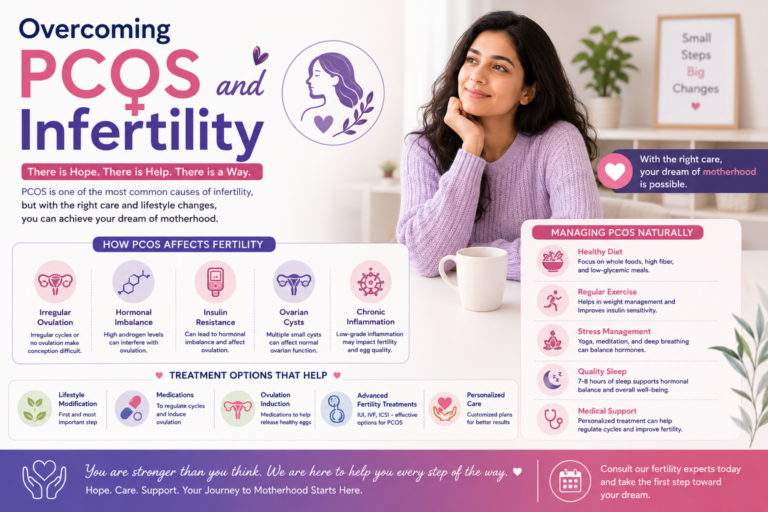
Overcoming PCOS and Infertility: Understanding the Connection and Your Path to Motherhood
Trying to start a family should be a joyful journey, but when month after month ends in disappointment, it can feel incredibly isolating. If you have been diagnosed with Polycystic Ovary Syndrome (PCOS), you might feel like your own body is working against your dreams of motherhood. You are not alone. PCOS infertility is one of the most common causes of female reproductive struggles, affecting millions of women worldwide.
The fear that you might never hold your own baby is overwhelming, but there is immense hope. With the right medical guidance, lifestyle adjustments, and advanced reproductive technologies, the vast majority of women with PCOS go on to have successful, healthy pregnancies.
What is PCOS and How Does it Cause Infertility?
Polycystic Ovary Syndrome (PCOS) causes infertility by disrupting hormonal balance, which prevents regular ovulation. Without the consistent release of a healthy egg, natural conception becomes highly unlikely. However, with targeted lifestyle changes, fertility medications, and advanced assisted reproductive treatments like IVF, most women with PCOS can successfully overcome these barriers and conceive.
The Root of the Problem: Symptoms, Causes, and Risk Factors
To effectively treat PCOS, it is crucial to understand how it impacts your body as a whole. PCOS is an endocrine disorder that creates a domino effect of hormonal imbalances.
Common Symptoms of PCOS
PCOS presents differently in every woman, but common signs include:
- Irregular or absent menstrual periods: A direct sign that ovulation is not occurring normally.
- Excess androgen levels: Leading to unwanted facial or body hair growth (hirsutism) and severe adult acne.
- Weight gain: Particularly around the abdomen, which is often difficult to lose despite diet and exercise.
- Chronic pain: Including severe pelvic cramping, heavy periods, and associated lower back pain during irregular cycles.
- Thinning hair: Hair loss on the scalp that mimics male-pattern baldness.
Causes and Hidden Risk Factors
While the exact cause of PCOS remains unknown, several key factors play a massive role in its development:
- Insulin Resistance: Up to 70% of women with PCOS have insulin resistance, meaning their cells cannot use insulin properly. The body compensates by producing more insulin, which triggers the ovaries to produce excess male hormones (androgens).
- Low-Grade Inflammation: Research shows that women with PCOS often experience chronic, low-grade inflammation, which stimulates polycystic ovaries to produce androgens, further complicating fertility.
- Genetics: If your mother or sister has PCOS, your risk of developing the condition is significantly higher.
- Weight: Being overweight or obese exacerbates insulin resistance and hormonal imbalances, creating a challenging cycle.
How is PCOS Infertility Diagnosed?
Accurate diagnosis is the first step toward building your family. At a specialized fertility clinic, doctors will perform a comprehensive evaluation that typically includes:
- Detailed Medical History: Discussing your menstrual cycles, weight changes, and overall health.
- Pelvic Ultrasound: To check the appearance of your ovaries and the thickness of the uterine lining. Ovaries might appear enlarged and contain numerous small follicles (cysts) surrounding the eggs.
- Blood Tests: To measure hormone levels (including androgens, LH, and FSH), check glucose tolerance, and evaluate cholesterol and triglyceride levels.
Comprehensive Treatment Options for PCOS Infertility
Finding the right treatment requires a personalized approach. What works for one patient may not work for another.
Non-Surgical Treatments and Lifestyle Modifications
Before moving to complex procedures, fertility specialists often recommend conservative approaches:
- Weight Management: Losing just 5% to 10% of your body weight can restore regular menstrual cycles and spontaneous ovulation.
- Dietary Adjustments: A low-glycemic, anti-inflammatory diet helps combat insulin resistance.
- Ovulation Induction Medications: Drugs like Letrozole or Clomiphene Citrate are often the first line of medical treatment to stimulate the ovaries to release an egg.
- Insulin-Sensitizing Drugs: Medications like Metformin can improve insulin resistance, thereby lowering androgen levels and encouraging regular ovulation.
Advanced Fertility Treatments (IUI & IVF)
When lifestyle changes and basic medications are not enough, advanced reproductive technologies offer incredible success rates.
- Intrauterine Insemination (IUI): A procedure where concentrated, healthy sperm is placed directly into the uterus during ovulation.
- In Vitro Fertilization (IVF): For patients who do not respond to ovulation induction, IVF is the gold standard. During IVF, eggs are retrieved from the ovaries, fertilized in a lab, and a healthy embryo is transferred to the uterus. If you are seeking the Best IVF Centre in Hyderabad, it is essential to choose a clinic with a specialized focus on endocrine disorders to prevent complications like Ovarian Hyperstimulation Syndrome (OHSS). Patients traveling from surrounding areas often look for the Best IVF Centre in Kondapur or the Best IVF Centre in Attapur to ensure they receive top-tier, accessible care.
Managing the Physical Toll of PCOS: Why Pain Management Matters
PCOS does not just affect the reproductive system; it impacts the entire body. The hormonal fluctuations, sudden weight gain, and chronic inflammation associated with PCOS can lead to severe musculoskeletal issues.
For instance, the added weight and core weakness can place immense strain on your spine and joints. Many women with PCOS require a multidisciplinary approach to their health. This is why we often work alongside expert pain specialists. Addressing chronic discomfort through proper Back Pain Treatment and targeted Knee Pain Treatment can drastically improve a patient’s ability to exercise, which is crucial for managing PCOS weight gain.
Furthermore, hormonal spikes frequently trigger debilitating headaches that require specialized Migraine Treatment. Poor posture resulting from chronic pelvic pain can even lead to issues requiring Neck Pain Treatment or comprehensive Spine Care. In some severe cases, referred nerve pain from pelvic inflammation mimics symptoms that require Sciatica Treatment. A healthy, pain-free body is much better equipped to handle the physical demands of fertility treatments and pregnancy.
Prevention Tips: Managing PCOS Flare-Ups
While PCOS cannot be entirely cured, its symptoms—and its impact on your fertility—can be heavily managed and prevented from worsening:
- Maintain a consistent exercise routine (aim for 150 minutes of moderate cardio per week).
- Focus on whole foods, lean proteins, and complex carbohydrates.
- Prioritize stress management techniques, such as yoga or meditation, to keep cortisol levels in check.
- Track your menstrual cycles meticulously so you and your doctor can spot irregularities early.
Benefits of Early Treatment
Delaying treatment for PCOS infertility can make the journey to motherhood longer and more difficult. Seeking help early offers significant advantages.
Aspect | Early Intervention | Delayed Intervention |
|---|---|---|
Ovarian Reserve | Higher egg quality and quantity | Potential decline in egg quality over time |
Treatment Complexity | Often resolves with simple medications | May require multiple rounds of IVF |
Associated Health Risks | Lower risk of Type 2 diabetes and hypertension | Increased risk of chronic metabolic conditions |
Emotional Toll | Shorter path to success, less anxiety | Prolonged stress, financial strain, and frustration |
When to See a Doctor
If you have been diagnosed with PCOS and have been trying to conceive for six months without success, you should consult a fertility specialist immediately. Do not wait a full year. Because PCOS inherently means you are not ovulating regularly, you are missing the crucial monthly windows for conception.
Why Choose Sree Swapna Fertility Centre?
At Sree Swapna Fertility Centre, we understand that every fertility journey is deeply personal and emotionally taxing. We do not just treat a diagnosis; we treat you.
Our state-of-the-art facility is equipped with the latest reproductive technology, and our team of compassionate fertility experts is dedicated to creating customized treatment plans that prioritize your physical and emotional well-being. From advanced IVF protocols designed specifically to protect PCOS patients from overstimulation, to a warm, supportive environment, we are committed to turning your dream of parenthood into a reality.
Doctor Consultation: Your Next Step Towards Motherhood
Do not let PCOS dictate your family’s future. Our multidisciplinary team, including renowned fertility experts and affiliated expert pain specialists, is ready to help you regain control of your body and your fertility. We will walk you through every step, from initial diagnosis to the moment you hear your baby’s heartbeat.
Frequently Asked Questions (FAQs)
1. Can I get pregnant naturally if I have PCOS?
Yes, it is possible. Many women with mild PCOS can conceive naturally by adopting a healthy lifestyle, losing weight, and managing their insulin resistance. However, if cycles remain highly irregular, medical intervention is usually required.
2. Are women with PCOS at a higher risk for pregnancy complications?
Unfortunately, yes. Women with PCOS have a slightly higher risk of gestational diabetes, pregnancy-induced hypertension, and premature delivery. This is why early treatment and close monitoring by a specialist are crucial.
3. Does IVF work well for PCOS infertility?
Absolutely. IVF is highly successful for women with PCOS. Because women with PCOS often have a high ovarian reserve (many eggs), they typically respond very well to IVF stimulation, often yielding a good number of embryos.
4. How does weight loss improve PCOS fertility?
Losing just 5-10% of your body weight significantly reduces insulin levels. Lower insulin levels help decrease the production of excess male hormones, allowing the ovaries to resume regular ovulation.
5. What is the success rate of fertility treatments for PCOS at the Best IVF Centre in Hyderabad?
While success rates vary based on age and individual health factors, reputable clinics like Sree Swapna Fertility Centre see excellent success rates for PCOS patients, often exceeding national averages due to customized stimulation protocols and advanced lab technologies.
Conclusion
A PCOS diagnosis is a hurdle, not a roadblock. The connection between PCOS and infertility is complex, but modern medicine has made it highly treatable. By understanding your symptoms, seeking timely medical advice, and exploring the advanced fertility treatments available today, you are taking empowering steps toward the family you deserve. Your journey may look a little different than you originally planned, but the destination—holding your baby—is entirely within reach.
Take the First Step Today
You do not have to navigate the heartbreak of infertility alone. If you are struggling with PCOS and want to explore your options with the Best IVF Centre in Hyderabad, we are here to help.
Book your personalized consultation today and let us help you bring your dream baby home.
Call us for Appointments and Queries: 7670804424
Visit us at: https://sreeswapnaivf.com
