
What Are Uterine Fibroids?
Uterine fibroids are non-cancerous growths arising from the muscle of the uterus. They are common and many cause no fertility problem. The effect on conception depends less on simply having a fibroid and more on where it is located, whether it distorts the uterine cavity, its size and number, and the patient’s symptoms and reproductive history.
Why Location Matters
Submucosal fibroids grow toward or into the uterine cavity and are most clearly associated with disruption of the cavity. Intramural fibroids grow within the muscle wall, while subserosal fibroids project outward. A cavity-distorting lesion is more likely to be relevant to implantation than a small fibroid on the outer uterine surface.

Fibroid location and whether the uterine cavity is distorted matter more than the simple presence of a fibroid.
How Fibroids Are Evaluated in Infertility
Evaluation may include pelvic ultrasound and, when the cavity needs closer assessment, saline sonography or hysteroscopy. The site’s comparison of HSG vs hysteroscopy explains how different tests answer different questions about the tubes and uterine cavity.
Fibroids and Natural Conception
Many people with fibroids conceive naturally. Fertility problems may arise when fibroids distort the cavity, interfere with sperm or embryo transport, or coexist with other factors such as age, tubal disease or male infertility. For couples who have been trying without success, the broader secondary infertility guide explains why a complete evaluation matters rather than attributing every difficulty to one scan finding.
Fibroids and IVF
Before IVF, clinicians consider whether a fibroid could reduce implantation chances or complicate pregnancy. Not every fibroid needs removal before treatment. If the cavity looks abnormal, hysteroscopic assessment may be considered. The IVF treatment beginner’s guide explains the overall treatment pathway, while recurrent implantation failure covers other reasons implantation can remain difficult.
When Fibroid Treatment May Be Discussed
Treatment may be considered for heavy bleeding, pain, pressure symptoms, recurrent pregnancy loss, significant cavity distortion or specific fertility concerns. Options depend on the fibroid type and reproductive goals. Hysteroscopic removal is used for suitable intracavitary lesions, while other surgical approaches may be needed for deeper fibroids.
Fibroids, Miscarriage and Pregnancy
Some fibroids are associated with pregnancy complications, but risk varies by size and location. A history of miscarriage should be assessed broadly rather than assuming a fibroid is the only cause. The clinic’s recurrent miscarriage tests guide outlines the wider evaluation that may be considered.
Questions to Ask Before Surgery
Before surgery, ask whether the fibroid actually distorts the cavity, how strongly it is linked to the current fertility problem, what approach is proposed, how long healing may take, and how surgery could affect a future pregnancy. The decision should balance possible reproductive benefit against surgical risks.
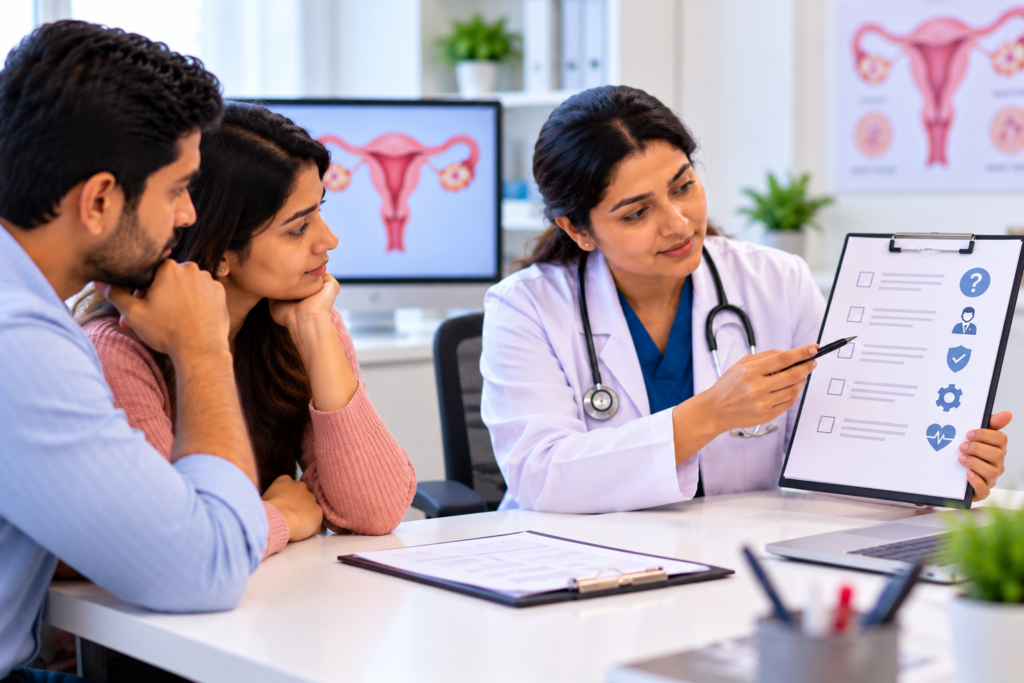
A fertility specialist can assess whether a specific uterine finding is relevant to conception or IVF.
Related Fertility Topics to Understand
This topic is closely connected with several other parts of fertility evaluation and treatment. For a fuller picture, read the HSG vs hysteroscopy, then compare it with the recurrent miscarriage tests. Patients moving toward assisted reproduction may also find the IVF treatment beginner’s guide useful, while the recurrent implantation failure explains another related decision point. If treatment planning is already underway, the secondary infertility causes can help connect this topic with the next stage of care.
Fertility Guidance From Dr. Swapna Naik
At Sree Swapna Fertility Centre, patients can discuss fibroids and fertility in the context of their complete fertility history rather than treating one test or symptom in isolation. Dr. Swapna Naik evaluates factors such as age, ovarian reserve, semen parameters, uterine and tubal health, previous treatment response and reproductive goals before recommending the next step. This individualized approach is especially important in fertility care because the same finding can have different implications for different patients.
Frequently Asked Questions
Can fibroids cause infertility?
Several factors can contribute, and the exact cause may differ from one patient to another. Evaluation usually combines medical history, examination and targeted fertility tests rather than relying on one symptom or one laboratory value.
Which type of fibroid affects fertility most?
The answer depends on the individual fertility history and clinical findings. For fibroids and fertility, decisions are best made after reviewing the relevant tests, symptoms, age and reproductive goals with a fertility specialist.
Do subserosal fibroids affect pregnancy?
Pregnancy and live-birth chances depend on multiple factors, including age, ovarian reserve, sperm factors, embryo quality, uterine health and the underlying diagnosis. No single test, medication or add-on can guarantee success.
Can intramural fibroids reduce IVF success?
Pregnancy and live-birth chances depend on multiple factors, including age, ovarian reserve, sperm factors, embryo quality, uterine health and the underlying diagnosis. No single test, medication or add-on can guarantee success.
Can submucosal fibroids cause implantation failure?
Several factors can contribute, and the exact cause may differ from one patient to another. Evaluation usually combines medical history, examination and targeted fertility tests rather than relying on one symptom or one laboratory value.
How are fibroids diagnosed during fertility evaluation?
The appropriate tests depend on the clinical situation. A fertility evaluation may combine blood tests, ultrasound, semen testing, uterine or tubal assessment, and other investigations when clinically indicated.
Can HSG detect fibroids?
The answer depends on the individual fertility history and clinical findings. For fibroids and fertility, decisions are best made after reviewing the relevant tests, symptoms, age and reproductive goals with a fertility specialist.
When is hysteroscopy used for fibroids?
Timing is individualized and can depend on the menstrual cycle, stimulation response, laboratory results and the treatment protocol. Follow the schedule given by the treating fertility team rather than changing medicines or appointments independently.
Do all fibroids need treatment before IVF?
Treatment should address the underlying cause and may range from monitoring or medicines to fertility procedures such as IUI, IVF or surgery when indicated. The most appropriate option is individualized after evaluation.
Can I get pregnant naturally with fibroids?
Pregnancy and live-birth chances depend on multiple factors, including age, ovarian reserve, sperm factors, embryo quality, uterine health and the underlying diagnosis. No single test, medication or add-on can guarantee success.
Can fibroids cause miscarriage?
Several factors can contribute, and the exact cause may differ from one patient to another. Evaluation usually combines medical history, examination and targeted fertility tests rather than relying on one symptom or one laboratory value.
Can fibroids grow during pregnancy?
Pregnancy and live-birth chances depend on multiple factors, including age, ovarian reserve, sperm factors, embryo quality, uterine health and the underlying diagnosis. No single test, medication or add-on can guarantee success.
Does fibroid size matter for fertility?
The answer depends on the individual fertility history and clinical findings. For fibroids and fertility, decisions are best made after reviewing the relevant tests, symptoms, age and reproductive goals with a fertility specialist.
Can fibroids block fallopian tubes?
The answer depends on the individual fertility history and clinical findings. For fibroids and fertility, decisions are best made after reviewing the relevant tests, symptoms, age and reproductive goals with a fertility specialist.
What is a myomectomy?
Fibroids And Fertility refers to a fertility-related concept that should be interpreted in the context of age, symptoms, test results and the couple’s overall treatment plan. A fertility specialist can explain what it means for an individual case.
How long after fibroid surgery can IVF start?
Timing is individualized and can depend on the menstrual cycle, stimulation response, laboratory results and the treatment protocol. Follow the schedule given by the treating fertility team rather than changing medicines or appointments independently.
Can fibroids come back after surgery?
The answer depends on the individual fertility history and clinical findings. For fibroids and fertility, decisions are best made after reviewing the relevant tests, symptoms, age and reproductive goals with a fertility specialist.
Are medicines useful for fertility-related fibroids?
The answer depends on the individual fertility history and clinical findings. For fibroids and fertility, decisions are best made after reviewing the relevant tests, symptoms, age and reproductive goals with a fertility specialist.
Should fibroids be removed before embryo transfer?
The answer depends on the individual fertility history and clinical findings. For fibroids and fertility, decisions are best made after reviewing the relevant tests, symptoms, age and reproductive goals with a fertility specialist.
When should I see a fertility specialist for fibroids?
Timing is individualized and can depend on the menstrual cycle, stimulation response, laboratory results and the treatment protocol. Follow the schedule given by the treating fertility team rather than changing medicines or appointments independently.
Conclusion
Fibroids should be assessed according to location, cavity distortion, symptoms and fertility history. The most useful question is not simply whether fibroids are present, but whether a specific fibroid is likely to affect conception, implantation or pregnancy enough to justify treatment.
Medical References
• ESHRE: Ovarian Stimulation for IVF/ICSI guideline update (2025)
• American Society for Reproductive Medicine: Practice Guidance
Medical review recommended before publication. Information is educational and does not replace individualized medical advice.
