
What Is the IVF Trigger Shot?
The trigger shot is the medication given near the end of ovarian stimulation to induce final oocyte maturation before egg retrieval. Depending on the protocol, it may use hCG, a GnRH agonist or a combination. The choice is individualized according to ovarian response and OHSS risk.
Why Timing Is Precise
Egg retrieval is scheduled a specific number of hours after the trigger so that oocytes have time to mature while retrieval still occurs before spontaneous ovulation. Because the procedure schedule is built around the injection time, patients should set reminders and follow the clinic’s written instructions carefully.
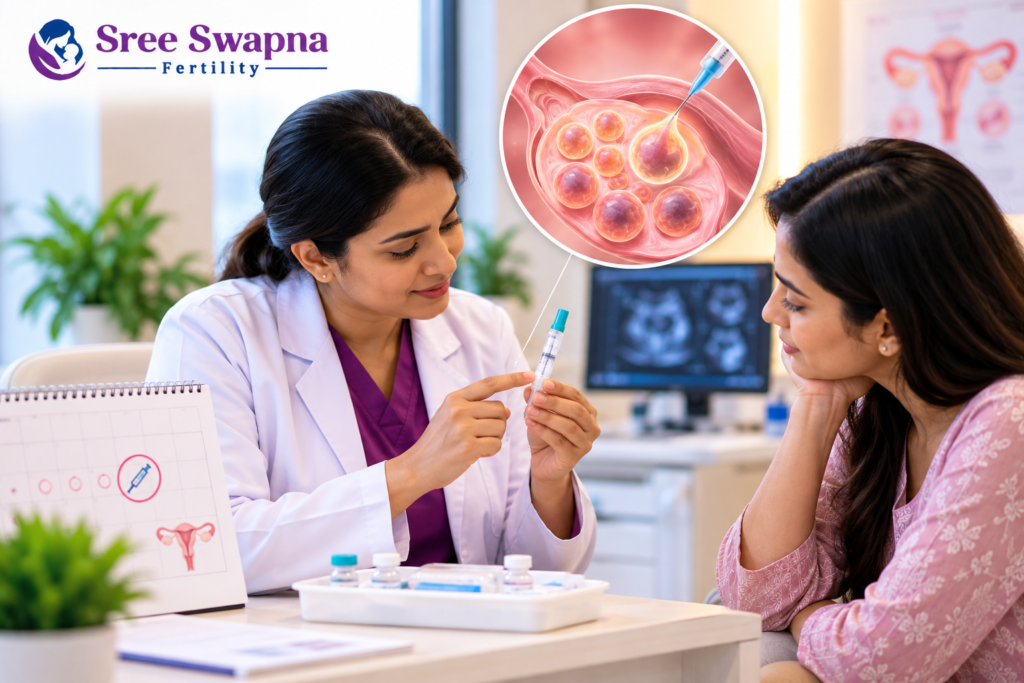
The IVF trigger shot is timed precisely before egg retrieval.
How the Clinic Decides When to Trigger
The decision is based on follicle measurements, hormone results when used, the number of developing follicles and the overall treatment plan. Trigger timing is therefore not based on a calendar date chosen in advance; it is determined after monitoring.
hCG Trigger vs GnRH Agonist Trigger
hCG has long been used for final maturation. In suitable antagonist protocols, a GnRH agonist trigger may be chosen when OHSS risk is a concern. ASRM guidance supports GnRH agonist trigger as an important strategy to reduce moderate-to-severe OHSS risk in appropriate patients.
What Happens After the Trigger
After the injection, patients follow the clinic’s fasting, medication and arrival instructions for egg retrieval. The broader IVF process guide explains how retrieval fits into stimulation, fertilization, embryo culture and transfer.
What If the Trigger Is Taken Late or Missed?
Contact the clinic immediately. Do not guess a new injection time or take an extra dose without instructions. Even a timing error can affect the retrieval plan, and the team may need to adjust the procedure time or provide specific guidance.
Trigger Shot and OHSS
Trigger choice is especially important when many follicles have developed. Patients with symptoms after retrieval should know the warning signs described in the related OHSS symptoms after egg retrieval guide.
Trigger Timing and Egg Maturity
The trigger supports final maturation, but egg maturity is also influenced by follicle development and individual response. A perfectly timed trigger cannot guarantee that every retrieved egg will be mature or fertilize, which is why IVF outcomes are assessed across the full cycle rather than one step.
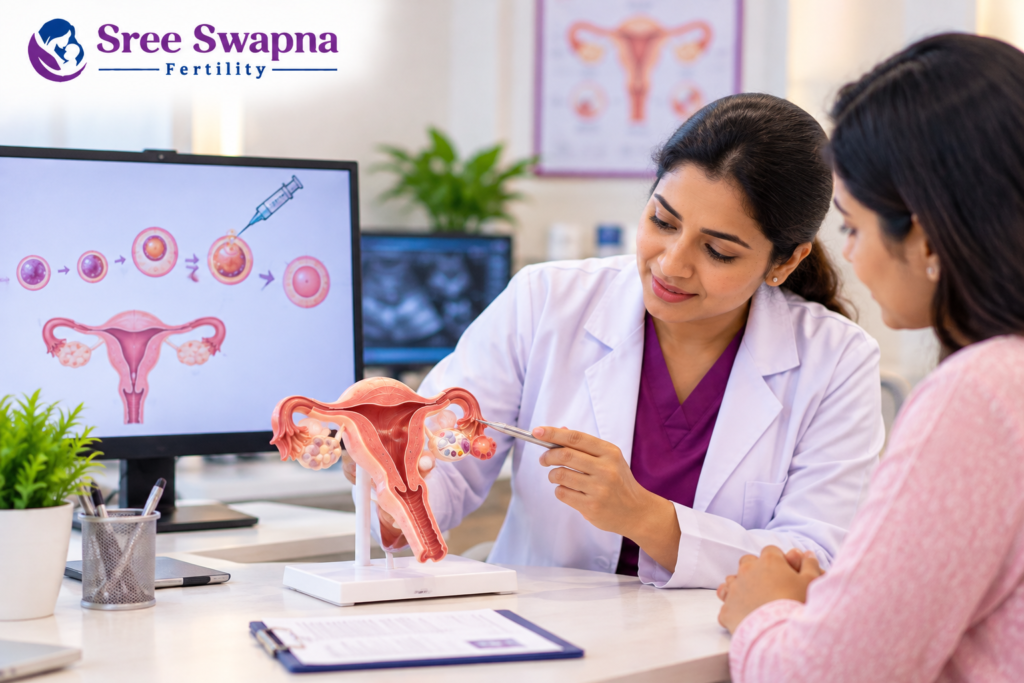
Trigger timing is coordinated with the laboratory and egg-retrieval schedule.
Related Fertility Topics to Understand
This topic is closely connected with several other parts of fertility evaluation and treatment. For a fuller picture, read the complete IVF process, then compare it with the IVF failure reasons. Patients moving toward assisted reproduction may also find the low AMH vs egg quality useful, while the DuoStim IVF guide explains another related decision point. If treatment planning is already underway, the IVF success rate can help connect this topic with the next stage of care.
Fertility Guidance From Dr. Swapna Naik
At Sree Swapna Fertility Centre, patients can discuss IVF trigger shot timing in the context of their complete fertility history rather than treating one test or symptom in isolation. Dr. Swapna Naik evaluates factors such as age, ovarian reserve, semen parameters, uterine and tubal health, previous treatment response and reproductive goals before recommending the next step. This individualized approach is especially important in fertility care because the same finding can have different implications for different patients.
Frequently Asked Questions
What is an IVF trigger shot?
Ivf Trigger Shot Timing refers to a fertility-related concept that should be interpreted in the context of age, symptoms, test results and the couple’s overall treatment plan. A fertility specialist can explain what it means for an individual case.
Why is a trigger shot used before egg retrieval?
Several factors can contribute, and the exact cause may differ from one patient to another. Evaluation usually combines medical history, examination and targeted fertility tests rather than relying on one symptom or one laboratory value.
When is the trigger shot given?
Timing is individualized and can depend on the menstrual cycle, stimulation response, laboratory results and the treatment protocol. Follow the schedule given by the treating fertility team rather than changing medicines or appointments independently.
How many hours after the trigger is egg retrieval?
The answer depends on the individual fertility history and clinical findings. For IVF trigger shot timing, decisions are best made after reviewing the relevant tests, symptoms, age and reproductive goals with a fertility specialist.
Why must the trigger time be exact?
Several factors can contribute, and the exact cause may differ from one patient to another. Evaluation usually combines medical history, examination and targeted fertility tests rather than relying on one symptom or one laboratory value.
What is an hCG trigger?
Ivf Trigger Shot Timing refers to a fertility-related concept that should be interpreted in the context of age, symptoms, test results and the couple’s overall treatment plan. A fertility specialist can explain what it means for an individual case.
What is a GnRH agonist trigger?
Ivf Trigger Shot Timing refers to a fertility-related concept that should be interpreted in the context of age, symptoms, test results and the couple’s overall treatment plan. A fertility specialist can explain what it means for an individual case.
What is a dual trigger?
Ivf Trigger Shot Timing refers to a fertility-related concept that should be interpreted in the context of age, symptoms, test results and the couple’s overall treatment plan. A fertility specialist can explain what it means for an individual case.
How does the clinic decide the trigger day?
The answer depends on the individual fertility history and clinical findings. For IVF trigger shot timing, decisions are best made after reviewing the relevant tests, symptoms, age and reproductive goals with a fertility specialist.
Does follicle size determine trigger timing?
Timing is individualized and can depend on the menstrual cycle, stimulation response, laboratory results and the treatment protocol. Follow the schedule given by the treating fertility team rather than changing medicines or appointments independently.
What happens if I take the trigger shot late?
The answer depends on the individual fertility history and clinical findings. For IVF trigger shot timing, decisions are best made after reviewing the relevant tests, symptoms, age and reproductive goals with a fertility specialist.
What happens if I miss the trigger shot?
The answer depends on the individual fertility history and clinical findings. For IVF trigger shot timing, decisions are best made after reviewing the relevant tests, symptoms, age and reproductive goals with a fertility specialist.
Can I repeat the trigger injection if I am unsure?
The answer depends on the individual fertility history and clinical findings. For IVF trigger shot timing, decisions are best made after reviewing the relevant tests, symptoms, age and reproductive goals with a fertility specialist.
Does the trigger shot cause ovulation?
Several factors can contribute, and the exact cause may differ from one patient to another. Evaluation usually combines medical history, examination and targeted fertility tests rather than relying on one symptom or one laboratory value.
Can a trigger shot cause OHSS?
Several factors can contribute, and the exact cause may differ from one patient to another. Evaluation usually combines medical history, examination and targeted fertility tests rather than relying on one symptom or one laboratory value.
Which trigger is used when OHSS risk is high?
Safety depends on the procedure, medical history and treatment protocol. Patients should discuss expected side effects, uncommon complications and warning symptoms with their fertility specialist before starting treatment.
Can the trigger shot cause a false-positive pregnancy test?
Several factors can contribute, and the exact cause may differ from one patient to another. Evaluation usually combines medical history, examination and targeted fertility tests rather than relying on one symptom or one laboratory value.
What should I do after the trigger shot?
The answer depends on the individual fertility history and clinical findings. For IVF trigger shot timing, decisions are best made after reviewing the relevant tests, symptoms, age and reproductive goals with a fertility specialist.
Can egg retrieval be cancelled after a trigger?
The answer depends on the individual fertility history and clinical findings. For IVF trigger shot timing, decisions are best made after reviewing the relevant tests, symptoms, age and reproductive goals with a fertility specialist.
Does the trigger shot guarantee mature eggs?
The answer depends on the individual fertility history and clinical findings. For IVF trigger shot timing, decisions are best made after reviewing the relevant tests, symptoms, age and reproductive goals with a fertility specialist.
Conclusion
The trigger shot is a small step with major timing importance. Following the exact injection time and contacting the clinic immediately after any dosing error helps the fertility team coordinate final maturation and egg retrieval safely.
Medical References
• ESHRE: Ovarian Stimulation for IVF/ICSI guideline update (2025)
• American Society for Reproductive Medicine: Practice Guidance
Medical review recommended before publication. Information is educational and does not replace individualized medical advice.
