
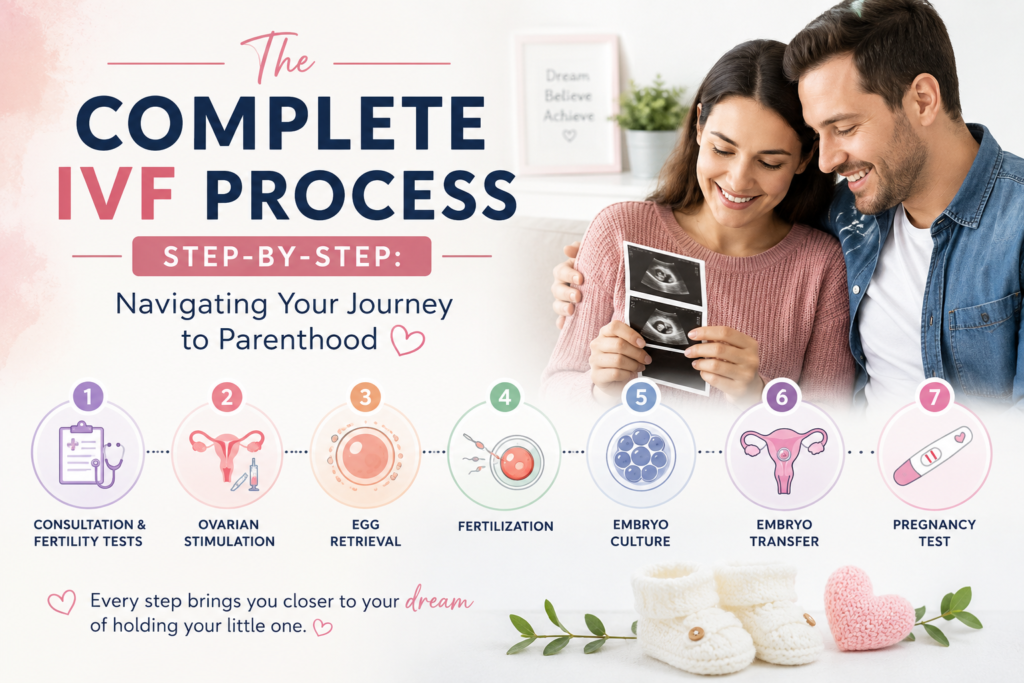
The Complete IVF Process Step-by-Step: Navigating Your Journey to Parenthood
Staring at another negative pregnancy test can feel incredibly lonely. Month after month, the emotional toll of infertility grows, leaving you exhausted and searching for answers. If you are experiencing this, please know that you are not alone, and science offers powerful solutions to help you build the family you dream of.
Today, advancements in reproductive medicine have made it highly possible to overcome fertility hurdles. Whether you are dealing with unexplained infertility or diagnosed reproductive issues, understanding the IVF process is the first step toward taking back control of your family planning journey.
This comprehensive guide will walk you through exactly what to expect—from your very first fertility evaluation all the way to a successful embryo transfer.
Featured Snippet Answer: What is the IVF process?
The IVF process (In Vitro Fertilization) is a series of medical steps where mature eggs are retrieved from a woman’s ovaries and fertilized with sperm in a laboratory. The resulting healthy embryos are then carefully transferred into the uterus to establish a successful pregnancy.
Recognizing the Signs: Symptoms That May Lead to IVF
While infertility itself is often a silent condition, there are certain symptoms and medical histories that frequently indicate the need for assisted reproductive technology.
- Inability to Conceive: Trying for over 12 months (or 6 months if you are over 35) without success.
- Irregular Menstrual Cycles: Unpredictable, exceptionally heavy, or absent periods.
- Severe Pelvic Pain: Often a sign of endometriosis, which can severely impact egg quality and uterine health.
- Hormonal Imbalances: Symptoms like unexplained weight gain, severe acne, or thinning hair.
Understanding the Causes of Infertility
Infertility is a shared challenge and can stem from various factors in either or both partners. Common causes that require the IVF process include:
- Tubal Factor Infertility: Blocked or damaged fallopian tubes that prevent the egg and sperm from meeting.
- Ovulation Disorders: Conditions like Polycystic Ovary Syndrome (PCOS) that disrupt the release of mature eggs.
- Endometriosis: Uterine tissue growing outside the uterus, affecting the function of the ovaries and fallopian tubes.
- Male Factor Infertility: Low sperm count, poor sperm motility (movement), or abnormal sperm morphology (shape).
- Unexplained Infertility: Cases where standard testing finds no definitive cause, but conception still does not occur naturally.
Common Risk Factors
Certain lifestyle and biological factors can increase the likelihood of facing fertility challenges. These risk factors include:
- Maternal Age: Egg quantity and quality decline significantly after age 35.
- Weight Extremes: Being significantly underweight or overweight alters hormone production.
- Substance Use: Tobacco and excessive alcohol consumption damage both egg and sperm DNA.
- Stress: High levels of chronic stress can disrupt ovulation cycles.
Accurate Diagnosis and Fertility Evaluation
Before beginning the actual treatment, a thorough medical investigation is crucial. A tailored fertility evaluation ensures that your treatment protocol is customized to your unique biology.
- Ovarian Reserve Testing: Blood tests to measure AMH (Anti-Mullerian Hormone) to evaluate egg quantity.
- Semen Analysis: Checking the health, count, and speed of the male partner’s sperm.
- Infectious Disease Screening: Ensuring both partners are healthy.
- Uterine Evaluation: Ultrasounds or hysteroscopy to examine the inside of the uterus for polyps, fibroids, or structural issues.
The IVF Process — Treatment Options and Steps
Once your evaluation is complete, the active IVF process begins. Here is what the typical timeline looks like:
IVF Step | Description | Estimated Timeline |
|---|---|---|
1. Ovarian Stimulation | Injectable fertility medications are used to stimulate the ovaries to produce multiple eggs instead of just one. | 8 to 14 days |
2. Egg Retrieval | A minor, minimally invasive surgical procedure under light sedation to gently extract the mature eggs. | 15 to 30 minutes |
3. Sperm Collection | A semen sample is collected and professionally washed to isolate the healthiest, most active sperm. | Same day as retrieval |
4. Fertilization | Eggs and sperm are combined in a lab. For severe male infertility, ICSI (injecting a single sperm into an egg) is utilized. | 3 to 5 days of growth |
5. Embryo Transfer | The best quality embryo is painlessly transferred into the mother’s uterus using a thin catheter. | 10 minutes |
Non-Surgical and Alternative Treatments
IVF is highly effective, but it isn’t the only answer. Depending on your diagnosis, we may explore simpler interventions first:
- Ovulation Induction (OI): Using oral or injectable medications to help you ovulate regularly.
- Intrauterine Insemination (IUI): Placing concentrated, washed sperm directly into the uterus during ovulation.
- Lifestyle Modification: Guided nutritional counseling and weight management to naturally restore fertility.
Prevention Tips: Protecting Your Fertility
While you cannot reverse age, you can protect your reproductive health proactively:
- Maintain a balanced, nutrient-rich diet.
- Engage in moderate, regular exercise (avoiding extreme strain).
- Limit caffeine and alcohol intake.
- Seek early medical intervention if you suspect issues like PCOS or endometriosis.
When to See a Doctor
Time is of the essence in reproductive medicine. You should schedule a consultation if:
- You are under 35 and have been trying to conceive for a year.
- You are over 35 and have been trying for six months.
- You have a known history of pelvic issues, multiple miscarriages, or irregular periods.
The Life-Changing Benefits of Early Treatment
Taking that first step is daunting, but acting early drastically improves outcomes. The benefits of starting your fertility evaluation promptly include:
- Higher Success Rates: Younger eggs generally yield higher quality embryos.
- More Treatment Options: Early diagnosis often means less invasive treatments (like IUI) might still be viable.
- Peace of Mind: Eliminating the “what ifs” and gaining a clear, scientific roadmap reduces immense psychological stress.
Why Choose Sree Swapna Fertility Centre?
When embarking on a deeply personal journey like IVF, you need more than just a hospital; you need a supportive family. Sree Swapna Fertility Centre is proud to be recognized as the Best IVF Centre in Hyderabad, offering world-class embryology labs and deeply compassionate care.
Whether you are seeking the Best IVF Centre in Kondapur for convenient access or looking for the Best IVF Centre in Attapur, our clinical excellence remains standardized across all our touchpoints. We combine cutting-edge technology with evidence-based protocols to ensure your highest chances of a healthy baby.
Comprehensive Care & Doctor Consultation
Your comfort and health are our ultimate priorities. Our team includes award-winning reproductive endocrinologists and dedicated support staff.
Furthermore, we understand that pregnancy—and the journey to it—can take a physical toll on your body. Because we believe in holistic patient care, we also partner with expert pain specialists to help manage any underlying chronic discomfort, ensuring your body is as healthy and comfortable as possible before, during, and after pregnancy.
Don’t let another month pass in uncertainty. Speak to our specialists today and let us map out your custom path to parenthood.
FAQ Section
Frequently Asked Questions
1. Is the IVF process painful?
Most patients experience very little pain. The daily injections use very fine needles, and the egg retrieval process is performed under light sedation, meaning you will sleep comfortably through it. Some mild cramping afterward is normal.
2. How long does one full IVF cycle take?
A typical IVF cycle takes about three to four weeks from the start of ovarian stimulation to the embryo transfer. However, this can vary slightly based on how your body responds to the medications.
3. Can I choose the gender of my baby during IVF?
In India, prenatal sex determination is strictly prohibited under the PC-PNDT Act. Therefore, gender selection is not legally permitted or practiced during IVF treatments.
4. What is the success rate of IVF on the first try?
Success rates vary largely based on maternal age and the specific cause of infertility. Generally, women under 35 have a higher success rate per cycle. Your doctor will give you a personalized estimate after your initial evaluation.
5. Are there any side effects from IVF medications?
Some women experience mild side effects from hormonal medications, including bloating, breast tenderness, mood swings, or mild headaches. Severe complications are rare, as your clinic will monitor you closely throughout the cycle.
Conclusion
The journey through infertility is undoubtedly challenging, but the IVF process has successfully brought millions of beautiful babies into the world. By understanding the steps involved, recognizing your options, and partnering with an expert medical team, you are empowering yourself. At Sree Swapna Fertility Centre, we are dedicated to holding your hand through every injection, every ultrasound, and every anxious waiting period until you finally meet your baby.
Ready to start your family?
Take the first step toward parenthood with a team that truly cares. Book a comprehensive fertility evaluation with our experts today.
📞 Call us for Appointments and Queries: 7670804424
🌐 Visit us: https://sreeswapnaivf.com
