
Why the Thyroid Matters in Reproductive Health
Thyroid hormones influence metabolism and interact with reproductive hormones. Significant thyroid dysfunction can affect menstrual regularity, ovulation and pregnancy health. Because symptoms such as fatigue, weight change or irregular cycles are non-specific, blood testing is usually needed to understand thyroid status.
TSH, Free T4 and Thyroid Antibodies
TSH is commonly used as an initial thyroid test, often alongside free T4 when indicated. Thyroid antibodies may be checked in selected situations. The interpretation should consider the laboratory range, symptoms, pregnancy status, medical history and current thyroid medication rather than relying on a single online target.
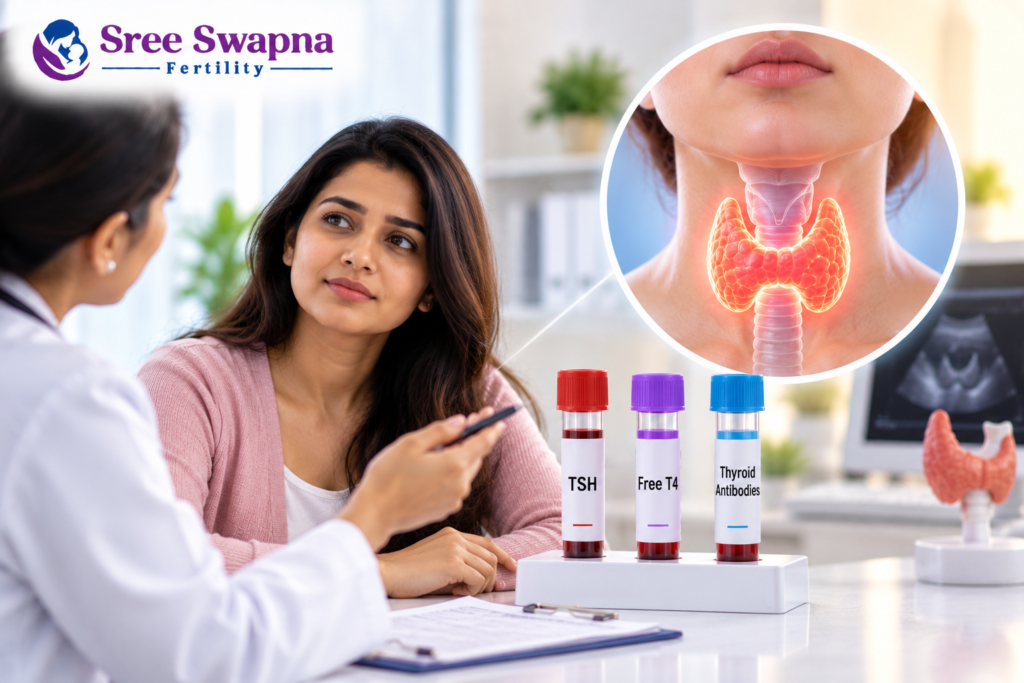
Thyroid function can interact with menstrual and reproductive health.
Hypothyroidism and Fertility
Untreated overt hypothyroidism can disrupt ovulation and menstrual cycles and should be medically managed. Mild or subclinical abnormalities require more individualized interpretation. A fertility evaluation should still look for other factors rather than assuming thyroid function explains every delay in conception.
Hyperthyroidism and Fertility
Overactive thyroid disease can also affect cycles and pregnancy health. Patients with known hyperthyroidism should coordinate care with their physician or endocrinologist when planning pregnancy because medication choices and monitoring can change before and during pregnancy.
Thyroid Testing During Fertility Evaluation
Thyroid testing may be part of an infertility work-up, especially when cycles are irregular, symptoms are present, there is a previous thyroid diagnosis or pregnancy is planned. Broader investigations are described on the clinic’s fertility investigation page.
Thyroid Function and PCOS
PCOS and thyroid disorders can coexist, but they are separate conditions. Irregular cycles should be evaluated carefully so that ovulatory dysfunction is not automatically attributed to one diagnosis. The site’s PCOS treatment guide explains the fertility implications of PCOS.
Thyroid and IVF
Before IVF, the fertility team may review thyroid status because untreated thyroid disease can complicate pregnancy. Thyroid treatment does not replace the rest of the IVF evaluation. Patients can review the IVF process to understand how medical testing fits into treatment planning.
Thyroid Health After a Positive Pregnancy Test
Patients taking thyroid medication may need follow-up once pregnancy is confirmed because hormone requirements can change. Medication should not be stopped or adjusted without medical advice. Early communication between fertility, obstetric and endocrine teams can help maintain appropriate monitoring.
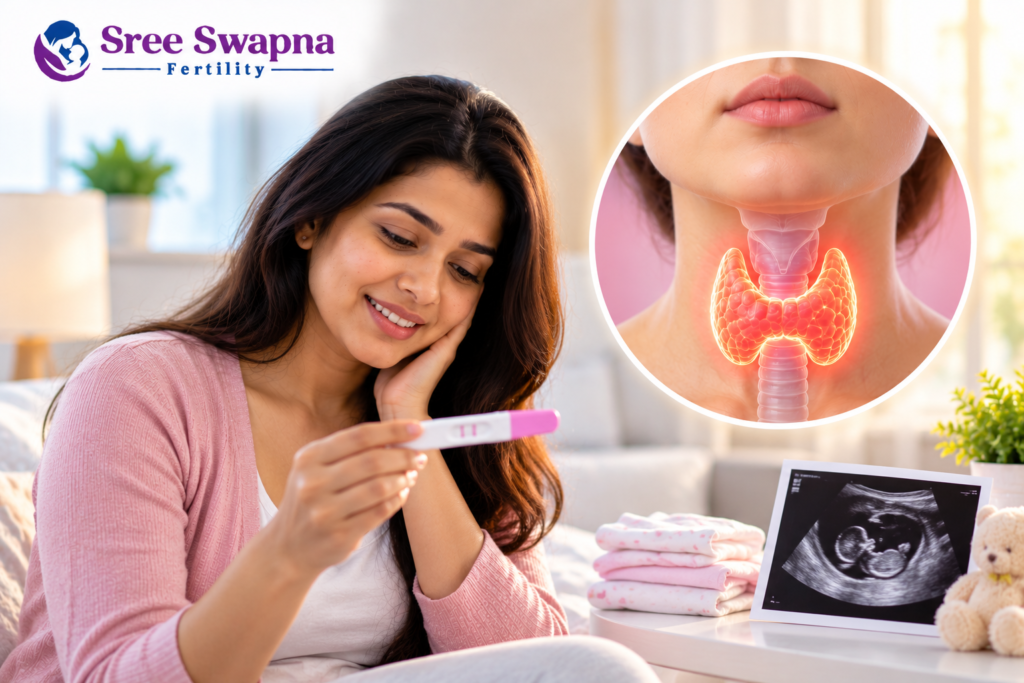
Fertility treatment planning considers thyroid health alongside the rest of the fertility evaluation.
Related Fertility Topics to Understand
This topic is closely connected with several other parts of fertility evaluation and treatment. For a fuller picture, read the PCOS treatment guide, then compare it with the fertility investigations. Patients moving toward assisted reproduction may also find the complete IVF process useful, while the secondary infertility causes explains another related decision point. If treatment planning is already underway, the recurrent miscarriage tests can help connect this topic with the next stage of care.
Fertility Guidance From Dr. Swapna Naik
At Sree Swapna Fertility Centre, patients can discuss thyroid and fertility in the context of their complete fertility history rather than treating one test or symptom in isolation. Dr. Swapna Naik evaluates factors such as age, ovarian reserve, semen parameters, uterine and tubal health, previous treatment response and reproductive goals before recommending the next step. This individualized approach is especially important in fertility care because the same finding can have different implications for different patients.
Frequently Asked Questions
Can thyroid problems cause infertility?
Several factors can contribute, and the exact cause may differ from one patient to another. Evaluation usually combines medical history, examination and targeted fertility tests rather than relying on one symptom or one laboratory value.
Can high TSH affect ovulation?
The answer depends on the individual fertility history and clinical findings. For thyroid and fertility, decisions are best made after reviewing the relevant tests, symptoms, age and reproductive goals with a fertility specialist.
Can low TSH affect fertility?
The answer depends on the individual fertility history and clinical findings. For thyroid and fertility, decisions are best made after reviewing the relevant tests, symptoms, age and reproductive goals with a fertility specialist.
What thyroid tests are used during fertility evaluation?
The appropriate tests depend on the clinical situation. A fertility evaluation may combine blood tests, ultrasound, semen testing, uterine or tubal assessment, and other investigations when clinically indicated.
What is TSH?
Thyroid And Fertility refers to a fertility-related concept that should be interpreted in the context of age, symptoms, test results and the couple’s overall treatment plan. A fertility specialist can explain what it means for an individual case.
What is free T4?
Thyroid And Fertility refers to a fertility-related concept that should be interpreted in the context of age, symptoms, test results and the couple’s overall treatment plan. A fertility specialist can explain what it means for an individual case.
Are thyroid antibodies important for fertility?
The answer depends on the individual fertility history and clinical findings. For thyroid and fertility, decisions are best made after reviewing the relevant tests, symptoms, age and reproductive goals with a fertility specialist.
Can hypothyroidism cause irregular periods?
Several factors can contribute, and the exact cause may differ from one patient to another. Evaluation usually combines medical history, examination and targeted fertility tests rather than relying on one symptom or one laboratory value.
Can hyperthyroidism affect pregnancy?
Pregnancy and live-birth chances depend on multiple factors, including age, ovarian reserve, sperm factors, embryo quality, uterine health and the underlying diagnosis. No single test, medication or add-on can guarantee success.
Can I get pregnant with hypothyroidism?
Pregnancy and live-birth chances depend on multiple factors, including age, ovarian reserve, sperm factors, embryo quality, uterine health and the underlying diagnosis. No single test, medication or add-on can guarantee success.
Can thyroid treatment improve fertility?
Treatment should address the underlying cause and may range from monitoring or medicines to fertility procedures such as IUI, IVF or surgery when indicated. The most appropriate option is individualized after evaluation.
What TSH level is best before pregnancy?
There is no single number that is ideal for everyone. Reference ranges vary by laboratory, age, treatment stage and clinical context, so results should be interpreted alongside ultrasound findings and other fertility tests.
Is thyroid testing required before IVF?
The appropriate tests depend on the clinical situation. A fertility evaluation may combine blood tests, ultrasound, semen testing, uterine or tubal assessment, and other investigations when clinically indicated.
Can thyroid problems cause IVF failure?
Several factors can contribute, and the exact cause may differ from one patient to another. Evaluation usually combines medical history, examination and targeted fertility tests rather than relying on one symptom or one laboratory value.
Does PCOS cause thyroid problems?
Several factors can contribute, and the exact cause may differ from one patient to another. Evaluation usually combines medical history, examination and targeted fertility tests rather than relying on one symptom or one laboratory value.
Can thyroid disease cause miscarriage?
Several factors can contribute, and the exact cause may differ from one patient to another. Evaluation usually combines medical history, examination and targeted fertility tests rather than relying on one symptom or one laboratory value.
Should thyroid medicine be continued during pregnancy?
Pregnancy and live-birth chances depend on multiple factors, including age, ovarian reserve, sperm factors, embryo quality, uterine health and the underlying diagnosis. No single test, medication or add-on can guarantee success.
Can thyroid levels change during pregnancy?
There is no single number that is ideal for everyone. Reference ranges vary by laboratory, age, treatment stage and clinical context, so results should be interpreted alongside ultrasound findings and other fertility tests.
When should TSH be rechecked?
Timing is individualized and can depend on the menstrual cycle, stimulation response, laboratory results and the treatment protocol. Follow the schedule given by the treating fertility team rather than changing medicines or appointments independently.
Should I see an endocrinologist before fertility treatment?
Treatment should address the underlying cause and may range from monitoring or medicines to fertility procedures such as IUI, IVF or surgery when indicated. The most appropriate option is individualized after evaluation.
Conclusion
Thyroid health matters in fertility and pregnancy, but a TSH value should be interpreted in clinical context. Identifying and treating significant thyroid disease is important while still completing a broader fertility assessment when conception is delayed.
Medical References
• ESHRE: Ovarian Stimulation for IVF/ICSI guideline update (2025)
• American Society for Reproductive Medicine: Practice Guidance
Medical review recommended before publication. Information is educational and does not replace individualized medical advice.
