
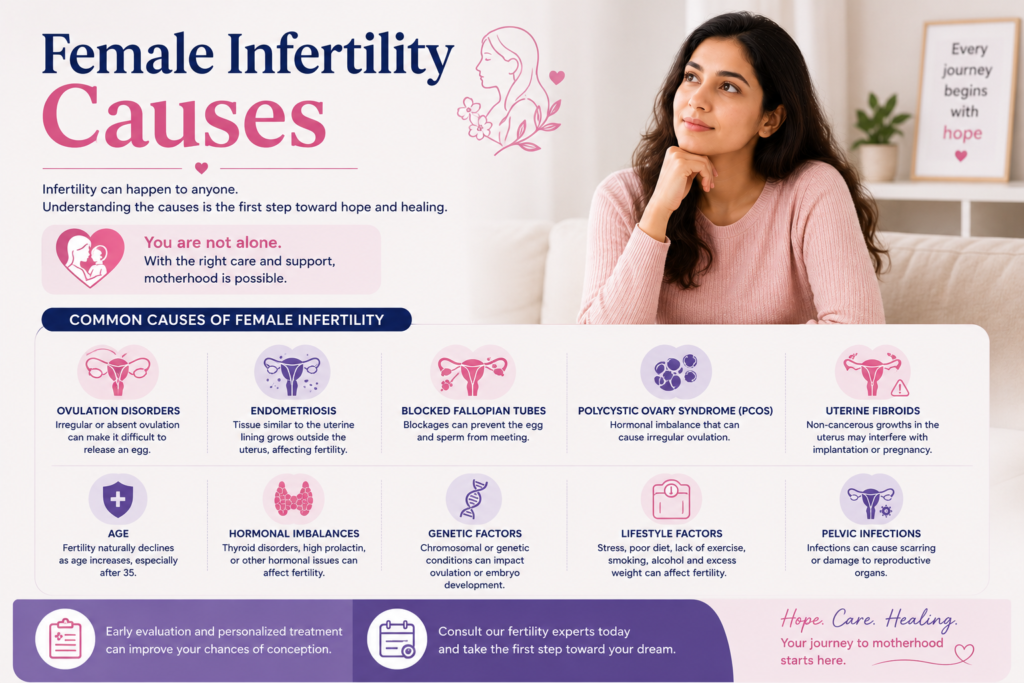
Understanding Female Infertility Causes: Common Factors Affecting Pregnancy
Trying for a baby is one of the most beautiful dreams for any couple. However, when months turn into years without a positive pregnancy test, it can quickly become an emotionally overwhelming journey. If you are struggling to conceive, please know that you are not alone. Millions of women face reproductive challenges, and understanding the root of the problem is the very first step toward a solution. In this comprehensive guide, we will explore the most common female infertility causes, the early warning signs you shouldn’t ignore, and the advanced treatments available to help you finally hold your little one.
What are the main causes of female infertility?
Female infertility causes primarily include ovulation disorders like PCOS, blocked or damaged fallopian tubes, endometriosis, and age-related decline in egg quality. Additionally, hormonal imbalances and structural issues in the uterus can prevent successful conception. Identifying these underlying factors early is essential for effective fertility treatment and achieving pregnancy.
What Are the Early Symptoms of Female Infertility?
Often, the only glaring symptom of infertility is the inability to get pregnant after one year of regular, unprotected intercourse (or six months if you are over 35). However, your body may send subtle warning signs that indicate an underlying issue:
- Irregular or Absent Periods: Menstrual cycles that are too long (35+ days), too short (less than 21 days), or completely absent suggest that you may not be ovulating regularly.
- Severe Pelvic and Back Pain: Extremely painful periods, heavy bleeding, and chronic lower back pain can be signs of endometriosis or uterine fibroids.
- Hormonal Fluctuations: Unexplained weight gain, severe acne, thinning hair, or excess facial hair often point to Polycystic Ovary Syndrome (PCOS).
- Pain During Intercourse: This can be a symptom of underlying infections or endometriosis.
The Most Common Female Infertility Causes Explained
Conception is a complex process. For a healthy pregnancy to occur, your ovaries must release an egg, the egg must travel down a healthy fallopian tube, be fertilized by sperm, and finally implant itself securely in the uterus. If there is a disruption at any of these stages, infertility can result.
Here are the primary female infertility causes you should know about:
Ovulation Disorders
Ovulation disorders account for a significant percentage of female infertility cases. If you do not ovulate, there is no egg available for fertilization. The most common culprit is Polycystic Ovary Syndrome (PCOS), a hormonal imbalance that disrupts normal ovulation. Other factors include premature ovarian failure (POI) and thyroid gland issues (both overactive and underactive thyroids).
Fallopian Tube Damage (Tubal Infertility)
The fallopian tubes are the pathways that carry the egg from the ovary to the uterus. If they are blocked or damaged, sperm cannot reach the egg. Tubal damage is frequently caused by Pelvic Inflammatory Disease (PID), previous abdominal surgeries, or untreated sexually transmitted infections (STIs).
Endometriosis and Pelvic Pain
Endometriosis occurs when tissue similar to the lining of the uterus grows outside of it. This rogue tissue can block fallopian tubes, damage ovaries, and create an inflammatory environment that makes implantation difficult. Furthermore, endometriosis is a leading cause of severe pelvic and lower back pain, often requiring intervention from both fertility and expert pain specialists to manage the patient’s quality of life.
Uterine or Cervical Causes
Structural abnormalities can interfere with the implantation of a fertilized egg. Benign polyps or fibroids in the uterus are common and can block the fallopian tubes or disrupt the uterine cavity. Additionally, cervical mucus issues can prevent sperm from effectively traveling through the cervix to reach the egg.
Key Risk Factors You Should Know
While some causes of infertility are genetic or structural, several lifestyle factors and external risks can impact your reproductive health:
- Age: A woman’s fertility naturally begins to decline in her early 30s, with a sharper drop after age 37 due to a decrease in egg quantity and quality.
- Weight: Being significantly overweight or underweight can disrupt hormone production and inhibit normal ovulation.
- Smoking and Alcohol: Tobacco use damages your cervix and fallopian tubes, while excessive alcohol consumption is linked to an increased risk of ovulation disorders.
- High Stress Levels: Chronic stress can interfere with the hormones responsible for triggering ovulation.
Diagnosis: How Do We Identify the Issue?
If you suspect you are dealing with infertility, a thorough medical evaluation is vital. At our clinic, we utilize advanced diagnostic tools to pinpoint the exact issue.
Diagnostic Test | What It Checks |
|---|---|
Blood Tests | Hormone levels, thyroid function, and ovulation confirmation (e.g., AMH, FSH, Progesterone). |
Pelvic Ultrasound | Examines the uterus and ovaries for structural issues like cysts or fibroids. |
Hysterosalpingography (HSG) | An X-ray procedure to check for blockages in the fallopian tubes. |
Laparoscopy | A minimally invasive surgery to identify endometriosis, scarring, or pelvic organ damage. |
Effective Treatment Options for Female Infertility
The right treatment depends on the specific cause of your infertility, your age, and your personal preferences. Thanks to modern medical advancements, the majority of couples can eventually go on to have a healthy baby.
Non-Surgical Treatments & Medications
If your infertility is caused by ovulation issues, non-surgical treatments are usually the first step. Fertility drugs, such as Clomiphene citrate or Letrozole, are highly effective at stimulating the ovaries to release eggs. Additionally, lifestyle modifications—such as weight management, nutritional counseling, and stress reduction—can naturally restore ovulation in some women.
Advanced Fertility Treatments (IVF & IUI)
When medications alone aren’t enough, Assisted Reproductive Technology (ART) offers incredible success rates:
- Intrauterine Insemination (IUI): Healthy sperm is collected, washed, and placed directly into the uterus around the time of ovulation.
- In Vitro Fertilization (IVF): Eggs are retrieved from the ovaries, fertilized with sperm in a specialized lab, and the resulting healthy embryo is transferred directly into the uterus.
Prevention Tips for a Healthy Reproductive System
While you cannot prevent age-related decline or genetic conditions, you can adopt healthy habits to protect your fertility:
- Maintain a healthy Body Mass Index (BMI).
- Quit smoking and limit caffeine and alcohol intake.
- Manage chronic conditions like diabetes or thyroid disorders.
- Practice safe sex to prevent STIs that can cause pelvic inflammatory disease.
- Manage stress through yoga, meditation, or counseling.
When Is It Time to See a Doctor?
Timing is critical when it comes to fertility. You should schedule a consultation if:
- You are under 35 and have been trying to conceive for 12 months.
- You are 35 or older and have been trying for 6 months.
- You are over 40 (seek immediate consultation).
- You have a history of irregular periods, severe pelvic pain, endometriosis, or multiple miscarriages.
The Benefits of Early Treatment
Ignoring the early signs of infertility will not make the problem disappear. Seeking early treatment offers several distinct advantages. First, it significantly increases your chances of a successful pregnancy, as egg quality and quantity are preserved. Second, early diagnosis can help manage underlying conditions like endometriosis before they cause irreversible damage or debilitating chronic pain. Finally, getting a clear diagnosis provides peace of mind and reduces the intense emotional anxiety associated with the unknown.
Why Choose Sree Swapna Fertility Centre?
Overcoming infertility requires a compassionate team, state-of-the-art technology, and a customized treatment plan. Sree Swapna Fertility Centre is proudly recognized as the Best IVF Centre in Hyderabad, offering world-class reproductive care tailored to your unique needs.
We understand that convenience and accessibility matter. That is why our highly successful treatment protocols are also available at our specialized branches, operating as the Best IVF Centre in Kondapur and the Best IVF Centre in Attapur. From advanced diagnostics to compassionate emotional support, our singular goal is to help you build the family of your dreams.
Consult Our Expert Fertility & Pain Specialists
Fertility struggles are frequently accompanied by physical discomfort, especially if conditions like endometriosis or fibroids are causing severe lower back or pelvic pain. Our multidisciplinary team includes not only top-tier fertility doctors but also expert pain specialists who ensure that your journey to motherhood is as comfortable and stress-free as possible. Don’t let infertility dictate your future—take the first step toward parenthood today.
FAQs Section
Q1: What are the most common female infertility causes?
The most frequent causes include ovulation disorders (like PCOS), blocked fallopian tubes, endometriosis, poor egg quality due to aging, and uterine abnormalities such as fibroids.
Q2: Can stress cause female infertility?
Yes, chronic and severe stress can disrupt the communication between your brain and ovaries, leading to delayed or absent ovulation. However, stress alone is rarely the sole cause of long-term infertility.
Q3: How do I know if I have blocked fallopian tubes?
Blocked fallopian tubes rarely present obvious symptoms. Most women only discover the blockage during a fertility evaluation through an X-ray test called an HSG (Hysterosalpingography).
Q4: Is IVF the only option for treating female infertility?
No, IVF is not the only option. Depending on the diagnosis, many women successfully conceive using fertility medications, lifestyle changes, minor surgical corrections, or less invasive procedures like IUI.
Q5: Can endometriosis-related infertility be cured?
While endometriosis cannot be permanently cured, its impact on fertility can be highly managed. Surgical removal of the endometrial tissue or proceeding directly to IVF are both highly successful strategies for achieving pregnancy.
Take the First Step Toward Your Dream Family Today!
Don’t wait and wonder. Get clarity, expert guidance, and a personalized fertility plan from the top specialists in the region.
Book your consultation with Sree Swapna Fertility Centre now!
📞 Call for Appointments & Queries: 7670804424
