
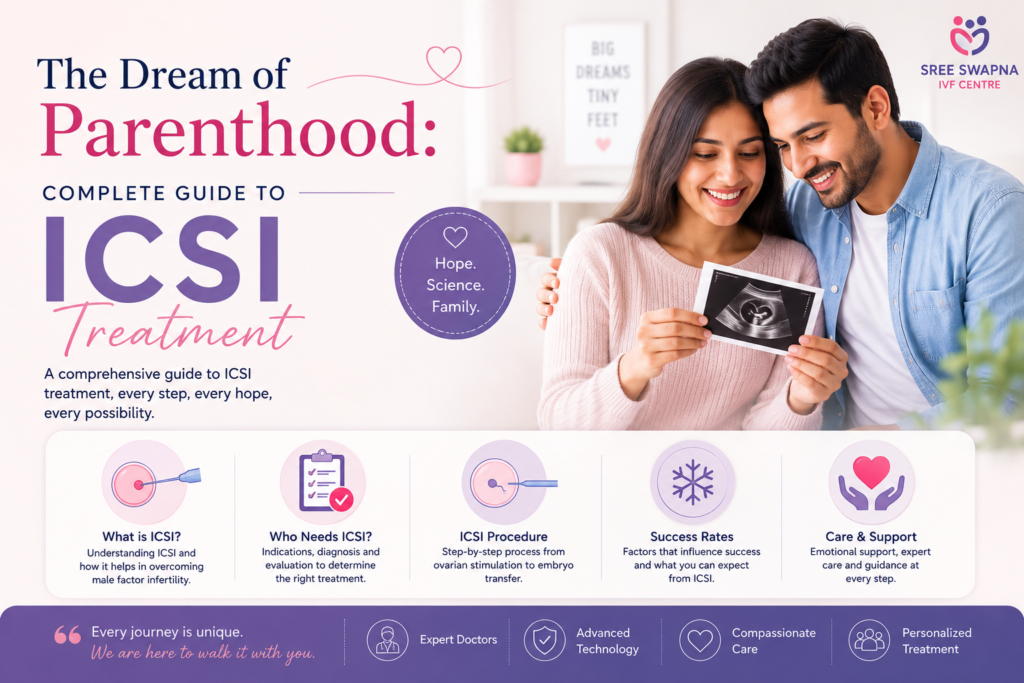
The Dream of Parenthood: Your Complete Guide to ICSI Treatment
When you have been dreaming of holding your own baby, every negative pregnancy test brings a fresh wave of heartbreak. The journey of trying to conceive can feel incredibly lonely, especially when you are facing unexpected roadblocks like male factor infertility. If you and your partner are feeling lost, please know that you are not out of options. Modern reproductive medicine offers profound hope.
Today, ICSI treatment (Intracytoplasmic Sperm Injection) has completely revolutionized the way we address fertility challenges, turning the dream of parenthood into a beautiful reality for thousands of couples every year.
In this comprehensive guide, we will walk you through exactly what ICSI is, why it might be the right path for you, and how it can help you finally start the family you have been waiting for.
What is ICSI Treatment?
Intracytoplasmic Sperm Injection (ICSI) is an advanced fertility treatment used alongside IVF. During the procedure, a skilled embryologist carefully injects a single, healthy sperm directly into the center of a mature egg to maximize the chances of fertilization. It is highly effective for couples facing severe male infertility issues, such as low sperm count or poor sperm motility.
Symptoms That Point Towards the Need for ICSI
Unlike many medical conditions, male infertility rarely presents with obvious physical symptoms. For most couples, the primary “symptom” is simply the inability to conceive after 12 months of regular, unprotected intercourse.
However, depending on the root cause of the infertility, a man might experience:
- Changes in sexual desire or difficulty maintaining an erection.
- Pain, swelling, or a visible lump in the testicle area.
- Recurrent respiratory infections or a decreased sense of smell (often linked to underlying genetic conditions).
- Abnormal breast growth (gynecomastia).
- Lower than normal facial or body hair (signs of a chromosomal or hormonal abnormality).
If a semen analysis reveals a severely low sperm count (oligospermia) or zero sperm in the ejaculate (azoospermia), ICSI treatment becomes the gold standard for achieving pregnancy.
Common Causes of Male Infertility
To understand why ICSI is recommended, it helps to understand what causes sperm issues in the first place. The most common causes include:
- Varicocele: A swelling of the veins that drain the testicle, which is the most common reversible cause of male infertility.
- Infection: Certain infections, including sexually transmitted infections (STIs) or inflammation of the testicles (orchitis), can interfere with sperm production.
- Ejaculation Issues: Retrograde ejaculation occurs when semen enters the bladder during orgasm instead of emerging out the tip of the penis.
- Undescended Testicles: A condition where one or both testicles fail to descend from the abdomen into the sac during fetal development.
- Blockages in the Sperm Transport System: Tubes carrying sperm can be blocked due to prior infections, trauma, or abnormal development (such as cystic fibrosis).
Risk Factors Affecting Sperm Quality
Your reproductive health is deeply tied to your overall lifestyle and environment. Several risk factors can decrease sperm quality and necessitate ICSI treatment:
- Age: While men can reproduce later in life than women, sperm quality naturally begins to decline after age 40.
- Lifestyle Choices: Smoking tobacco, excessive alcohol consumption, and the use of illicit drugs or anabolic steroids severely damage sperm production.
- Weight: Obesity can impair fertility by causing hormone changes that reduce male fertility directly.
- Environmental Toxins: Prolonged exposure to industrial chemicals, heavy metals, or radiation can lower sperm counts.
- Heat Exposure: Frequent use of saunas, hot tubs, or placing a warm laptop directly on your lap can temporarily elevate scrotal temperatures and impair sperm production.
How is Infertility Diagnosed?
Before recommending ICSI, your fertility specialist will conduct a thorough diagnostic workup. The process usually involves:
- General Physical Exam & Medical History: Discussing your medical history, surgeries, and lifestyle.
- Semen Analysis: The most critical test. It measures the volume of semen, total sperm count, sperm motility (movement), and morphology (shape).
- Scrotal Ultrasound: To check for varicoceles or other structural issues in the testicles.
- Hormone Testing: Blood tests to measure testosterone and other hormones that control sperm production.
- Genetic Tests: If sperm concentration is extremely low, a genetic test may be recommended to check for chromosomal abnormalities.
Fertility Treatment Options: IVF vs. ICSI
Many patients ask about the difference between traditional IVF and ICSI. While both involve retrieving eggs from the ovaries and fertilizing them in a lab, the fertilization step is very different.
Feature | Traditional IVF | ICSI Treatment |
|---|---|---|
Fertilization Method | Thousands of sperm are placed in a dish with an egg to fertilize naturally. | A single, hand-picked sperm is directly injected into the egg. |
Best Used For | Unexplained infertility, female factor infertility (like blocked tubes). | Severe male infertility, previous IVF fertilization failure. |
Sperm Requirement | Requires a high number of healthy, fast-moving sperm. | Requires only one viable sperm per egg. |
Non-Surgical Treatments and Preparation
If male infertility is mild, your doctor might first suggest non-surgical or less invasive treatments before moving to ICSI. These may include:
- Hormone Therapy: Medications to balance hormone levels and stimulate sperm production.
- Antibiotics: To clear up any infections in the reproductive tract.
- Lifestyle Optimization: Nutritional supplements (like CoQ10 and antioxidants), weight loss, and quitting smoking to improve baseline sperm quality before an IVF/ICSI cycle.
Prevention Tips for Better Reproductive Health
While you cannot prevent genetic causes of infertility, you can protect your existing sperm health by adopting these daily habits:
- Maintain a healthy Body Mass Index (BMI).
- Eat a nutrient-rich diet full of antioxidants (berries, nuts, leafy greens).
- Manage daily stress through yoga, meditation, or counseling.
- Avoid exposure to pesticides and heavy metals.
- Limit alcohol intake and avoid tobacco entirely.
When to See a Fertility Doctor
Time is one of the most critical factors in fertility. You should schedule a consultation with a fertility specialist if:
- You are under 35 and have been trying to conceive for a full year.
- You are over 35 and have been trying for six months.
- You have a known history of testicular, prostate, or sexual problems.
- You have undergone treatment for cancer (chemotherapy or radiation).
The Life-Changing Benefits of Early Treatment
Delaying fertility assessments can cause unnecessary emotional strain and limit your treatment options. Seeking early intervention offers immense benefits:
- Higher Success Rates: Egg and sperm quality are highly dependent on age. The earlier you start ICSI treatment, the higher your chances of a successful, healthy pregnancy.
- Clear Answers: Diagnosis removes the anxiety of the “unknown” and gives you a concrete medical action plan.
- Preserved Options: If progressive conditions (like a worsening varicocele) are identified early, you can freeze healthy sperm (cryopreservation) before the condition deteriorates further.
Why Choose Sree Swapna Fertility Centre?
When it comes to building your family, you deserve a medical team that combines world-class technology with deep, genuine compassion.
At Sree Swapna Fertility Centre, we are incredibly proud to be recognized as the Best IVF Centre in Hyderabad. Our state-of-the-art embryology lab is equipped with the latest micromanipulation technology required for highly successful ICSI procedures.
We understand that our patients come from all over the city, which is why we strive to provide accessible, top-tier care. Whether you are searching for the Best IVF Centre in Kondapur for your consultations, or you need the Best IVF Centre in Attapur for localized support, our clinical excellence remains consistent across the board. We treat our patients like family, ensuring complete transparency, ethical treatments, and unwavering emotional support throughout your IVF journey.
Consult Our Fertility Experts Today
Do not let male infertility dictate your future. Our board-certified fertility specialists and expert embryologists are here to review your medical history, explain your options in simple English, and design a customized ICSI treatment plan tailored exactly to your body.
With the right team by your side, parenthood is closer than you think.
FAQs
Q1: Is ICSI treatment painful for the male partner?
No, ICSI is a laboratory procedure performed on the egg and sperm after they have been collected. Collecting the sperm is usually done through a standard semen sample. If surgical sperm retrieval (like TESA/PESA) is required, it is done under local anesthesia, ensuring you feel no pain.
Q2: Does ICSI guarantee 100% fertilization?
While ICSI treatment significantly increases the chances of fertilization compared to traditional IVF (especially in male infertility cases), it does not guarantee 100% success. Fertilization depends on the cellular health of both the injected sperm and the retrieved egg.
Q3: Are babies born through ICSI healthy?
Yes. Decades of clinical data show that children conceived via ICSI are just as healthy as children conceived naturally. The risk of birth defects is extremely low and comparable to standard IVF pregnancies.
Q4: How much time does an ICSI cycle take?
An ICSI cycle follows the exact same timeline as a standard IVF cycle. From the start of the female partner’s ovarian stimulation injections to the embryo transfer, the entire process takes roughly 3 to 4 weeks.
Q5: Can ICSI be used if a man has had a vasectomy?
Absolutely. For men who have had a vasectomy, sperm can be directly extracted from the testicles or epididymis using a minor surgical procedure. This extracted sperm is then used perfectly for ICSI treatment.
Take the First Step Towards Parenthood Today
Your dream of holding your baby is worth fighting for. Do not wait for a miracle—rely on advanced medical science and our compassionate experts.
Book your personalized fertility consultation at Sree Swapna Fertility Centre today!
📞 Call us for appointments and queries: 7670804424
