
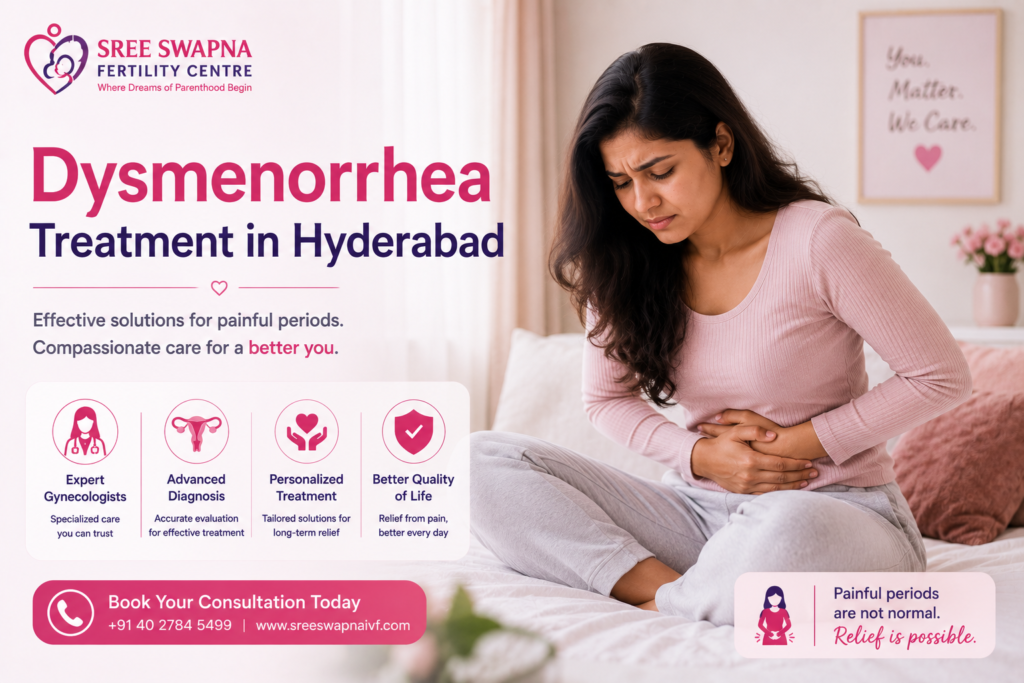
Period pain is so common that it’s often dismissed as just something to push through. But dysmenorrhea (the medical term for painful periods) accounts for an estimated 140 million lost work hours every year in the US alone — it’s a genuine, treatable medical issue, not something to simply endure.
This guide explains the two very different types of dysmenorrhea, current treatment guidelines, and when it’s time to look deeper for an underlying cause.
Primary vs. Secondary Dysmenorrhea: The Key Distinction
Primary Dysmenorrhea
This is period pain without any underlying pelvic pathology. It’s caused by prostaglandins — natural chemicals that trigger uterine contractions during your period. Higher prostaglandin levels mean stronger contractions, and stronger contractions mean more pain.
Primary dysmenorrhea typically has no abnormal findings on physical exam or imaging — the pain is real, but there’s no structural cause behind it.
Secondary Dysmenorrhea
This is period pain caused by an identifiable underlying condition, most commonly:
- Endometriosis
- Adenomyosis
- Uterine fibroids
- Cervical stenosis (narrowing of the cervical opening)
- Ovarian cysts
Secondary dysmenorrhea often shows up differently than primary dysmenorrhea — pain that’s progressively worsening over time, starting later in life rather than from your teenage years, or accompanied by other symptoms like heavy bleeding or pain outside of your period.
The Current, Evidence-Based Approach to Treatment
Here’s something genuinely important from current clinical guidelines: you don’t need a confirmed diagnosis before starting treatment. Since both primary and secondary dysmenorrhea generally respond to the same initial treatments, doctors are advised to start symptomatic treatment right away, rather than delaying relief while pursuing extensive testing upfront.
First-Line Treatment: NSAIDs
NSAIDs (like ibuprofen or naproxen) work by reducing prostaglandin production, directly addressing the root cause of the pain. A systematic review of 73 clinical trials confirmed NSAIDs are significantly more effective than placebo for dysmenorrhea pain — notably, this same effectiveness hasn’t been shown for aspirin or plain acetaminophen (paracetamol).
Getting the dosing right matters more than people realise:
- Start at the very first sign of symptoms or bleeding — don’t wait until pain is already severe
- Take on a scheduled basis, not just when pain becomes unbearable
- Continue for the first 1–3 days of your period, or for as long as cramping typically lasts
Underdosing is a common, often overlooked reason NSAIDs seem “not to work” — particularly in younger patients.
First-Line Treatment: Hormonal Options
Hormonal contraceptives are equally considered first-line therapy, and include:
- Combined oral contraceptive pills
- The vaginal ring or transdermal patch
- Hormonal IUDs (LNG-IUD)
- Contraceptive implants
Current guidelines note that no strong evidence favours NSAIDs over hormonal options, or vice versa — both are considered legitimate first choices, and the right one for you depends on your other needs (like contraception) and personal preference.
Complementary Approaches
Heat therapy, regular exercise, and certain supplements (like ginger) have some supporting evidence, though generally weaker than NSAIDs or hormonal treatment. These are reasonable to use alongside first-line treatment, particularly for those who prefer to minimise medication use.
When Should You Suspect a Secondary Cause?
Current guidelines recommend further evaluation — including a detailed pelvic exam and transvaginal ultrasound — if:
- Symptoms persist despite 3–6 months of properly optimised NSAID and/or hormonal treatment
- Pain is progressively worsening rather than staying stable
- Other symptoms are present, such as heavy bleeding, pain during intercourse, or pelvic pain outside your period
- Pain started later in life, rather than being present since your teenage years
A thorough physical examination at this stage often includes assessment of the rectovaginal area, pelvic floor muscles, and abdominal wall — details that help guide whether further imaging or even diagnostic laparoscopy is appropriate.
When Is Laparoscopy Considered?
Laparoscopy isn’t a first step — it’s generally reserved for cases where pain persists despite an adequate trial of medical therapy (typically 3–6 months), and there’s a reasonably high suspicion of an underlying condition like endometriosis based on your history and exam findings.
Dysmenorrhea Treatment at Sree Swapna Fertility Centre
As one of the best fertility centers in Hyderabad, we treat period pain as a genuine medical concern deserving proper evaluation — not something to simply prescribe painkillers for indefinitely without asking why it’s happening.
Dr. Swapna Naik, Clinical Director at Sree Swapna Fertility Centre, holds an MBBS, DGO, DRM, DFM, a Diploma in Reproductive Medicine from Germany, and a Fellowship in Advanced ART, and is a trained laparoscopic surgeon with over 15 years of experience. Her approach starts with proper first-line treatment, but includes genuine attention to when your symptoms suggest something more — moving to detailed pelvic ultrasound and, when appropriate, laparoscopic evaluation for conditions like endometriosis or adenomyosis.
Both our Kondapur and Attapur clinics offer in-house diagnostic ultrasound, so if your period pain isn’t responding to standard treatment, we can properly investigate rather than simply increasing your painkiller dose indefinitely.
Frequently Asked Questions
1. What is the difference between primary and secondary dysmenorrhea?
Primary dysmenorrhea has no underlying pelvic pathology and is caused by natural prostaglandins, while secondary dysmenorrhea is caused by an identifiable condition like endometriosis, adenomyosis, or fibroids.
2. Do I need a diagnosis before starting period pain treatment?
No, current guidelines recommend starting NSAID and/or hormonal treatment right away, since both primary and secondary dysmenorrhea generally respond to the same initial approach.
3. What is the first-line treatment for painful periods?
NSAIDs and hormonal contraceptives are both considered first-line treatments, with no strong evidence favouring one over the other.
4. Why might NSAIDs not seem to work for my period pain?
Underdosing is a common issue — NSAIDs work best when started at the first sign of symptoms and taken on a scheduled basis, not just when pain becomes severe.
5. Are aspirin and paracetamol as effective as NSAIDs for period pain?
No, research supporting effectiveness for dysmenorrhea specifically applies to NSAIDs like ibuprofen and naproxen, not aspirin or plain paracetamol.
6. When should I suspect a secondary cause for my period pain?
If symptoms persist despite 3–6 months of proper treatment, are progressively worsening, or are accompanied by heavy bleeding or pain outside your period.
7. What conditions commonly cause secondary dysmenorrhea?
Endometriosis, adenomyosis, uterine fibroids, cervical stenosis, and ovarian cysts are among the most common causes.
8. Is a transvaginal ultrasound needed for every case of period pain?
Not necessarily for typical primary dysmenorrhea, but it’s recommended if symptoms persist despite treatment or other concerning features are present.
9. Can hormonal IUDs help with period pain?
Yes, hormonal IUDs are considered an effective first-line option for managing dysmenorrhea.
10. When is laparoscopy considered for period pain?
Generally when pain persists despite 3–6 months of adequate medical treatment and there’s a reasonable suspicion of an underlying condition like endometriosis.
11. Are heat therapy and exercise effective for period pain?
They have some supporting evidence, generally weaker than NSAIDs or hormonal treatment, but are reasonable complementary options.
12. Can period pain that started later in life be a red flag?
Yes, pain that begins later in life, rather than from adolescence, can suggest a secondary cause and may warrant further evaluation.
13. Is dysmenorrhea a common issue?
Yes, it’s extremely common and represents a significant public health and economic burden due to lost work and school days.
14. Can dysmenorrhea affect fertility?
Primary dysmenorrhea itself doesn’t affect fertility, but some secondary causes, like endometriosis or adenomyosis, can.
15. What does a pelvic exam for period pain typically involve?
It may include assessment of the rectovaginal area, pelvic floor muscles, and abdominal wall, alongside a standard gynaecological exam.
16. Can combined oral contraceptive pills help even if I’m not sexually active?
Yes, hormonal contraceptives are used for dysmenorrhea management regardless of sexual activity, based on their hormonal effect on the menstrual cycle.
17. Is it normal for period pain treatment to take a few months to assess properly?
Yes, guidelines generally recommend a 3–6 month trial of optimised treatment before concluding it isn’t working and pursuing further evaluation.
18. Can ginger supplements help with period pain?
Some evidence supports ginger as a complementary option, though it’s generally considered weaker evidence compared to NSAIDs or hormonal treatment.
19. Does dysmenorrhea always require surgery?
No, most cases are effectively managed with NSAIDs and/or hormonal treatment, with surgery reserved for confirmed secondary causes not responding to medical management.
20. Can adolescents be under-treated for period pain?
Yes, underdosing and inconsistent NSAID use is particularly common in adolescents, which can lead to the perception that treatment isn’t working.
21. Should I track my symptoms before seeing a doctor about period pain?
Yes, noting your pain pattern, timing, and any other symptoms can help your doctor determine whether further evaluation is needed.
22. Where can I get dysmenorrhea evaluated and treated in Hyderabad?
Sree Swapna Fertility Centre, a leading best fertility center in Hyderabad, offers comprehensive dysmenorrhea evaluation and treatment at both our Kondapur and Attapur clinics.
Conclusion
Painful periods deserve real treatment, not just quiet endurance. Starting with properly dosed NSAIDs or hormonal options is the right first step for almost everyone — but if your pain persists despite genuine effort with these treatments, it’s a clear signal to look deeper for an underlying cause, rather than simply living with it.
Get Your Period Pain Properly Evaluated
Dr. Swapna Naik and the team at Sree Swapna Fertility Centre can help you find real, lasting relief — whatever’s behind your pain.
📞 Call: +91 76708 04424 / +91 40 4995 3719 💬 WhatsApp: Message us directly 📧 Email: sreeswapna.fertility@gmail.com 📍 Visit us at: Kondapur (flagship centre) or Attapur, Hyderabad 🌐 Book an appointment: sreeswapnaivf.com/contact-us
