
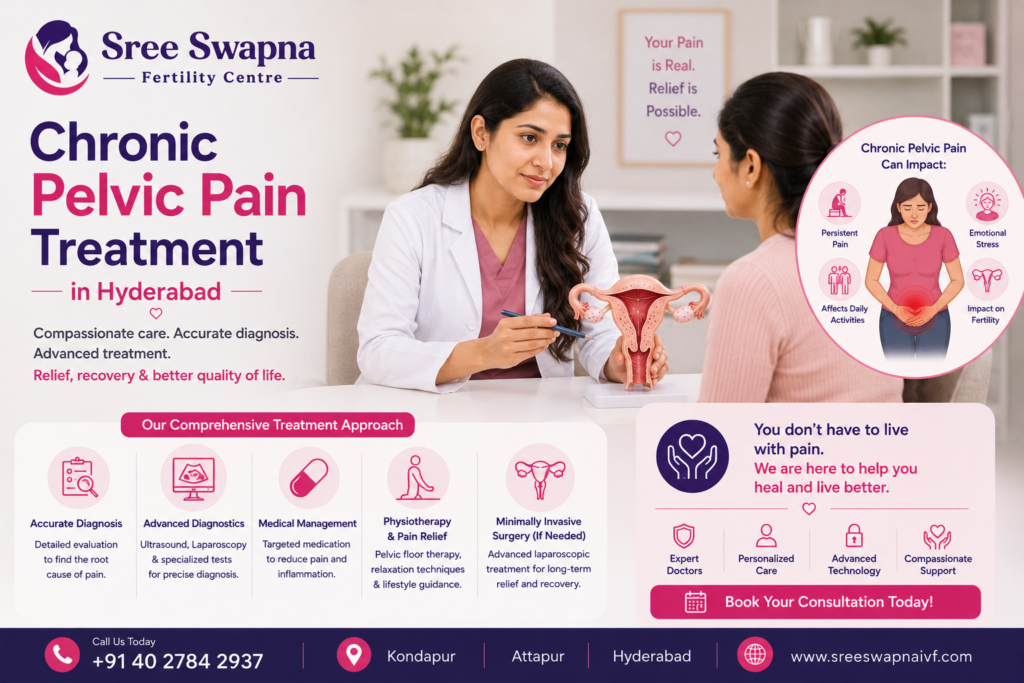
Chronic pelvic pain (CPP) is genuinely one of the harder conditions to diagnose — not because doctors don’t take it seriously, but because it isn’t actually a single disease. It’s a symptom with dozens of possible underlying causes, and many women have more than one contributing factor at once.
This guide explains how specialists approach chronic pelvic pain, what the real range of causes looks like, and what proper evaluation involves.
What Counts as Chronic Pelvic Pain?
Chronic pelvic pain is generally defined as pain in the pelvis, lower abdomen, or lower back that lasts 6 months or longer, isn’t caused by pregnancy, and isn’t limited to just your period or intercourse.
It affects a significant number of women — estimates range from roughly 15–26% of women worldwide, making it comparable in prevalence to conditions like migraine or chronic back pain. Despite this, research suggests only about a third of affected women actually seek medical care for it.
Why Chronic Pelvic Pain Is Genuinely Hard to Diagnose
Unlike a single, well-defined condition, CPP can arise from — or be worsened by — multiple body systems at once. In fact, no single identifiable cause is found in roughly a third to half of patients, even after thorough evaluation. This isn’t a failure of the diagnostic process; it reflects how complex and overlapping the underlying mechanisms often are.
The Many Possible Causes of Chronic Pelvic Pain
Specialists generally use an organ-system approach, since gynaecological, gastrointestinal, urological, musculoskeletal, neurological, and even psychological factors can all contribute.
Gynaecological Causes
- Endometriosis — the most common gynaecological diagnosis among women who seek care for CPP
- Adenomyosis — causing progressively worsening period pain and pelvic pressure
- Ovarian cysts, including chocolate cysts (endometriomas)
- Uterine fibroids
- Pelvic inflammatory disease (PID) or its long-term aftereffects
Gastrointestinal Causes
- Irritable Bowel Syndrome (IBS) — one of the most commonly diagnosed contributors to CPP
- Inflammatory Bowel Disease (IBD)
- Bowel endometriosis, which can closely mimic IBS
Urological Causes
- Interstitial cystitis (painful bladder syndrome) — commonly overlapping with CPP; a large proportion of women with this condition also have chronic pelvic pain
- Recurrent urinary tract infections
- Bladder endometriosis
Musculoskeletal Causes
- Pelvic floor muscle tension (myalgia)
- Abdominal wall myofascial pain
- Piriformis syndrome and other muscular or nerve-related issues
These causes are frequently overlooked, since they don’t show up on typical gynaecological imaging.
Neurological Causes
- Nerve entrapment syndromes, which can cause localised, sometimes sharp pelvic or abdominal wall pain
Psychological Contributors
Depression, anxiety, and a history of trauma are genuinely recognised contributors to how chronic pain is experienced and maintained — not as “it’s all in your head,” but as real, physiological factors that interact with pain processing and deserve proper attention alongside physical causes.
How Is Chronic Pelvic Pain Diagnosed?
- Detailed History: Understanding your pain’s pattern, triggers, and relationship to your cycle, bowel movements, urination, and posture
- Pelvic Examination: Including a speculum exam, bimanual exam to assess for tenderness or masses, and sometimes a rectovaginal exam
- Imaging: Transvaginal ultrasound, and sometimes MRI, to look for gynaecological causes like endometriosis, adenomyosis, or cysts
- Referral When Needed: To a gastroenterologist, urologist, or pelvic floor physiotherapist, depending on which system appears most involved
A thorough evaluation often takes more than one visit, especially when multiple systems seem to be contributing.
Treatment Approaches for Chronic Pelvic Pain
Because CPP has so many possible causes, treatment is rarely a single intervention. It typically combines:
- Pharmacologic treatment — pain relief medication, hormonal therapy for gynaecological causes, or targeted medication for bladder or bowel-related contributors
- Behavioural and physical approaches — pelvic floor physiotherapy, particularly when muscular tension is a factor
- Surgical treatment — when a specific, correctable condition like endometriosis, adenomyosis, or a cyst is identified
- Multidisciplinary coordination — since gynaecological, gastrointestinal, urological, and psychological factors often need to be addressed together, not in isolation
Why a Coordinated, Multi-System Approach Matters
Treating chronic pelvic pain as “just a gynaecological issue” — or dismissing it without a thorough evaluation — often leads to years of frustration without relief. The most effective care usually comes from a specialist willing to look across systems, rather than stopping at the first negative gynaecological scan.
Chronic Pelvic Pain Evaluation at Sree Swapna Fertility Centre
Dr. Swapna Naik, Clinical Director at Sree Swapna Fertility Centre, brings over 15 years of experience in gynaecology and reproductive medicine, along with laparoscopic surgical expertise for conditions like endometriosis and adenomyosis that commonly contribute to chronic pelvic pain.
Both our Kondapur and Attapur clinics offer in-house diagnostic ultrasound to properly evaluate gynaecological causes of your pain. If your evaluation points toward a gastrointestinal, urological, or musculoskeletal contributor, we’ll help guide you toward the right additional specialist, rather than treating chronic pelvic pain as a purely gynaecological issue when it may not be.
If you’re looking for more detail on specific gynaecological causes of pelvic pain, we’ve covered several in depth separately, including bladder endometriosis, bowel endometriosis, adenomyosis, and chocolate cysts (ovarian endometriomas).
Frequently Asked Questions
1. What is considered chronic pelvic pain?
Pain in the pelvis, lower abdomen, or lower back lasting 6 months or longer, not caused by pregnancy and not limited to your period or intercourse.
2. How common is chronic pelvic pain?
Estimates suggest it affects roughly 15–26% of women worldwide, making it a genuinely common condition.
3. What is the most common gynaecological cause of chronic pelvic pain?
Endometriosis is the most common gynaecological diagnosis among women who seek care specifically for chronic pelvic pain.
4. Can chronic pelvic pain have no identifiable cause?
Yes, no specific cause is found in roughly a third to half of patients, even after thorough evaluation.
5. Can bowel or bladder issues cause chronic pelvic pain?
Yes, conditions like IBS and interstitial cystitis are common contributors, and often overlap with gynaecological causes.
6. Is chronic pelvic pain always related to the menstrual cycle?
No, by definition it isn’t limited to your period, though many underlying causes can worsen around menstruation.
7. Can muscle or nerve issues cause pelvic pain?
Yes, pelvic floor muscle tension, abdominal wall myofascial pain, and nerve entrapment are recognised musculoskeletal and neurological causes.
8. Is psychological factors part of chronic pelvic pain, or is that dismissive?
Psychological factors like depression, anxiety, and trauma history are genuinely recognised as real, physiological contributors to chronic pain — not a dismissal of physical causes, but an additional, legitimate part of the picture.
9. What tests are used to diagnose chronic pelvic pain?
A detailed history, pelvic examination, and imaging like transvaginal ultrasound are typically the starting point, with further tests based on findings.
10. Do I need to see multiple specialists for chronic pelvic pain?
Sometimes, yes — depending on which body systems appear to be contributing, referral to gastroenterology, urology, or pelvic floor physiotherapy may be needed alongside gynaecological care.
11. Can chronic pelvic pain be treated without surgery?
Yes, many cases are managed with medication, physical therapy, and other non-surgical approaches, depending on the underlying cause.
12. When is surgery considered for chronic pelvic pain?
Surgery is generally considered when a specific, correctable condition like endometriosis, adenomyosis, or a cyst is clearly identified as a contributing cause.
13. Can chronic pelvic pain affect fertility?
Some underlying causes, like endometriosis or adenomyosis, can affect fertility, though this depends on the specific diagnosis.
14. How long does it typically take to diagnose the cause of chronic pelvic pain?
This varies significantly, and may take more than one visit, especially if multiple systems appear to be contributing.
15. Is chronic pelvic pain more common in women with endometriosis?
Yes, a substantial proportion of women with endometriosis report chronic pelvic pain as one of their symptoms.
16. Can bladder pain syndrome overlap with gynaecological causes of pelvic pain?
Yes, a significant proportion of women with bladder pain syndrome also have comorbid chronic pelvic pain from other causes.
17. Is it normal for chronic pelvic pain to have more than one cause at once?
Yes, this is actually quite common, which is part of why a thorough, multi-system evaluation matters.
18. Can pelvic floor physiotherapy help with chronic pelvic pain?
Yes, particularly when muscular tension or pelvic floor dysfunction is identified as a contributing factor.
19. Should I keep seeking help if my first evaluation didn’t find a cause?
Yes, given how complex CPP can be, a second, more comprehensive evaluation or looking at additional body systems is often worthwhile.
20. Can chronic pelvic pain be related to a previous surgery or childbirth?
Yes, scar tissue, nerve changes, or musculoskeletal changes following surgery or childbirth can contribute to ongoing pelvic pain.
21. Is chronic pelvic pain treatable?
Yes, though treatment depends entirely on identifying the contributing causes — a multidisciplinary approach often provides the most effective relief.
22. Where can I get a chronic pelvic pain evaluation in Hyderabad?
Sree Swapna Fertility Centre offers gynaecological evaluation for chronic pelvic pain at both our Kondapur and Attapur clinics, with referral coordination for non-gynaecological causes when needed.
Conclusion
Chronic pelvic pain deserves a thorough, multi-system evaluation, not a quick dismissal after one negative scan. Whether the underlying cause turns out to be gynaecological, gastrointestinal, urological, muscular, or a combination of several, understanding the full picture is the real first step toward relief.
Get a Thorough Pelvic Pain Evaluation
Dr. Swapna Naik and the team at Sree Swapna Fertility Centre can help evaluate the gynaecological causes of your chronic pelvic pain, and guide you toward the right additional care if needed.
📞 Call: +91 76708 04424 / +91 40 4995 3719 💬 WhatsApp: Message us directly 📧 Email: sreeswapna.fertility@gmail.com 📍 Visit us at: Kondapur (flagship centre) or Attapur, Hyderabad 🌐 Book an appointment: sreeswapnaivf.com/contact-us
