
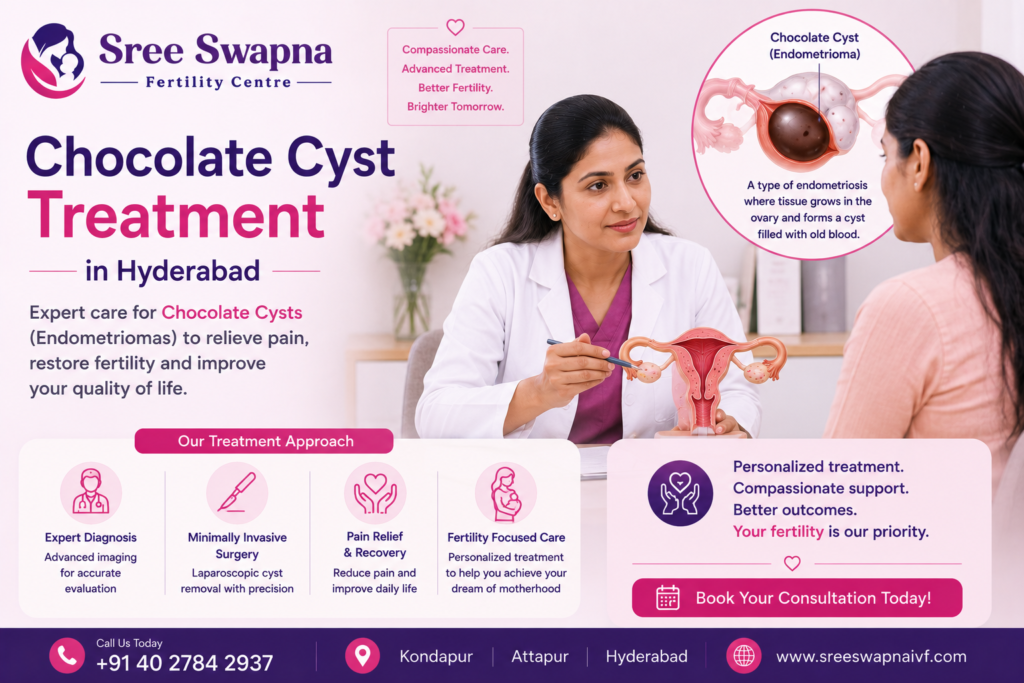
A “chocolate cyst” diagnosis often comes as a surprise, usually found during an ultrasound for pelvic pain or fertility investigation. The name sounds almost harmless, but understanding what it actually is helps you make sense of your treatment options.
This guide explains what a chocolate cyst really is, its symptoms, treatment choices, and how surgery is approached when fertility matters to you.
What Is a Chocolate Cyst?
A chocolate cyst, medically known as an ovarian endometrioma, is a cyst that forms on the ovary as a result of endometriosis. It’s filled with old, dark reddish-brown blood — which is exactly where the “chocolate” name comes from.
It forms when endometrial-like tissue implants on the ovary, then bleeds internally with each menstrual cycle, gradually building up trapped blood within a cyst.
Common Symptoms of Chocolate Cysts
- Pelvic pain — dull, sharp, or cramp-like, often worsening during your period
- Pain during intercourse
- Heavy or irregular periods
- Bloating
- Difficulty conceiving
Some smaller chocolate cysts cause no symptoms at all and are only discovered incidentally during an ultrasound.
How Are Chocolate Cysts Sized and Classified?
- Small: Under 4 cm in diameter
- Medium: 4–8 cm in diameter
- Large: Over 8 cm in diameter
Size plays a significant role in deciding your treatment path, alongside your symptoms and fertility plans.
How Are Chocolate Cysts Diagnosed?
- Transvaginal Ultrasound: The primary diagnostic tool, showing the characteristic appearance of an endometrioma
- MRI: Sometimes used for more detailed evaluation, particularly for larger or complex cysts
- Blood Tests: Used to rule out other conditions, such as anaemia from heavy bleeding or infection
Treatment Options for Chocolate Cysts
1. Monitoring
Small, asymptomatic cysts are often simply monitored with periodic ultrasound follow-up, without immediate treatment.
2. Medical Management
- NSAIDs for pain relief
- Hormonal therapy — birth control pills, progestin-only medications, or GnRH agonists — to regulate hormones and manage symptoms
Medical management can control symptoms, but it doesn’t shrink or eliminate an existing cyst permanently.
3. Surgical Treatment
Surgery is generally recommended for cysts larger than 4 cm, cysts causing significant symptoms, or when fertility is affected.
- Cystectomy: Removes the cyst while preserving healthy ovarian tissue — the preferred option when future fertility matters
- Oophorectomy: Removes the entire affected ovary — generally reserved for severe cases or when there’s concern about malignancy
Most chocolate cyst surgery today is performed laparoscopically, offering smaller incisions, lower risk of bleeding and infection compared to open surgery, and typically a same-day or short hospital stay.
Why Cystectomy Is Usually Preferred for Fertility
For women hoping to conceive, cystectomy is generally favoured over removing the entire ovary, since it preserves as much healthy ovarian tissue — and therefore ovarian reserve — as possible. That said, cystectomy itself can sometimes reduce ovarian reserve slightly, since some healthy tissue is inevitably affected during removal of the cyst wall. This trade-off is exactly why the decision should be made carefully, considering cyst size, symptoms, and your individual fertility profile.
Is There a Cancer Risk With Chocolate Cysts?
The vast majority of chocolate cysts are benign. However, larger or rapidly growing cysts carry a small increased risk of malignancy, which is one reason doctors recommend surgical removal for larger cysts rather than indefinite monitoring alone.
Can Chocolate Cysts Come Back After Surgery?
Yes, recurrence is a genuine possibility after cystectomy — research generally reports recurrence rates in the range of roughly 10–35%, depending on the study and follow-up period. Postoperative hormonal treatment and, in some cases, achieving pregnancy afterward have both been associated with lower recurrence risk. If you’d like a deeper look at recurrence specifically, this is covered in more detail in our dedicated article on endometriosis recurrence after surgery.
Chocolate Cyst Treatment at Sree Swapna Fertility Centre
Chocolate cysts require a treatment approach that balances symptom relief, surgical precision, and fertility preservation — not a one-size-fits-all removal.
Dr. Swapna Naik, Clinical Director at Sree Swapna Fertility Centre, is a trained laparoscopic surgeon with over 15 years of experience in reproductive medicine, focused on fertility-preserving cystectomy techniques wherever appropriate.
Both our Kondapur and Attapur clinics offer in-house diagnostic ultrasound, allowing accurate sizing and monitoring of any chocolate cyst, along with laparoscopic surgical facilities for treatment when needed. If you’re also trying to conceive, we’ll factor your fertility goals directly into the surgical approach and post-surgery care plan — not treat it as a separate conversation.
Frequently Asked Questions
1. What is a chocolate cyst?
It’s a cyst on the ovary, medically called an ovarian endometrioma, filled with old blood as a result of endometriosis.
2. Why is it called a chocolate cyst?
Because the old, dark reddish-brown blood inside resembles the colour of chocolate.
3. Are chocolate cysts cancerous?
The vast majority are benign, though larger or rapidly growing cysts carry a small increased risk of malignancy, which is why removal is often recommended for larger cysts.
4. What size chocolate cyst needs surgery?
Surgery is generally considered for cysts larger than 4 cm, or smaller cysts causing significant symptoms.
5. Can a chocolate cyst be treated without surgery?
Yes, small or asymptomatic cysts can be monitored, and hormonal medication can help manage symptoms, though it won’t eliminate the cyst itself.
6. Does removing a chocolate cyst affect fertility?
Cystectomy can sometimes slightly reduce ovarian reserve, since some healthy tissue is affected during removal, which is why the decision is made carefully based on your specific case.
7. What is the difference between cystectomy and oophorectomy?
Cystectomy removes just the cyst while preserving the ovary, while oophorectomy removes the entire affected ovary — generally reserved for more severe cases.
8. Is laparoscopic surgery used for chocolate cysts?
Yes, most chocolate cyst surgery today is performed laparoscopically, offering a shorter recovery and lower complication risk than open surgery.
9. Can chocolate cysts come back after surgery?
Yes, recurrence rates are generally reported in the range of 10–35%, depending on the study and follow-up period.
10. Does pregnancy after surgery reduce recurrence risk?
Some studies have found postoperative pregnancy associated with lower recurrence rates, though this isn’t guaranteed for every individual.
11. Can chocolate cysts cause infertility?
Yes, they can affect fertility through ovarian tissue damage, inflammation, and disruption of the normal ovulation process.
12. How are chocolate cysts diagnosed?
Primarily through transvaginal ultrasound, sometimes supported by MRI for more detailed evaluation of larger or complex cysts.
13. What are the main symptoms of a chocolate cyst?
Pelvic pain, painful periods, pain during intercourse, heavy or irregular bleeding, and sometimes infertility.
14. Can a chocolate cyst rupture?
Yes, in some cases a cyst can rupture, which typically causes sudden, severe pain and needs prompt medical attention.
15. Do all chocolate cysts need to be removed?
No, small, asymptomatic cysts can often be monitored rather than surgically removed.
16. Is hormonal treatment a long-term solution for chocolate cysts?
Hormonal treatment manages symptoms and may help control growth, but it isn’t a permanent solution — the cyst itself typically remains unless surgically removed.
17. How long does recovery take after laparoscopic cystectomy?
Recovery is generally quicker than open surgery, often allowing return to normal activities within a couple of weeks, though this varies by individual.
18. Can both ovaries be affected by chocolate cysts?
Yes, chocolate cysts can occur on one or both ovaries, which is an important factor in surgical planning.
19. Does age affect chocolate cyst treatment decisions?
Yes, age and fertility plans are both key factors in choosing between monitoring, medical management, and surgery.
20. Can chocolate cysts affect egg quality?
Yes, the presence of an endometrioma can affect the surrounding ovarian environment, which may influence egg quality in some cases.
21. Should I get a second opinion before chocolate cyst surgery?
It’s a reasonable step for any major surgical decision, especially one that could affect your future fertility.
22. Where can I get chocolate cyst treatment in Hyderabad?
Sree Swapna Fertility Centre offers diagnosis, monitoring, and fertility-preserving laparoscopic surgery for chocolate cysts at both our Kondapur and Attapur clinics.
Conclusion
A chocolate cyst diagnosis isn’t something to panic about, but it does deserve a proper evaluation — especially if fertility matters to you. Whether the right path is monitoring, medication, or fertility-preserving surgery, getting an accurate assessment of your cyst’s size, symptoms, and your individual goals is the foundation for the right treatment decision.
Get Your Chocolate Cyst Evaluated in Hyderabad
Dr. Swapna Naik and the team at Sree Swapna Fertility Centre can help you understand your treatment options while keeping your fertility goals in focus.
📞 Call: +91 76708 04424 / +91 40 4995 3719 💬 WhatsApp: Message us directly 📧 Email: sreeswapna.fertility@gmail.com 📍 Visit us at: Kondapur (flagship centre) or Attapur, Hyderabad 🌐 Book an appointment: sreeswapnaivf.com/contact-us
