
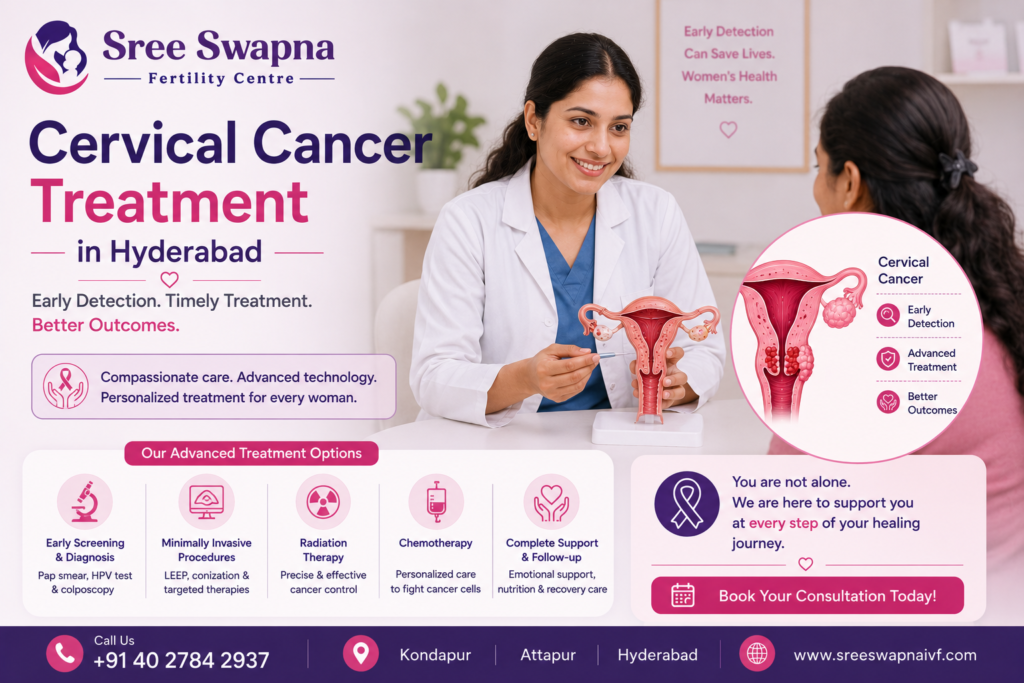
Let’s be upfront about something important: cervical cancer treatment itself — chemotherapy, radiation, and cancer-specific surgery — requires a gynaecologic oncologist, a specialist with focused training beyond general gynaecology or fertility medicine.
What we can genuinely help with is what happens before that point: screening, early detection, managing precancerous changes, and — for younger patients diagnosed with cervical cancer — coordinating fertility preservation before cancer treatment begins. This guide explains all of this clearly, so you know exactly where to go for what.
What Causes Cervical Cancer?
Cervical cancer is caused by persistent infection with high-risk strains of HPV (Human Papillomavirus) in the vast majority of cases. Most HPV infections clear on their own, but persistent infection with certain high-risk strains can, over years, lead to precancerous cell changes and eventually cancer if undetected and untreated.
Risk Factors
- Persistent high-risk HPV infection
- Lack of regular screening
- Smoking
- Weakened immune system
- Multiple sexual partners or early sexual activity, which increase HPV exposure risk
Why Screening Matters More Than Almost Anything Else
Cervical cancer is one of the most preventable cancers, largely because it develops slowly, over years, through detectable precancerous stages. Regular screening can catch these changes long before cancer develops.
Screening Methods
- Pap Smear (Pap Test): Checks for abnormal cervical cells
- HPV Testing: Checks for the presence of high-risk HPV strains, often done alongside or instead of a Pap smear depending on age and guidelines
- Co-testing: Combining both tests for more comprehensive screening in certain age groups
Screening typically starts in your 20s, with frequency depending on your age, prior results, and specific guidelines your doctor follows.
What Happens If Screening Finds an Abnormality?
An abnormal Pap smear or positive HPV test doesn’t mean cancer — it means further evaluation is needed.
- Colposcopy: A magnified examination of the cervix to identify areas of concern
- Biopsy: A small tissue sample taken to determine the exact nature of any abnormal cells
- Grading (CIN 1, 2, or 3): Precancerous changes are graded by severity, guiding the next steps
Managing Precancerous Changes
Many precancerous cervical changes (particularly CIN 1) can be monitored with repeat testing, since they often resolve on their own. More significant changes (CIN 2 or 3) are often treated with procedures like a LEEP (Loop Electrosurgical Excision Procedure) or cone biopsy, which remove the abnormal tissue — procedures that general gynaecologists with appropriate training can often perform.
This is where our care applies. Screening, colposcopy, and management of precancerous changes fall within general gynaecological care.
When Does Care Need to Move to a Gynaecologic Oncologist?
If a biopsy confirms actual cervical cancer, treatment planning and delivery — including staging, cancer-specific surgery (such as radical hysterectomy or trachelectomy), radiation, and chemotherapy — should be handled by a gynaecologic oncologist or a specialised cancer centre. This isn’t a referral we make reluctantly; it’s the standard of care, since oncologic treatment requires specific training and multidisciplinary tumour board coordination that general gynaecology and fertility practices aren’t equipped to provide.
Fertility Preservation Before Cervical Cancer Treatment
This is where fertility medicine plays a genuinely important role for younger patients facing a cervical cancer diagnosis.
Cancer treatments like radiation and certain surgical procedures can significantly affect future fertility. For patients diagnosed at a young age who haven’t completed their family, fertility preservation before starting cancer treatment is a critical, time-sensitive conversation.
Fertility Preservation Options
- Egg freezing (oocyte cryopreservation): Retrieving and freezing eggs before cancer treatment begins
- Embryo freezing: If applicable, fertilising eggs with sperm before freezing
- Coordination with your oncology team, since fertility preservation typically needs to happen quickly, before radiation or chemotherapy starts
In some early-stage cases, a gynaecologic oncologist may also discuss fertility-sparing surgical options, such as a radical trachelectomy instead of a full hysterectomy — a decision made collaboratively between your oncology and fertility care teams.
How Sree Swapna Fertility Centre Fits Into Your Care
We want to be completely clear about our role: Dr. Swapna Naik, Clinical Director at Sree Swapna Fertility Centre, brings over 15 years of experience in gynaecology and reproductive medicine, and our clinics offer:
- Cervical cancer screening — Pap smears and HPV testing
- Colposcopy and management of precancerous cervical changes
- Fertility preservation counselling and treatment for patients facing a cancer diagnosis, working alongside your oncology team
For an actual cervical cancer diagnosis requiring treatment, we will help coordinate a referral to a qualified gynaecologic oncologist, and continue supporting your fertility preservation needs in parallel with your cancer care.
Frequently Asked Questions
1. Does Sree Swapna Fertility Centre treat cervical cancer directly?
No, cervical cancer treatment (surgery, radiation, chemotherapy) requires a gynaecologic oncologist. We provide screening, precancerous change management, and fertility preservation support, and coordinate oncology referrals when needed.
2. What causes cervical cancer?
Persistent infection with high-risk strains of HPV is the primary cause in the vast majority of cases.
3. How often should I get a Pap smear?
This depends on your age and prior results — your doctor can guide you on the recommended screening schedule for your specific situation.
4. What does an abnormal Pap smear mean?
It doesn’t mean cancer — it means further evaluation, typically through colposcopy, is needed to understand the nature of the abnormal cells.
5. What is a colposcopy?
A magnified examination of the cervix used to identify and assess areas of concern found during screening.
6. What is CIN (Cervical Intraepithelial Neoplasia)?
It’s a grading system for precancerous cervical cell changes, ranging from CIN 1 (mild) to CIN 3 (more severe), guiding treatment decisions.
7. Can precancerous cervical changes be treated without a full hysterectomy?
Yes, many cases are managed with procedures like LEEP or cone biopsy, which remove only the abnormal tissue.
8. When should I see a gynaecologic oncologist instead of a general gynaecologist?
If a biopsy confirms actual cervical cancer, treatment planning should move to a gynaecologic oncologist or specialised cancer centre.
9. Can fertility be preserved before cervical cancer treatment?
Yes, options like egg or embryo freezing can often be arranged before cancer treatment begins, particularly for younger patients.
10. How quickly does fertility preservation need to happen after a cancer diagnosis?
It’s typically time-sensitive, since cancer treatment often needs to start promptly. Coordination between your oncology and fertility teams is essential.
11. What is a radical trachelectomy?
A fertility-sparing surgical option for some early-stage cervical cancers, removing the cervix while preserving the uterus — a decision made by your gynaecologic oncologist based on your specific case.
12. Does the HPV vaccine prevent cervical cancer?
The HPV vaccine protects against the high-risk HPV strains responsible for most cervical cancers, making it an important preventive measure, though regular screening is still recommended.
13. Can HPV infection go away on its own?
Yes, most HPV infections clear naturally without causing any long-term problems, though persistent infection with high-risk strains requires monitoring.
14. Is cervical cancer preventable?
It’s considered one of the most preventable cancers, largely due to effective screening methods that catch precancerous changes early.
15. What is the difference between a Pap smear and an HPV test?
A Pap smear checks for abnormal cervical cells, while an HPV test checks specifically for high-risk HPV strains. Both may be used together depending on your age and guidelines.
16. Can radiation therapy affect fertility?
Yes, radiation to the pelvic area can significantly affect ovarian function and fertility, which is why preservation before treatment is an important consideration.
17. Does Sree Swapna Fertility Centre coordinate with oncologists?
Yes, we work alongside your oncology team to support fertility preservation needs while your cancer treatment is being planned and delivered.
18. What age should cervical cancer screening start?
This varies by guideline, but generally begins in a woman’s 20s. Discuss the appropriate starting point and frequency with your doctor.
19. Can I get a Pap smear and fertility consultation at the same clinic?
Yes, Sree Swapna Fertility Centre offers cervical screening alongside our broader gynaecological and fertility services.
20. Is LEEP a painful procedure?
It’s generally done under local anaesthesia and is well-tolerated by most patients, with a relatively quick recovery.
21. What should I do if I’m diagnosed with cervical cancer and want to preserve my fertility?
Speak to your oncology team as early as possible, and ask about a fertility preservation consultation before treatment begins, since timing is critical.
22. Where can I get cervical cancer screening in Hyderabad?
Sree Swapna Fertility Centre offers Pap smear and HPV screening, along with colposcopy, at both our Kondapur and Attapur clinics.
Conclusion
Cervical cancer is highly preventable with regular screening, and early precancerous changes are very manageable. If a cancer diagnosis does occur, especially at a younger age, fertility preservation deserves a place in that conversation — planned in coordination with your oncology team, not as an afterthought. We’re here to support the screening, early management, and fertility preservation side of that journey, working alongside the right specialists for cancer treatment itself.
Book a Screening or Fertility Preservation Consultation
Dr. Swapna Naik and the team at Sree Swapna Fertility Centre can guide you through cervical screening, precancerous change management, or fertility preservation planning.
📞 Call: +91 76708 04424 / +91 40 4995 3719 💬 WhatsApp: Message us directly 📧 Email: sreeswapna.fertility@gmail.com 📍 Visit us at: Kondapur or Attapur, Hyderabad 🌐 Book an appointment: sreeswapnaivf.com/contact-us
