
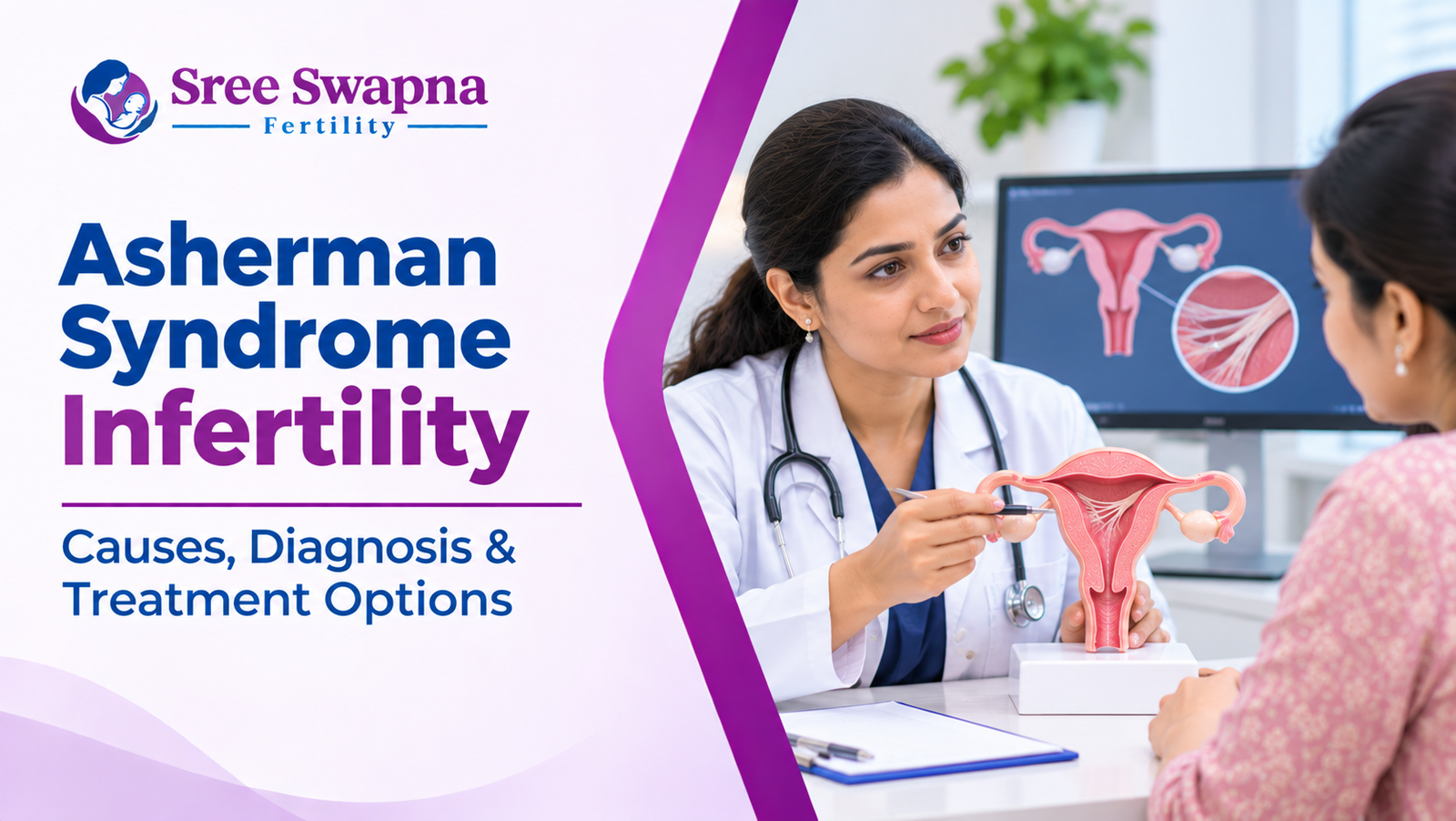
Asherman Syndrome and Infertility: Uterine Adhesions Explained
Periods that become much lighter or stop after a uterine procedure deserve assessment, especially when accompanied by pain or difficulty conceiving. One possible explanation is scar tissue inside the uterine cavity. This is different from a hormonal cause of absent periods and needs a targeted evaluation.
Quick Answer
Asherman syndrome generally describes intrauterine adhesions associated with symptoms or reproductive problems. Hysteroscopy is the definitive diagnostic method and can be used to divide adhesions when treatment is appropriate. Outcomes depend on the extent of scarring, endometrial recovery and other fertility factors; restoring the cavity does not guarantee pregnancy.
What Is Asherman Syndrome?
Intrauterine adhesions are bands of scar tissue within the uterine cavity. They can form when injured surfaces of the endometrium, the uterine lining, heal together. Adhesions may be thin and limited or dense and extensive.
The term Asherman syndrome is generally used when these adhesions are associated with problems such as menstrual changes, pain, infertility or pregnancy loss. An incidental adhesion and severe symptomatic disease should not be treated as identical situations.
What Can Cause Intrauterine Adhesions?
An important risk context is injury to the lining during pregnancy-related uterine instrumentation, including procedures for retained pregnancy or placental tissue. Other surgery involving the cavity and some infections may also contribute.
Having had a uterine procedure does not mean you will develop Asherman syndrome. The history raises suspicion when it fits the later symptoms; it does not establish the diagnosis.
Share the reason for previous procedures, whether repeat treatment was needed, any infection history and when the menstrual pattern changed. Operative reports can be useful.
Symptoms That May Need Assessment
- Periods becoming substantially lighter after a uterine procedure.
- Periods stopping when they previously occurred regularly.
- Cyclical pelvic pain with little or no bleeding.
- Difficulty conceiving in a history suggestive of uterine injury.
- Pregnancy loss requiring an individual reproductive assessment.
These symptoms are not specific to adhesions. Pregnancy, hormonal conditions and other uterine or cervical causes may need consideration. Some patients with adhesions have less obvious menstrual changes.
When Not to Wait for a Routine Appointment
Severe or worsening pain, heavy bleeding, fever or feeling acutely unwell after a uterine procedure needs prompt medical assessment. Follow the operating team’s urgent-contact instructions rather than waiting for an online callback.
How Can Adhesions Affect Fertility?
Adhesions can distort the cavity, reduce functioning endometrial surface or interfere with menstrual outflow. These changes may affect implantation and pregnancy. Their significance depends on location and severity.
A persistently thin lining can coexist with adhesions, but thin endometrium does not automatically mean Asherman syndrome. Our guide to thin endometrium and IVF explains why lining thickness is a finding to interpret, not a complete diagnosis.
If pregnancy losses have occurred, adhesions should not be assumed to be the only possible explanation. The guide to recurrent miscarriage investigations describes the broader context for a targeted assessment.
How Is Asherman Syndrome Diagnosed?
Assessment begins with the menstrual, pregnancy and procedure history. Ultrasound or cavity imaging may be used, but routine ultrasound alone can miss adhesions. Hysteroscopy allows direct assessment of the cavity.
| Investigation | Potential role | Limitation |
|---|---|---|
| Transvaginal ultrasound | Initial assessment of the uterus and endometrium. | A normal routine scan does not reliably exclude adhesions. |
| Saline sonography | Fluid helps outline the uterine cavity and suspected defects. | Findings may need confirmation and do not provide treatment by themselves. |
| HSG | Can outline the cavity and assess apparent fallopian-tube patency. | Does not directly visualise the scar tissue; interpretation requires clinical context. |
| Hysteroscopy | Direct visualisation of adhesions; treatment may be planned in the appropriate setting. | An invasive procedure requiring an individual discussion of setting, discomfort and risks. |
The AAGL/ESGE intrauterine-adhesion guideline identifies hysteroscopy as the most accurate diagnostic method when available. Our HSG vs hysteroscopy comparison explains why a tubal test and direct cavity inspection are not interchangeable.
The clinician should describe the location and extent of the adhesions and what remains uncertain. A classification can help document severity, but it cannot provide a guaranteed personal pregnancy outcome.
How Are Uterine Adhesions Treated?
When treatment is indicated, hysteroscopic adhesiolysis involves dividing adhesions under direct vision with the aim of restoring the cavity while protecting remaining endometrium.
Treatment is generally considered in relation to symptoms and reproductive goals. An incidental finding without symptoms does not automatically require surgery. Dense or extensive adhesions may need specialist expertise and more than one procedure.
The clinic’s hysteroscopy service page introduces direct examination of the cavity. Ask whether the proposed procedure is diagnostic, operative or staged, and what anaesthesia is planned.
What Risks Should Be Discussed?
The consent discussion should include possible bleeding, infection, uterine perforation, procedure-related fluid complications, incomplete treatment and further adhesion formation. The individual risks depend on severity, technique and clinical circumstances.
Ask what benefit is expected: improved menstrual flow, relief of obstructed-flow pain, cavity restoration or support for a fertility plan. These outcomes are related but are not identical.
Can Adhesions Return After Treatment?
Yes. Recurrence can occur, particularly with more extensive disease. A technically successful operation does not mean follow-up is unnecessary.
The AAGL/ESGE guideline recommends reassessment of the cavity, preferably with hysteroscopy. Timing should be individualised; follow the operating team’s plan rather than a fixed online interval.
What About Balloons, Gels or Hormonal Treatment?
Selected postoperative approaches may be used to reduce re-adhesion. Options can include a temporary intrauterine barrier, an anti-adhesion gel or hormonal treatment. The evidence and intended purpose differ between methods.
A reduction in adhesion reformation does not necessarily establish an improvement in live birth. The 2023 review of Asherman syndrome management notes that there is no consensus on the ideal postoperative method. Do not self-start oestrogen or other treatment.
Can Pregnancy Happen After Treatment?
Pregnancy can be possible, but the outlook depends on adhesion severity, how much functional endometrium remains, recurrence, age and other fertility factors. Improved periods or a more open cavity do not guarantee implantation or live birth.
Avoid comparing one published success percentage with your situation unless severity, treatment history and the outcome definition are comparable.
Is IVF Always Required?
No. Conception without IVF may be possible in suitable circumstances after assessment or treatment. IVF may be appropriate for additional factors, but it cannot bypass a severely damaged uterine cavity because implantation still depends on the uterine environment.
Suspected adhesions provide a specific reason to assess the cavity. That is different from recommending hysteroscopy routinely to every IVF patient. Our guide to when hysteroscopy before IVF may be considered explains this distinction.
When Can Trying or Embryo Transfer Resume?
There is no single waiting period suitable for every patient. The operating and fertility teams should confirm healing, review follow-up findings and give individual instructions before intercourse aimed at pregnancy or embryo transfer.
Will Pregnancy Need Additional Monitoring?
A history of significant intrauterine adhesions or their treatment should be shared with the obstetric team. Some patients have increased risks of placental and other obstetric complications even after cavity restoration. The monitoring plan depends on the individual history.
Are PRP or Stem Cells Established Treatments?
Regenerative approaches are being investigated, but they should not be presented as proven routine treatment or guaranteed ways to restore fertility. The 2023 review describes limited data for stem cells and platelet-rich plasma in this setting.
Ask whether a proposed intervention is part of a properly governed study, what risks are known, what alternatives exist and whether evidence addresses live birth rather than only a scan measurement.
What to Bring to Your Consultation
- Records of uterine procedures and their indications.
- Any operative photographs, videos or hysteroscopy reports.
- Previous ultrasound, saline sonography or HSG reports.
- A timeline of menstrual changes, pain and pregnancy history.
- Previous fertility-treatment and embryo-transfer records.
- A list of medicines and treatments already tried.
Frequently Asked Questions
Does every D&C cause Asherman syndrome?
No. Previous pregnancy-related instrumentation is an important risk context, but most procedure histories do not by themselves establish the diagnosis. Symptoms and assessment matter.
Can Asherman syndrome make periods lighter?
Yes. Reduced functioning lining or restricted outflow can cause lighter or absent bleeding. Other causes of menstrual change must also be considered.
Can a normal ultrasound exclude adhesions?
Not reliably. Cavity imaging or hysteroscopy may be appropriate when the history and symptoms raise sufficient suspicion.
Are pelvic adhesions the same as intrauterine adhesions?
No. Intrauterine adhesions are inside the uterine cavity. Pelvic adhesions are outside it and require a different assessment depending on their location and effects.
Can adhesions return after hysteroscopy?
Yes. Follow-up and selected postoperative strategies are used because re-adhesion can occur, particularly after more extensive disease.
Does normal menstrual flow after treatment prove fertility is restored?
No. Menstrual improvement is encouraging, but cavity findings, endometrial function and other reproductive factors still influence pregnancy.
Can IVF overcome uterine scar tissue?
IVF helps with egg fertilisation and embryo creation. It does not remove adhesions or eliminate the need for an appropriate uterine environment for implantation.
Is pregnancy guaranteed after adhesiolysis?
No. Outcomes depend on severity, endometrial recovery, recurrence, age and other fertility factors. Individual counselling is essential.
Conclusion
Asherman syndrome requires a clear diagnosis and a plan matched to symptoms and reproductive goals. Hysteroscopic treatment can restore cavity anatomy in suitable cases, but follow-up and realistic fertility counselling remain important. The aim is not simply to perform a procedure; it is to explain what improvement is achievable and how the next steps will be assessed.

About the specialist
Dr. Swapna Naik
Founder & Medical Director
Sree Swapna Fertility Centre
Her clinic profile describes fertility services including IVF, IUI, ovulation induction and fertility preservation.
Read Dr. Swapna Naik’s professional profile .
Request an appointmentAbout This Health Information
Purpose and evidence
This guide provides general education, not a diagnosis or an individual surgical recommendation. Professional guidance and a clinical review are listed below. Their publication dates are shown so readers can understand the evidence context.
Publisher and commercial context
Sree Swapna Fertility Centre publishes this article and offers fertility services. Appointment and service links lead to the clinic’s own pages. No treatment guarantees pregnancy or live birth.
Questions and corrections
Use the contact page to report a possible error. Include the article title and relevant passage. Do not post private medical information in public comments.
Medical Sources
General educational information only. Seek individual medical advice for diagnosis, treatment and pregnancy planning. Do not start hormones or other postoperative treatments based on this page. The callback form is not an emergency service.
FERTILITY HELPLINE
Contact the Clinic
Appointment and fertility consultation enquiries.
Not an emergency service. Do not send sensitive medical information through this panel.
