
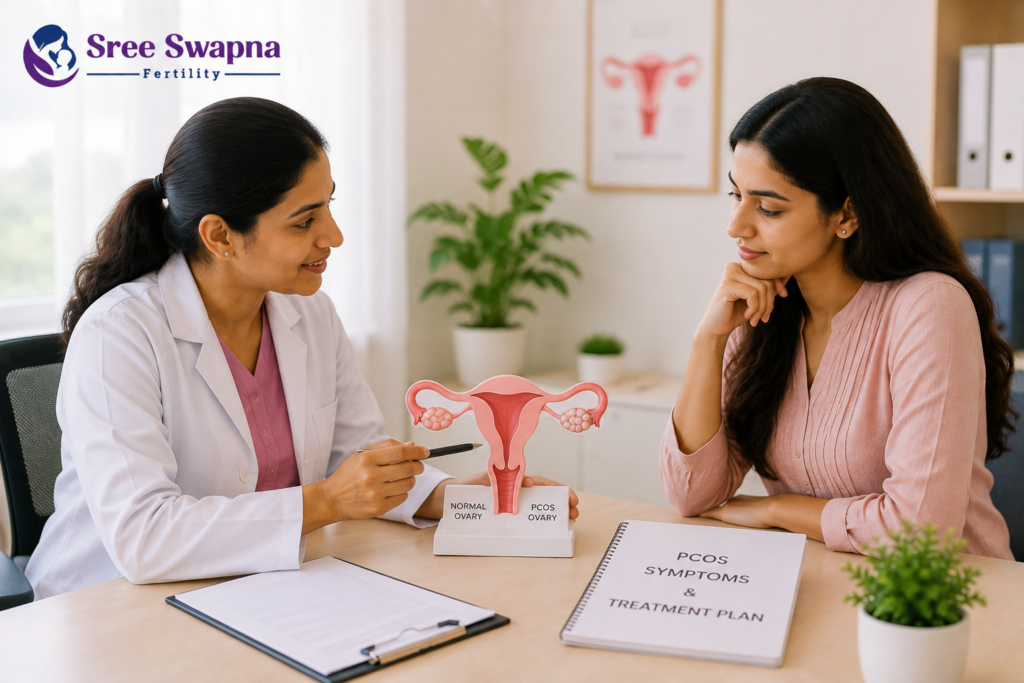
Polycystic ovary syndrome (PCOS) is a common hormonal and metabolic condition that can affect menstrual cycles, ovulation, skin, hair growth, body weight and fertility. Symptoms vary widely, and not every person with PCOS has the same features.
PCOS is manageable, but treatment should be tailored to the individual’s symptoms, metabolic health and whether pregnancy is a current goal.
For related treatment information, explore PCOS treatment and fertility specialist. These resources provide additional context for the treatment choices discussed in this guide.
Common Symptoms of PCOS
Possible features include:
- irregular or infrequent periods
- absent ovulation or unpredictable ovulation
- excess facial or body hair
- acne or oily skin
- scalp hair thinning
- difficulty conceiving
- weight gain or difficulty managing weight in some people
- darkened skin or other signs of insulin resistance in some patients
PCOS can also be associated with metabolic and psychological health concerns. This is why management is broader than simply regulating periods.
How Is PCOS Diagnosed?
Diagnosis is based on clinical history, examination and appropriate testing. Other conditions that can mimic PCOS may need to be excluded. Ultrasound appearance alone is not enough to diagnose every patient.
The exact diagnostic criteria and tests depend on age and clinical context, so self-diagnosis from symptoms or an ultrasound report is not recommended.
Does PCOS Cause Infertility?
PCOS can make conception harder mainly because ovulation may be irregular or absent. However, many women with PCOS conceive naturally or with treatment. Fertility planning should consider age, duration of infertility, ovarian function, semen analysis, tubal factors and other possible causes rather than assuming PCOS is the only issue.
PCOS Treatment When Pregnancy Is Not the Immediate Goal
Management may focus on menstrual regularity, acne, excess hair growth, metabolic risk and long-term health. Lifestyle support, hormonal medicines or other treatments may be considered depending on symptoms and medical history.
For additional context, review IUI treatment. You can also explore IVF treatment to understand related options before discussing the next step with your fertility team.
PCOS Treatment When You Want to Get Pregnant
The first step is to confirm whether ovulation is occurring and evaluate both partners where appropriate. Treatment may include lifestyle support, ovulation-induction medicines, timed intercourse, IUI or IVF depending on the diagnosis and response.
Not every woman with PCOS needs IVF. Many patients can conceive with simpler treatment when that is clinically appropriate.
Lifestyle and PCOS
Lifestyle intervention is recommended as part of PCOS care, but it should not be presented as a punishment or a guaranteed cure. Sustainable nutrition, physical activity, sleep and management of other health conditions can support overall wellbeing and may improve reproductive and metabolic outcomes in some patients.
PCOS and Weight
Weight is only one part of PCOS care. People with PCOS can have symptoms at many body sizes. Treatment should avoid stigma and focus on measurable health goals, individual preferences and evidence-based care.
When Should You See a Fertility Specialist?
Consider an evaluation if periods are very irregular, you are not ovulating, you have been trying to conceive without success, you have had repeated pregnancy losses, or age and fertility history make timely assessment important.
If you would like advice based on your reports, age, diagnosis and treatment history, book a consultation for an individual fertility assessment.
Frequently Asked Questions
1. What is PCOS?
Polycystic ovary syndrome is a common hormonal and metabolic condition associated with ovulatory dysfunction, signs of androgen excess, and/or polycystic ovarian morphology depending on the diagnostic framework.
2. What are common PCOS symptoms?
Common features include irregular or absent periods, acne, increased facial or body hair, scalp hair thinning, difficulty conceiving, and weight or metabolic concerns in some patients.
3. Can I have PCOS without ovarian cysts?
Yes. The name can be misleading; a person can meet diagnostic criteria without classic polycystic ovarian morphology on ultrasound.
4. Can I have regular periods and still have PCOS?
It is possible, although irregular ovulation is common. Diagnosis requires a full clinical assessment rather than relying on one symptom.
5. How is PCOS diagnosed?
Diagnosis is based on symptoms, menstrual and reproductive history, examination, laboratory tests, and sometimes ultrasound after excluding other conditions that can mimic PCOS.
6. Does PCOS always cause infertility?
No. Many people with PCOS conceive naturally. Fertility difficulty often relates to irregular or absent ovulation and can frequently be treated.
7. Why does PCOS cause irregular periods?
Hormonal signalling can disrupt regular follicle development and ovulation, leading to longer, unpredictable, or absent cycles.
8. Can PCOS cause weight gain?
Weight gain or difficulty with weight management can occur, but PCOS affects people across all body sizes. Weight should not be used as the sole marker of severity.
9. Is insulin resistance common in PCOS?
Yes, insulin resistance and metabolic risk are common in PCOS, although not every patient has the same metabolic profile.
10. How is PCOS treated?
Treatment is individualized to goals such as cycle regulation, androgen-related symptoms, metabolic health, or fertility. Lifestyle support and medications may be used depending on clinical needs.
11. What lifestyle changes help PCOS?
Regular physical activity, sustainable nutrition, adequate sleep, and weight management where appropriate can improve overall metabolic and reproductive health.
12. Can losing weight restore ovulation?
For some patients with higher body weight, modest weight reduction may improve ovulation and metabolic health, but weight loss is not the only treatment and should be approached supportively.
13. What fertility treatments are used for PCOS?
For anovulatory infertility, clinicians may use ovulation-induction medication, with letrozole commonly recommended as first-line in suitable patients under current international guidance. Other options depend on response and additional fertility factors.
14. Is metformin used for PCOS?
Metformin may be used for selected metabolic or reproductive indications, but it is not appropriate for everyone and should be prescribed after clinical evaluation.
15. Can PCOS increase miscarriage risk?
Some studies show higher pregnancy complications in PCOS populations, but individual risk varies and should be discussed based on age, weight, metabolic health, and other factors.
16. Does PCOS increase diabetes risk?
PCOS is associated with increased risk of impaired glucose regulation and type 2 diabetes, so metabolic screening may be recommended.
17. Can PCOS affect mental health?
Yes. Anxiety, depression, body-image concerns, and eating difficulties are more common in PCOS and deserve appropriate screening and support.
18. Can pregnancy improve PCOS permanently?
Pregnancy can temporarily change cycles and hormones, but it does not permanently cure the underlying syndrome.
19. When should I see a fertility specialist for PCOS?
Seek help if cycles are very irregular, you are not ovulating, you have been trying to conceive without success, or age and other risk factors suggest earlier evaluation.
20. Can IVF be needed for PCOS?
Yes, but many patients conceive with simpler treatment first. IVF may be considered when ovulation induction fails, additional infertility factors are present, or other clinical reasons apply.
21. Can PCOS be managed long term?
Yes. Long-term care can address cycle health, fertility goals, metabolic risk, androgen-related symptoms, and psychological wellbeing as needs change over time.
Next Step
For PCOS and fertility evaluation in Hyderabad, book a consultation with Sree Swapna Fertility Centre.
Medical References
Important: This article is for general educational information and is not a substitute for individualized medical advice.
