
What Is Hydrosalpinx?
A hydrosalpinx is a fallopian tube that is blocked and distended with fluid. It often results from previous pelvic infection, inflammation, surgery or other tubal damage. It is different from a simple statement that a tube is blocked because the presence of fluid and communication with the uterine cavity can be particularly relevant to IVF.
How Hydrosalpinx Affects Natural Fertility
A severely damaged tube may interfere with egg and sperm transport. If both tubes are affected, natural conception can become much less likely. The site’s broader blocked fallopian tubes treatment guide explains tubal blockage, HSG and treatment options.
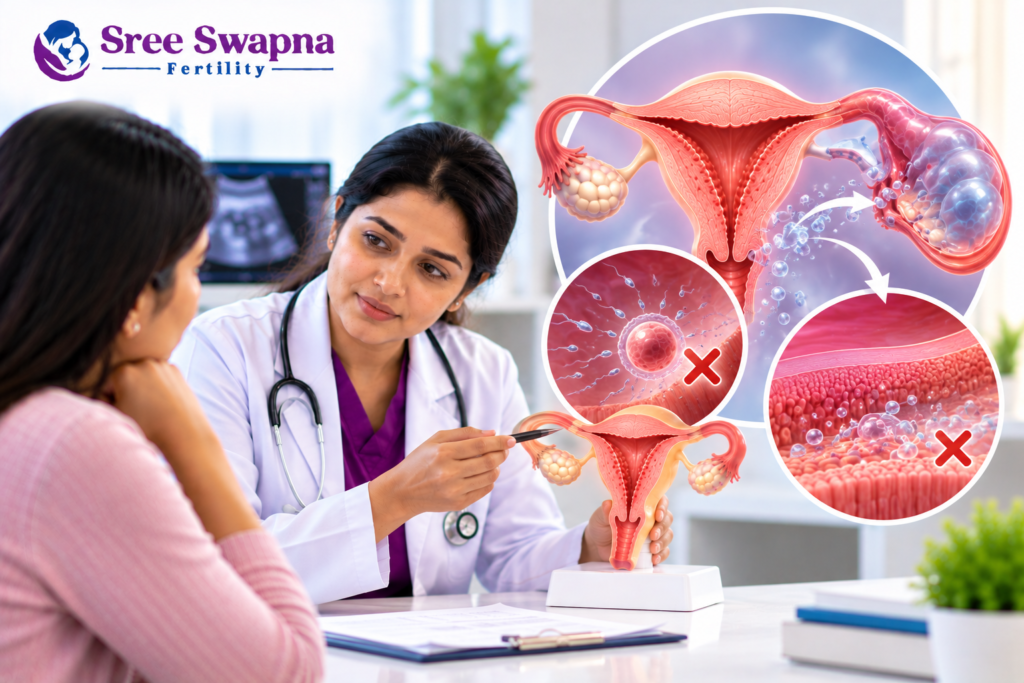
Hydrosalpinx is a fluid-filled damaged fallopian tube that may affect fertility planning.
Why Hydrosalpinx Matters Before IVF
IVF bypasses the fallopian tubes for fertilization, but hydrosalpinx fluid may still affect the uterine environment and implantation. For this reason, clinicians may discuss treating a communicating hydrosalpinx before embryo transfer rather than simply proceeding as though the tube is irrelevant.
How Hydrosalpinx Is Diagnosed
Hydrosalpinx may be suspected on ultrasound or identified during HSG or laparoscopy. Each test provides different information. The clinic’s HSG vs hysteroscopy guide helps explain why a tubal test and a uterine-cavity test are not interchangeable.
Treatment Before IVF
Depending on the tube, symptoms, surgical history and reproductive plan, options may include salpingectomy or proximal tubal occlusion before IVF. The decision should be individualized because pelvic surgery also has risks, including possible effects on ovarian blood supply in some circumstances.
Hydrosalpinx and Embryo Transfer Timing
If surgery is performed, the fertility team decides when stimulation or embryo transfer can proceed based on recovery and the overall plan. For patients using frozen embryos, the frozen embryo transfer timeline explains the usual preparation steps once the uterine environment is ready.
What If Only One Tube Is Affected?
A unilateral hydrosalpinx still requires individualized assessment. The status of the other tube, age, ovarian reserve, previous pregnancies and duration of infertility all influence whether natural conception, surgery or IVF is the most reasonable next step.
Hydrosalpinx, Endometriosis and Pelvic Disease
Some patients have hydrosalpinx alongside endometriosis, adhesions or previous pelvic infection. These additional findings may change surgery and fertility planning. A complete evaluation is more useful than treating the X-ray or ultrasound finding in isolation.
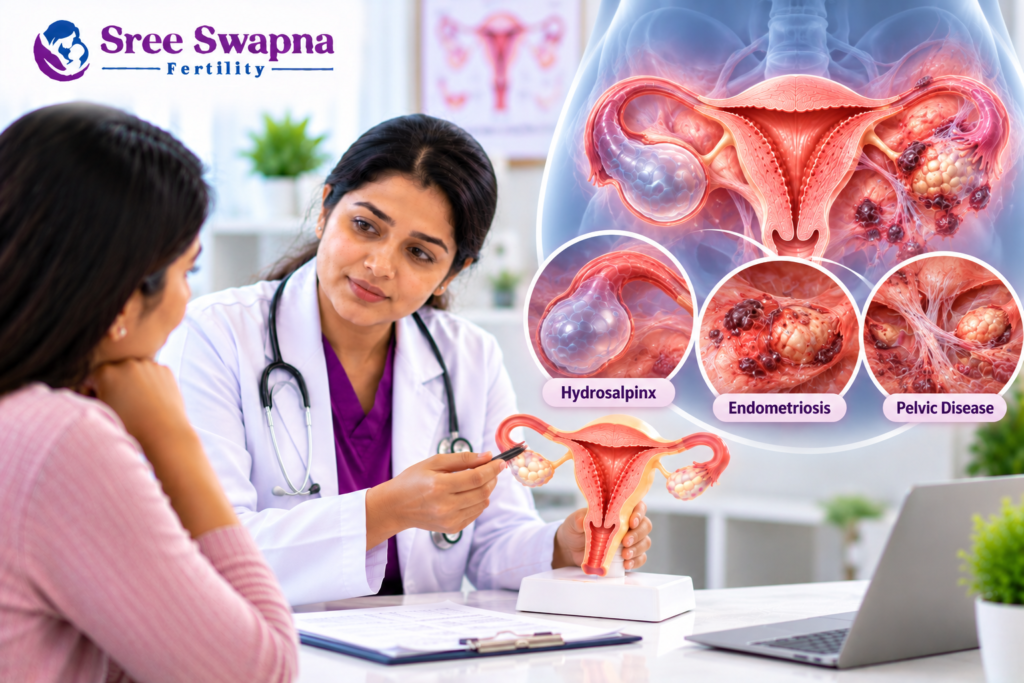
Tubal findings are interpreted together with ultrasound and other fertility tests.
Related Fertility Topics to Understand
This topic is closely connected with several other parts of fertility evaluation and treatment. For a fuller picture, read the blocked fallopian tubes treatment, then compare it with the HSG vs hysteroscopy. Patients moving toward assisted reproduction may also find the frozen embryo transfer timeline useful, while the IVF treatment guide explains another related decision point. If treatment planning is already underway, the recurrent implantation failure can help connect this topic with the next stage of care.
Fertility Guidance From Dr. Swapna Naik
At Sree Swapna Fertility Centre, patients can discuss hydrosalpinx and IVF in the context of their complete fertility history rather than treating one test or symptom in isolation. Dr. Swapna Naik evaluates factors such as age, ovarian reserve, semen parameters, uterine and tubal health, previous treatment response and reproductive goals before recommending the next step. This individualized approach is especially important in fertility care because the same finding can have different implications for different patients.
Frequently Asked Questions
What is hydrosalpinx?
Hydrosalpinx And Ivf refers to a fertility-related concept that should be interpreted in the context of age, symptoms, test results and the couple’s overall treatment plan. A fertility specialist can explain what it means for an individual case.
Is hydrosalpinx the same as a blocked fallopian tube?
The answer depends on the individual fertility history and clinical findings. For hydrosalpinx and IVF, decisions are best made after reviewing the relevant tests, symptoms, age and reproductive goals with a fertility specialist.
Can hydrosalpinx cause infertility?
Several factors can contribute, and the exact cause may differ from one patient to another. Evaluation usually combines medical history, examination and targeted fertility tests rather than relying on one symptom or one laboratory value.
Can I get pregnant naturally with hydrosalpinx?
Pregnancy and live-birth chances depend on multiple factors, including age, ovarian reserve, sperm factors, embryo quality, uterine health and the underlying diagnosis. No single test, medication or add-on can guarantee success.
Can hydrosalpinx affect IVF success?
Pregnancy and live-birth chances depend on multiple factors, including age, ovarian reserve, sperm factors, embryo quality, uterine health and the underlying diagnosis. No single test, medication or add-on can guarantee success.
How does hydrosalpinx affect implantation?
The answer depends on the individual fertility history and clinical findings. For hydrosalpinx and IVF, decisions are best made after reviewing the relevant tests, symptoms, age and reproductive goals with a fertility specialist.
How is hydrosalpinx diagnosed?
The appropriate tests depend on the clinical situation. A fertility evaluation may combine blood tests, ultrasound, semen testing, uterine or tubal assessment, and other investigations when clinically indicated.
Can ultrasound detect hydrosalpinx?
The answer depends on the individual fertility history and clinical findings. For hydrosalpinx and IVF, decisions are best made after reviewing the relevant tests, symptoms, age and reproductive goals with a fertility specialist.
Can HSG detect hydrosalpinx?
The answer depends on the individual fertility history and clinical findings. For hydrosalpinx and IVF, decisions are best made after reviewing the relevant tests, symptoms, age and reproductive goals with a fertility specialist.
Is laparoscopy required to diagnose hydrosalpinx?
The appropriate tests depend on the clinical situation. A fertility evaluation may combine blood tests, ultrasound, semen testing, uterine or tubal assessment, and other investigations when clinically indicated.
Does hydrosalpinx always need treatment before IVF?
Treatment should address the underlying cause and may range from monitoring or medicines to fertility procedures such as IUI, IVF or surgery when indicated. The most appropriate option is individualized after evaluation.
What is salpingectomy?
Hydrosalpinx And Ivf refers to a fertility-related concept that should be interpreted in the context of age, symptoms, test results and the couple’s overall treatment plan. A fertility specialist can explain what it means for an individual case.
What is proximal tubal occlusion?
Hydrosalpinx And Ivf refers to a fertility-related concept that should be interpreted in the context of age, symptoms, test results and the couple’s overall treatment plan. A fertility specialist can explain what it means for an individual case.
Can hydrosalpinx return after treatment?
Treatment should address the underlying cause and may range from monitoring or medicines to fertility procedures such as IUI, IVF or surgery when indicated. The most appropriate option is individualized after evaluation.
Can one hydrosalpinx affect pregnancy if the other tube is normal?
There is no single number that is ideal for everyone. Reference ranges vary by laboratory, age, treatment stage and clinical context, so results should be interpreted alongside ultrasound findings and other fertility tests.
Can IVF bypass hydrosalpinx?
It can influence IVF planning, but its importance depends on the broader clinical picture. The fertility team may adjust stimulation, embryo-transfer timing, medication support or additional evaluation based on the patient’s diagnosis.
How long after hydrosalpinx surgery can IVF start?
Timing is individualized and can depend on the menstrual cycle, stimulation response, laboratory results and the treatment protocol. Follow the schedule given by the treating fertility team rather than changing medicines or appointments independently.
Can hydrosalpinx cause miscarriage?
Several factors can contribute, and the exact cause may differ from one patient to another. Evaluation usually combines medical history, examination and targeted fertility tests rather than relying on one symptom or one laboratory value.
Can endometriosis cause hydrosalpinx?
Several factors can contribute, and the exact cause may differ from one patient to another. Evaluation usually combines medical history, examination and targeted fertility tests rather than relying on one symptom or one laboratory value.
When should I see a fertility specialist for hydrosalpinx?
Timing is individualized and can depend on the menstrual cycle, stimulation response, laboratory results and the treatment protocol. Follow the schedule given by the treating fertility team rather than changing medicines or appointments independently.
Conclusion
Hydrosalpinx deserves special attention because IVF bypasses the tube but does not necessarily remove the effect of tubal fluid on the uterine environment. Diagnosis, treatment and embryo-transfer timing should therefore be planned together.
Medical References
• ESHRE: Ovarian Stimulation for IVF/ICSI guideline update (2025)
• American Society for Reproductive Medicine: Practice Guidance
Medical review recommended before publication. Information is educational and does not replace individualized medical advice.
