
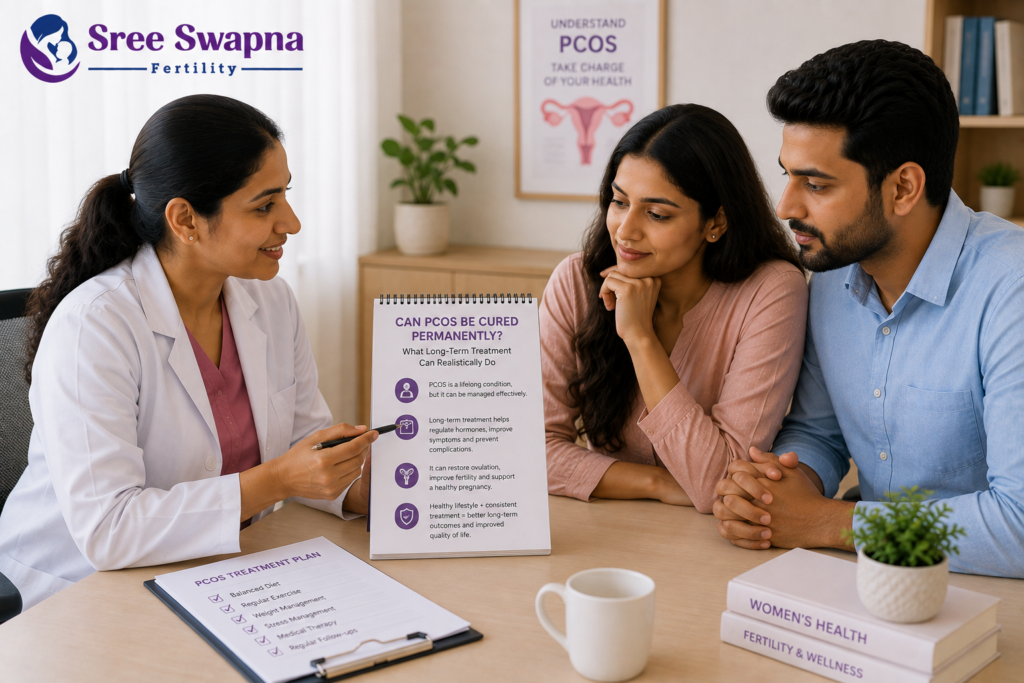
People often search “how to cure PCOS permanently” because they want a clear end point. The medically responsible answer is that PCOS is generally treated as a long-term hormonal and metabolic condition rather than something that can be guaranteed to disappear forever.
That does not mean nothing can be done. Many symptoms can improve substantially, fertility can often be supported, and long-term health risks can be managed with an individual treatment plan.
For related treatment information, explore PCOS treatment and PCOS symptoms and treatment. These resources provide additional context for the treatment choices discussed in this guide.
Why There Is No Single Permanent Cure
PCOS is not caused by one simple problem. Genetics, hormone regulation, insulin resistance, ovarian function, metabolism and other factors may all play a role. Symptoms can also change over time.
Because of this, a treatment that improves one person’s cycles may not address another person’s acne, fertility goals or metabolic risk.
What “Successful PCOS Treatment” Looks Like
Treatment goals can include:
- more predictable menstrual cycles
- improved ovulation when pregnancy is desired
- better management of acne or excess hair growth
- improved metabolic health
- reduced risk of endometrial problems from prolonged irregular cycles
- support for fertility
- improved quality of life
Success should be defined around the patient’s goals, not around an unrealistic promise that PCOS has been “removed permanently.”
Lifestyle Management
International evidence-based guidance supports healthy lifestyle intervention as part of PCOS care. This can include nutrition, physical activity, sleep and behavioural support. The plan should be realistic and sustainable, not a crash diet.
For additional context, review ovulation and fertility care. You can also explore IUI treatment to understand related options before discussing the next step with your fertility team.
Lifestyle changes may improve metabolic health and, for some women, menstrual or ovulatory function. They do not guarantee permanent cure.
Medicines for PCOS
Medicines may be used for menstrual regulation, androgen-related symptoms, insulin resistance or fertility depending on the patient. The right treatment depends on whether pregnancy is currently desired and on medical history.
Never start or stop prescription medicines solely because of online advice.
PCOS and Fertility Treatment
If irregular ovulation is making conception difficult, the fertility specialist may discuss ovulation induction. Depending on age, duration of infertility, semen analysis, tubal factors and response, IUI or IVF may be considered later.
Many women with PCOS do not need IVF.
Do Symptoms Come Back?
They can. Symptoms may change with age, weight changes, pregnancy, medicines and other health factors. Long-term follow-up is therefore more useful than searching for a one-time “cure.”
Be Careful with “Permanent Cure” Claims
Supplements, detox programmes and extreme diets sometimes promise to cure PCOS permanently. Such claims should be treated cautiously. Ask whether the recommendation is supported by high-quality evidence, whether it is safe with your medicines, and whether a qualified clinician has reviewed your diagnosis.
If you would like advice based on your reports, age, diagnosis and treatment history, book a consultation for an individual fertility assessment.
Frequently Asked Questions
1. Can PCOS be cured permanently?
Current evidence does not support a permanent cure for PCOS. It is a long-term condition that can often be managed very effectively with individualized lifestyle and medical care.
2. Can PCOS symptoms disappear completely?
Symptoms can improve substantially and may become minimal for long periods, but the underlying tendency can persist and may change across life stages.
3. Can weight loss cure PCOS?
No. Weight management can improve symptoms and metabolic health for some people, but PCOS also occurs in lean individuals and weight loss is not a cure.
4. Can pregnancy cure PCOS?
No. Pregnancy can temporarily change hormone patterns and menstrual cycles, but it does not remove the underlying condition.
5. Can metformin cure PCOS permanently?
No. Metformin can help selected metabolic and reproductive features while it is used, but it is not a permanent cure.
6. Can birth-control pills cure PCOS?
No. Hormonal contraceptives can regulate bleeding and improve androgen-related symptoms for some patients, but they manage symptoms rather than cure PCOS.
7. Can natural remedies permanently cure PCOS?
No supplement or herbal remedy has been proven to permanently cure PCOS. Some may interact with medicines, so discuss them with a clinician.
8. Can diet alone cure PCOS?
No single diet cures PCOS. A sustainable eating pattern can support metabolic health and symptom management.
9. Can exercise reverse PCOS?
Exercise can improve insulin sensitivity, fitness, mood, and metabolic health, but it should be viewed as management rather than a guaranteed reversal.
10. Can PCOS return after symptoms improve?
Yes. Symptoms can fluctuate with age, weight changes, stress, medications, and reproductive stages, which is why long-term follow-up can be helpful.
11. What does remission mean in PCOS?
Some people use remission to describe a period with fewer symptoms or improved cycles and metabolic markers. It does not mean the condition is permanently eliminated.
12. How can irregular periods be managed long term?
Management depends on pregnancy goals and clinical risks. Options may include lifestyle measures and medicines to regulate cycles or protect the endometrium.
13. How can acne and excess hair be managed?
Treatment may include dermatologic care, hormonal therapy when appropriate, cosmetic methods, and management of underlying androgen excess.
14. How can PCOS-related infertility be treated?
Treatment focuses on restoring or inducing ovulation and checking for other fertility factors. Medication, IUI, or IVF may be used depending on the individual case.
15. Is letrozole used for PCOS infertility?
Current international guidance supports letrozole as a first-line pharmacological option for ovulation induction in suitable women with anovulatory PCOS infertility and no other infertility factors.
16. Should women with PCOS be screened for diabetes?
Because metabolic risk is increased, clinicians may recommend periodic assessment of glucose regulation and cardiovascular risk based on individual factors.
17. Can PCOS be managed without medication?
Some people can manage certain symptoms with lifestyle measures alone, while others need medication. Treatment should match the person’s symptoms, goals, and risks.
18. Does PCOS get better with age?
Ovulatory patterns and androgen levels may change with age, but metabolic and reproductive risks do not disappear automatically.
19. What is the best long-term PCOS plan?
A strong plan addresses menstrual health, fertility goals, metabolic health, sleep, activity, nutrition, mental wellbeing, and periodic medical review.
20. When should I seek urgent medical advice with PCOS?
Seek prompt care for very heavy bleeding, severe pelvic pain, symptoms of pregnancy complications, or other acute concerns rather than assuming they are caused by PCOS.
21. What should I ask my fertility specialist about PCOS?
Ask what is driving your symptoms, whether you are ovulating, what metabolic screening you need, which fertility treatment fits your goals, and how progress will be monitored.
Next Step
If PCOS is affecting your cycles or fertility, schedule a personalised consultation with Sree Swapna Fertility Centre.
Medical References
Important: This article is for general educational information and is not a substitute for individualized medical advice.
