
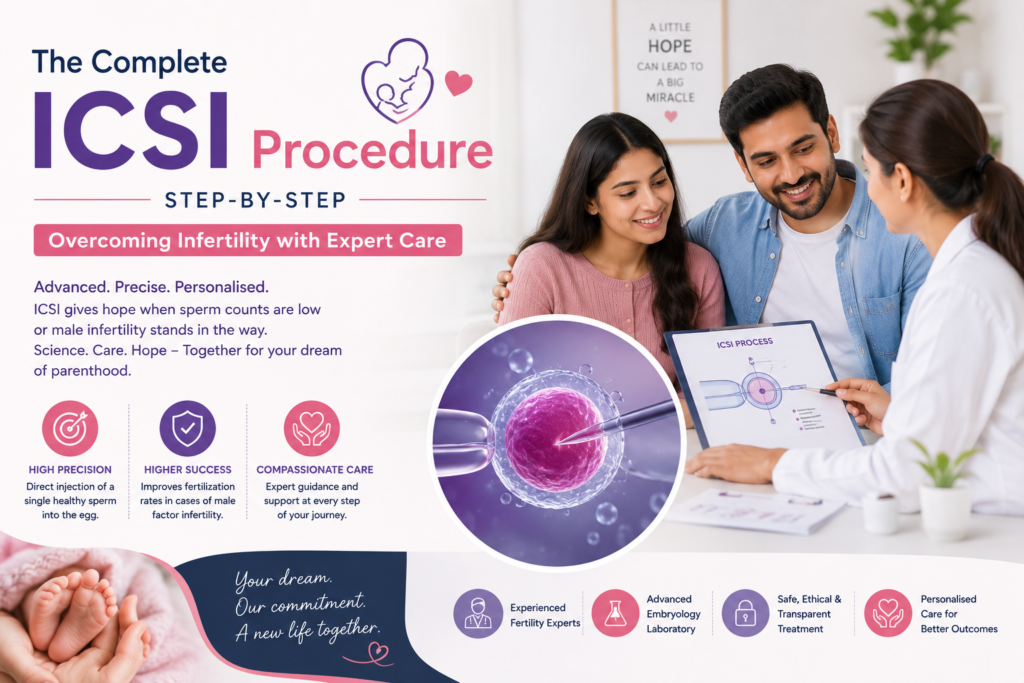
The Complete ICSI Procedure Step-by-Step: Overcoming Infertility with Expert Care
Dealing with infertility is an emotionally exhausting journey. Month after month of negative pregnancy tests can leave you feeling frustrated, heartbroken, and searching for answers. If you or your partner are facing challenges related to male factor infertility, or if previous IVF attempts have not resulted in fertilization, there is still hope. Modern reproductive medicine offers highly advanced solutions, and understanding your options is the first step toward building the family you have always dreamed of.
One of the most effective breakthroughs in fertility treatment is the ICSI procedure. In this comprehensive guide, we will break down exactly what this treatment involves, how it helps overcome severe infertility hurdles, and what you can expect during your journey to parenthood.
What is the ICSI Procedure? (Featured Snippet)
The ICSI procedure (Intracytoplasmic Sperm Injection) is an advanced fertility treatment used alongside IVF. During this highly precise process, an embryologist selects a single, healthy sperm and injects it directly into the center of a mature egg. This bypasses natural fertilization hurdles, making it highly effective for treating severe male infertility and ensuring successful embryo development.
Symptoms That May Indicate You Need ICSI
Unlike a common cold or a backache, male factor infertility often does not present obvious physical symptoms. However, certain signs and reproductive histories may indicate that standard conception or traditional IVF might not be enough. You may be a candidate for ICSI if you experience:
- A history of failed fertilization during previous traditional IVF cycles.
- Problems with sexual function, such as erectile dysfunction or difficulties with ejaculation.
- Visible swelling or pain in the testicle area (which could indicate a varicocele).
- Decreased facial or body hair, signaling a chromosomal or hormonal abnormality.
- Underlying pelvic pain in female partners, such as endometriosis, which may require maximizing fertilization chances with available healthy eggs.
Causes Behind the Need for ICSI
ICSI was specifically developed to address severe male factor infertility. While standard IVF mixes thousands of sperm with an egg in a dish, ICSI takes the guesswork out of the equation. Common causes that necessitate this treatment include:
- Oligospermia: A significantly low sperm count.
- Asthenozoospermia: Poor sperm motility (the sperm’s ability to swim and penetrate the egg).
- Teratozoospermia: Abnormal sperm morphology (shape and size).
- Physical Blockages: Conditions like a vasectomy or genetic absence of the vas deferens that prevent sperm from mixing with semen.
- High DNA Fragmentation: Sperm that appears normal but has underlying genetic damage.
Risk Factors Affecting Fertility
Several lifestyle and environmental factors can negatively impact sperm quality and overall fertility, potentially leading to the need for ICSI. These risk factors include:
- Age: Advanced age can reduce sperm quality and egg viability.
- Lifestyle Choices: Smoking, excessive alcohol consumption, and the use of recreational drugs.
- Weight: Obesity can trigger hormonal imbalances that affect reproductive health.
- Environmental Toxins: Prolonged exposure to heavy metals, industrial chemicals, or excessive heat.
- Medical History: Previous cancer treatments (chemotherapy/radiation) or chronic health conditions.
Diagnosis: Preparing for Your Fertility Journey
Before starting the ICSI procedure, your fertility specialist will conduct a thorough medical evaluation. Accurate diagnosis is essential to tailor the treatment to your specific needs.
- Comprehensive Semen Analysis: This is the primary test to evaluate sperm count, motility, and morphology.
- Blood Tests: To check hormone levels (such as FSH, LH, and testosterone) in both partners.
- Genetic Testing: If a genetic abnormality is suspected to be the root cause of infertility.
- Ultrasound: To check the female partner’s ovarian reserve and the male partner’s reproductive organs for physical blockages.
Treatment Options: The ICSI Procedure Step-by-Step
Understanding the treatment process can significantly reduce the anxiety associated with fertility care. Here is the step-by-step breakdown of how the ICSI procedure works:
Step 1: Ovarian Stimulation
The female partner receives carefully monitored hormone medications for 8 to 14 days. This stimulates the ovaries to produce multiple mature eggs instead of the single egg typically released during a natural cycle.
Step 2: Egg Retrieval
Once the eggs are mature, they are collected during a minor, minimally invasive surgical procedure. The patient is placed under light sedation to ensure absolute comfort, and a fine needle is guided via ultrasound to retrieve the eggs from the follicles.
Step 3: Sperm Collection and Preparation
On the same day as the egg retrieval, a semen sample is collected from the male partner. In cases where there is a blockage or no sperm in the ejaculate, sperm can be surgically extracted directly from the testicles (using procedures like TESE or PESA). The laboratory then washes and prepares the sample to isolate the healthiest, most active sperm.
Step 4: The Injection (ICSI)
This is the defining moment of the procedure. Using a high-powered microscope, a highly skilled embryologist picks up a single, morphologically perfect sperm using a microscopic glass needle. The embryologist then gently pierces the outer shell of the egg and injects the sperm directly into the cytoplasm.
Step 5: Embryo Observation and Transfer
Following the injection, the eggs are placed in a controlled incubator. The embryology team closely monitors them over the next 3 to 5 days to ensure healthy cell division. Once the embryos reach the optimal stage (often the blastocyst stage), the best quality embryo is carefully transferred into the woman’s uterus. Any remaining healthy embryos can be frozen for future use.
Traditional IVF | The ICSI Procedure |
|---|---|
Sperm and egg are placed together in a petri dish. | A single sperm is directly injected into the egg. |
Relies on the sperm’s natural ability to penetrate the egg. | Bypasses the need for sperm to penetrate the egg naturally. |
Best for tubal factor infertility or unexplained infertility. | Best for severe male factor infertility or previous IVF failure. |
Non-Surgical Treatments & Alternatives
While ICSI is highly effective, it is not always the first step. Depending on your diagnosis, your doctor might recommend less invasive, non-surgical treatments first:
- Fertility Medications: To balance hormones and stimulate ovulation.
- Intrauterine Insemination (IUI): A procedure where washed, concentrated sperm is placed directly into the uterus during ovulation.
- Lifestyle Modifications: Diet changes, stress reduction, and targeted supplements to improve natural sperm and egg quality.
Prevention Tips for Protecting Your Fertility
While not all causes of infertility can be prevented, you can take proactive steps to protect your reproductive health:
- Maintain a healthy BMI through a balanced diet and regular exercise.
- Quit smoking and limit alcohol intake.
- Manage stress through yoga, meditation, or counseling.
- Avoid prolonged exposure to high temperatures (like hot tubs or saunas) which can damage sperm.
When to See a Doctor
Time is of the essence in fertility care. You should schedule a consultation with a fertility specialist if:
- You are under 35 and have been trying to conceive for 12 months without success.
- You are over 35 and have been trying for 6 months.
- You have known reproductive issues, irregular periods, or a history of pelvic pain/endometriosis.
The Benefits of Early Treatment
Seeking help early drastically improves your chances of a successful pregnancy. Early intervention allows doctors to diagnose issues before they worsen, gives you more treatment options, and often results in a less stressful, more affordable path to parenthood.
Why Choose Sree Swapna Fertility Centre?
When it comes to building your family, you deserve world-class care, compassion, and cutting-edge technology. Sree Swapna Fertility Centre is proud to be recognized as the Best IVF Centre in Hyderabad, offering personalized care tailored to your unique medical history.
With state-of-the-art embryology labs, we are also trusted as the Best IVF Centre in Kondapur and the Best IVF Centre in Attapur. Our high success rates, transparent pricing, and ethical medical practices ensure that you are in the safest hands possible throughout your journey.
Doctor Consultation: Comprehensive Care for Your Journey
We understand that fertility treatments can take a physical and emotional toll. Our multidisciplinary team goes beyond basic reproductive care. Alongside our renowned fertility experts, we coordinate with specialized wellness and expert pain specialists to help manage any chronic pelvic pain, endometriosis discomfort, or pregnancy-related back pain you may experience along the way.
Don’t let infertility dictate your future. Take the first step toward your dream family today.
Call us now at 7670804424 to schedule your confidential consultation.
FAQs
Q1: Is the ICSI procedure painful?
No, the ICSI procedure itself is performed in a laboratory on the retrieved eggs and sperm. The egg retrieval process for the female partner is done under light anesthesia, ensuring you feel no pain, though mild cramping afterward is normal.
Q2: What is the success rate of the ICSI procedure?
ICSI successfully fertilizes 70% to 85% of injected eggs. However, the overall pregnancy success rate depends on various factors, including the female partner’s age and the quality of the resulting embryos.
Q3: Does ICSI increase the risk of birth defects?
The risk of birth defects with ICSI is very low and comparable to standard IVF (around 1-2% higher than natural conception, often linked to the underlying infertility rather than the procedure itself).
Q4: How long does the entire ICSI treatment cycle take?
A typical IVF-ICSI cycle takes about 4 to 6 weeks from the start of ovarian stimulation medications to the embryo transfer.
Q5: Are the babies born through ICSI healthy?
Absolutely. Millions of healthy babies have been born worldwide using the ICSI procedure, and they grow up to be just as healthy as children conceived naturally.
Ready to start your journey to parenthood?
Do not wait another day wondering “what if.” Trust your dreams to the most compassionate and advanced fertility experts.
📞 Call Sree Swapna Fertility Centre at 7670804424 today to book your appointment or to speak with our care coordinators regarding your queries. Your baby dream is our mission!
