
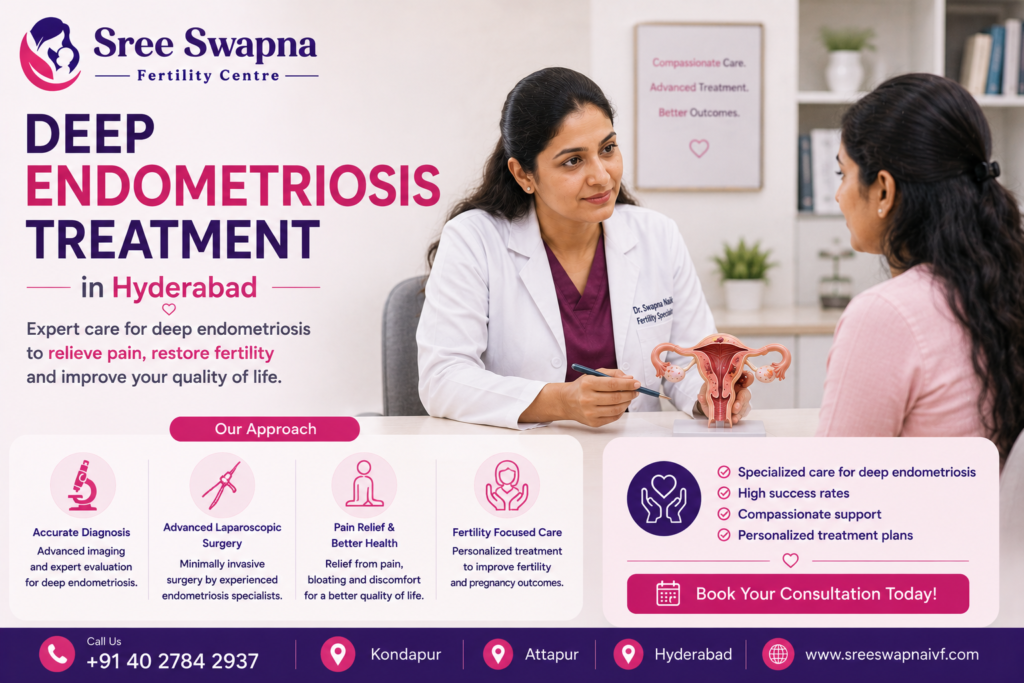
Not all endometriosis looks the same under the surface. Deep infiltrating endometriosis (DIE) is considered the most severe form of the disease — penetrating deeply into pelvic structures rather than sitting superficially on the peritoneal surface.
This guide explains what makes DIE different, where it commonly occurs, and how surgical treatment is approached when multiple pelvic structures are involved.
What Makes Endometriosis “Deep”?
Endometriosis is generally classified into three types:
- Superficial (peritoneal) endometriosis — lesions on the surface lining of the pelvis
- Ovarian endometriosis — chocolate cysts (endometriomas) on the ovaries
- Deep infiltrating endometriosis (DIE) — lesions penetrating more than 5mm beneath the surface, into deeper pelvic structures
DIE is found in roughly 10–20% of women with endometriosis, and it’s associated with more significant pain and, often, more complex surgical treatment.
Where Does Deep Infiltrating Endometriosis Occur?
DIE can affect several structures, sometimes simultaneously:
- Uterosacral ligaments — one of the most commonly affected sites
- Pouch of Douglas (retrocervical area) and the rectovaginal septum — frequently involved, often causing deep pain during intercourse
- Parametrium — the tissue extending from the uterus toward the pelvic sidewall; posterior involvement here is seen in a majority of DIE cases, and lateral involvement, while less common, is linked to more severe pain and urinary symptoms
- Bladder — a specific subtype we’ve covered in detail separately
- Bowel (rectum and sigmoid colon) — another specific subtype covered in detail separately
- Ureters — less commonly affected, but important to check for, since ureteral involvement can silently affect kidney function if missed
Because DIE frequently involves more than one of these areas at once, thorough imaging and surgical planning matter enormously.
Symptoms of Deep Infiltrating Endometriosis
- Severe, often progressively worsening period pain
- Deep pain during intercourse
- Chronic pelvic pain, not limited to menstruation
- Symptoms specific to the affected organ — for example, urinary symptoms with bladder involvement, or bowel symptoms with rectosigmoid involvement
- Infertility, in some cases
How Is DIE Diagnosed?
- Transvaginal Ultrasound: Often the first step, and increasingly effective at detecting deep lesions when performed by an experienced specialist
- MRI: Provides more detailed mapping of lesion location and depth, particularly important for surgical planning when multiple structures may be involved
- Careful Assessment for Ureteral Involvement: Since this can be present without obvious symptoms, specific attention during imaging is important
Accurate pre-surgical mapping is one of the most important factors in planning safe, effective DIE surgery.
Treatment Options for Deep Infiltrating Endometriosis
Medical (Hormonal) Treatment
Hormonal options — including birth control pills, progestins like dienogest, and GnRH agonists or antagonists — can meaningfully reduce pain and, in some documented cases, shrink lesions. However, this effect is generally temporary, and symptoms typically return once treatment is stopped, since the underlying tissue isn’t removed.
Surgical Treatment
Laparoscopic excision surgery is considered the gold standard for DIE, aiming to remove the full depth of affected tissue — not just the visible surface — across whichever structures are involved.
Key surgical principles include:
- Complete, margin-free excision, which is associated with better long-term pain relief and lower recurrence, compared to superficial ablation techniques
- Nerve-sparing surgical technique, which carefully preserves the pelvic nerves running near affected ligaments and tissue, reducing the risk of post-operative bladder or bowel dysfunction
- Multidisciplinary surgical teams, since DIE affecting the bowel, bladder, or ureters at the same time often requires coordinated input from colorectal or urological surgeons alongside a gynaecological surgeon, to safely and completely address all affected areas in one procedure
Why DIE Surgery Is More Complex Than Standard Endometriosis Surgery
Because DIE can distort normal pelvic anatomy and involve multiple organs simultaneously, surgery requires more extensive planning, longer operative time, and — in cases involving the bowel or ureters — a coordinated surgical team. This is very different from surgery for superficial endometriosis or an isolated ovarian cyst, and it’s an important distinction to understand when discussing your treatment options.
Is There a Permanent Cure for DIE?
There’s no guaranteed permanent cure for endometriosis, including its deep infiltrating form. However, complete, margin-free surgical excision by an experienced surgical team offers the best chance of long-term pain relief and lower recurrence, compared to medical management alone or incomplete surgical removal.
Deep Infiltrating Endometriosis Treatment at Sree Swapna Fertility Centre
DIE requires a specialist comfortable with complex pelvic anatomy and precise laparoscopic excision technique.
Dr. Swapna Naik, Clinical Director at Sree Swapna Fertility Centre, is a trained laparoscopic surgeon with over 15 years of experience, approaching DIE with thorough pre-surgical imaging and a focus on complete, nerve-sparing excision wherever possible. For cases involving significant bowel or ureteral disease, we coordinate with the appropriate specialist teams to ensure safe, complete treatment.
If you’re looking for detail on specific DIE subtypes, our dedicated articles on bladder endometriosis and bowel endometriosis cover those presentations in more depth.
Frequently Asked Questions
1. What is deep infiltrating endometriosis (DIE)?
It’s endometriosis that penetrates more than 5mm beneath the pelvic surface, considered the most severe form of the disease.
2. How common is DIE among women with endometriosis?
It’s estimated to affect roughly 10–20% of women with endometriosis.
3. Where does DIE most commonly occur?
Common sites include the uterosacral ligaments, the pouch of Douglas, the rectovaginal septum, and the parametrium, along with the bladder, bowel, and occasionally the ureters.
4. Is DIE the same as ovarian endometrioma (chocolate cyst)?
No, they’re different presentations. Ovarian endometrioma is a cyst on the ovary, while DIE involves deep tissue infiltration in other pelvic structures.
5. What is the gold standard treatment for DIE?
Laparoscopic excision surgery aiming for complete, margin-free removal of affected tissue is generally considered the gold standard.
6. Can hormonal treatment alone manage DIE?
It can reduce symptoms and sometimes shrink lesions temporarily, but symptoms typically return once treatment stops, since the tissue isn’t removed.
7. What is nerve-sparing surgery?
A surgical technique that carefully preserves pelvic nerves during DIE excision, reducing the risk of post-operative bladder or bowel dysfunction.
8. Why does DIE surgery sometimes need multiple surgical specialists?
When DIE involves the bowel, bladder, or ureters simultaneously, a coordinated team including colorectal or urological surgeons alongside a gynaecologist is often needed for complete, safe treatment.
9. Can DIE affect the ureters?
Yes, though less commonly than other sites, and this involvement can occur without obvious symptoms, making careful imaging important.
10. What imaging is used to diagnose DIE?
Transvaginal ultrasound is typically the first step, with MRI used for more detailed mapping, especially when planning complex surgery.
11. Is DIE surgery more complex than standard endometriosis surgery?
Yes, because DIE can distort pelvic anatomy and involve multiple organs simultaneously, requiring more extensive planning and, in some cases, a multidisciplinary team.
12. Can DIE be permanently cured?
There’s no guaranteed permanent cure, but complete surgical excision by an experienced team offers the best chance of long-term relief and lower recurrence.
13. What is the parametrium, and why does it matter in DIE?
It’s tissue extending from the uterus toward the pelvic sidewall; DIE here, especially in the lateral portion, is associated with more severe pain and urinary symptoms.
14. Does DIE always cause severe pain?
Most patients experience significant, often progressively worsening pain, though symptom severity can vary between individuals.
15. Can DIE affect fertility?
Yes, depending on the extent and location of disease, DIE can be associated with fertility challenges in some patients.
16. What is the difference between excision and ablation for DIE?
Excision removes the full depth of affected tissue, while ablation only treats the surface — excision is generally associated with better long-term outcomes for DIE specifically.
17. Is DIE surgery always done laparoscopically?
Laparoscopic surgery is the standard approach for most cases, offering better visualisation and generally faster recovery than open surgery.
18. Can DIE come back after surgery?
Recurrence is possible, though complete, margin-free excision is associated with lower recurrence rates compared to incomplete removal.
19. How is bladder or bowel involvement in DIE specifically treated?
These have specific surgical approaches depending on the extent of involvement — covered in more detail in our dedicated articles on bladder and bowel endometriosis.
20. Does every DIE patient need a multidisciplinary surgical team?
Not necessarily — this is generally reserved for cases involving significant bowel, bladder, or ureteral disease requiring coordinated, specialised surgical input.
21. What should I ask my surgeon before DIE surgery?
Ask about their specific experience with DIE excision, whether nerve-sparing technique will be used, and whether additional specialists will be involved if multiple organs are affected.
22. Where can I get deep infiltrating endometriosis treatment in Hyderabad?
Sree Swapna Fertility Centre offers diagnostic evaluation and laparoscopic excision surgery for DIE at both our Kondapur and Attapur clinics, coordinating additional specialists when needed.
Conclusion
Deep infiltrating endometriosis is a more complex, often more severe form of the disease, frequently involving multiple pelvic structures at once. Getting an accurate diagnosis through proper imaging, followed by complete surgical excision from an experienced team, offers the best path toward lasting relief — even though a guaranteed permanent cure doesn’t yet exist.
Get Your DIE Evaluated by an Experienced Team
Dr. Swapna Naik and the team at Sree Swapna Fertility Centre can help evaluate the extent of your deep infiltrating endometriosis and coordinate the right treatment approach.
📞 Call: +91 76708 04424 / +91 40 4995 3719 💬 WhatsApp: Message us directly 📧 Email: sreeswapna.fertility@gmail.com 📍 Visit us at: Kondapur or Attapur, Hyderabad 🌐 Book an appointment: sreeswapnaivf.com/contact-us
