
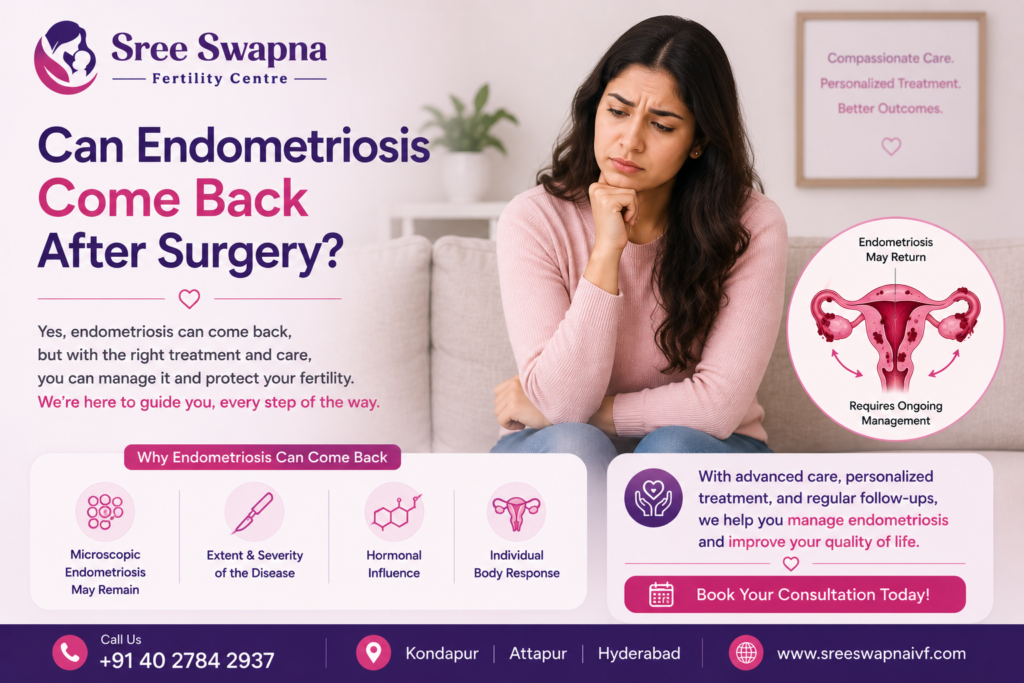
Surgery for endometriosis can bring real, lasting relief. But it’s honest to say upfront: yes, endometriosis can come back after surgery.
This isn’t meant to discourage you from surgery — for many women, it’s genuinely the right treatment. It just means going in with realistic expectations, and understanding what actually lowers your risk of recurrence.
This guide covers real recurrence rates, why it happens, and what you can do to reduce the chances.
Why Does Endometriosis Come Back After Surgery?
Surgery removes visible endometriosis tissue and adhesions, but two things can still lead to symptoms returning:
- Microscopic disease that wasn’t visible or removable during surgery
- New lesion formation, since ongoing hormonal stimulation each month can allow fresh endometriosis tissue to develop over time
This is why doctors sometimes distinguish between true recurrence (new disease forming) and persistence (some original disease was left behind) — though in practice, both look the same to the patient: symptoms coming back.
What Are the Actual Recurrence Rates?
Recurrence rates vary depending on the type and location of endometriosis, and how it’s measured:
- Overall recurrence: Roughly 20–30% of women experience recurrence within 2 years, rising to 40–50% by 5 years if no preventive treatment is used afterward
- Ovarian endometrioma (cystectomy): Around 5–17% at one year, climbing to roughly 20% by two years in some studies
- Superficial endometriosis: Lower rates, around 4% at one year and under 7% at two years
- Deep infiltrating endometriosis (DIE): A wider range reported, from about 2% to over 40% across different studies, depending on follow-up length and surgical technique; one long-term study found cumulative recurrence of 7.1% at 6 years, rising to 14.1% by 12 years
These numbers vary because studies define “recurrence” differently — some count any new imaging finding, others only count symptomatic recurrence requiring further treatment.
What Increases the Risk of Recurrence?
- Younger age at surgery (under 35), consistently linked with higher recurrence in multiple studies
- Larger or bilateral ovarian cysts at the time of original surgery
- Incomplete excision, particularly with ablation or fulguration techniques rather than full excision
- No postoperative hormonal treatment, especially in women not trying to conceive immediately after surgery
- Prior endometriosis surgery, since repeat cases sometimes indicate more aggressive underlying disease
What Lowers the Risk of Recurrence?
- Complete, meticulous surgical excision by an experienced surgeon — this is consistently linked to lower recurrence rates than ablation-based techniques
- Postoperative hormonal suppression therapy, such as GnRH agonists or hormonal birth control, for women not immediately trying to conceive
- Postoperative pregnancy, which has been associated with lower recurrence rates in several studies
- Regular follow-up, allowing early detection if symptoms or imaging findings suggest recurrence
Does the Surgeon’s Skill Really Matter?
Yes, significantly. Because endometriosis surgery involves identifying and removing tissue that can be subtle or deeply embedded, more experienced surgeons using thorough excision techniques are associated with lower persistence/recurrence rates than less experienced surgeons or those relying on quicker ablation methods.
This is one of the more important, practical takeaways: choosing a surgeon with real experience in endometriosis-specific excision surgery can meaningfully affect your long-term outcome.
Is Recurrence the Same as Treatment Failure?
Not necessarily. Endometriosis is increasingly understood as a chronic, progressive condition rather than something “cured” in a single procedure. Many women who experience recurrence still had genuine, meaningful relief for months or years after surgery. Recurrence is a reason to seek follow-up care, not evidence that the original surgery failed or wasn’t worthwhile.
Managing Recurrence If It Happens
If symptoms return, your specialist will typically:
- Reassess with updated imaging (ultrasound or MRI)
- Discuss whether hormonal treatment can manage symptoms without further surgery
- Consider repeat surgery only if symptoms are significant and medical management hasn’t helped
Not every recurrence needs another operation — many cases are manageable with medical therapy alone.
Endometriosis Care at Sree Swapna Fertility Centre
Reducing recurrence risk starts with the quality of the original surgery. Dr. Swapna Naik, Clinical Director at Sree Swapna Fertility Centre, is a trained laparoscopic surgeon with over 15 years of experience, focused on thorough, meticulous excision rather than quicker ablation techniques — an approach associated with lower long-term recurrence in research.
Both our Kondapur and Attapur clinics offer structured follow-up care after surgery, including guidance on postoperative hormonal treatment where appropriate, and coordinated fertility planning for patients hoping to conceive after their procedure.
Frequently Asked Questions
1. Can endometriosis really come back after surgery?
Yes, recurrence is a recognised possibility, with reported rates of roughly 20–30% within 2 years, depending on the type of endometriosis and treatment approach used afterward.
2. Does this mean my surgery failed?
No, recurrence doesn’t mean the surgery failed — many women experience genuine relief for months or years before any recurrence occurs.
3. What is the difference between recurrence and persistence?
Recurrence usually refers to new disease forming after surgery, while persistence means some original disease wasn’t fully removed. In practice, both present the same way to the patient.
4. Does the type of endometriosis affect recurrence risk?
Yes, ovarian, superficial, and deep infiltrating endometriosis all have different reported recurrence rates and risk patterns.
5. Does surgeon experience affect recurrence rates?
Yes, more experienced surgeons using thorough excision techniques are associated with lower recurrence compared to less experienced surgeons or quicker ablation methods.
6. Can hormonal treatment after surgery reduce recurrence?
Yes, postoperative hormonal suppression therapy is associated with lower recurrence rates in women not immediately trying to conceive.
7. Does getting pregnant after surgery lower recurrence risk?
Some studies have found postoperative pregnancy associated with lower recurrence rates, though this isn’t guaranteed for every individual.
8. Is younger age a risk factor for recurrence?
Yes, several studies have found women under 35 at the time of surgery have somewhat higher recurrence rates.
9. How soon can endometriosis recur after surgery?
It varies significantly — some recurrences are detected within a year, while others appear several years later.
10. Does every recurrence require another surgery?
No, many recurrences can be managed with hormonal or medical treatment without needing repeat surgery.
11. Is ablation or excision better for lowering recurrence?
Excision techniques are generally associated with lower recurrence rates compared to ablation or fulguration methods.
12. Can I prevent endometriosis from ever coming back?
There’s no guaranteed way to prevent recurrence entirely, but thorough surgery and appropriate postoperative treatment can meaningfully reduce the risk.
13. What symptoms suggest recurrence?
A return of pelvic pain, painful periods, or other original symptoms after a period of relief may suggest recurrence and warrants follow-up evaluation.
14. How is recurrence diagnosed?
Typically through a combination of symptom review, pelvic exam, and imaging such as transvaginal ultrasound or MRI.
15. Does deep infiltrating endometriosis have a higher recurrence rate than other types?
Reported rates for deep infiltrating endometriosis vary widely across studies, from quite low to notably higher, depending on surgical technique and follow-up duration.
16. Can recurrence affect fertility again after surgery?
It can, particularly if recurrence involves the ovaries or causes new adhesions, which is why ongoing monitoring matters for those planning pregnancy.
17. Should I ask my surgeon about their recurrence rates before surgery?
It’s a reasonable question, along with asking about their specific excision technique and experience with endometriosis surgery.
18. Is repeat surgery for endometriosis riskier than the first surgery?
Repeat surgery can be technically more complex due to scar tissue from the previous procedure, so it’s usually approached carefully by an experienced surgeon.
19. Does stopping hormonal treatment increase recurrence risk?
Stopping postoperative hormonal treatment, especially early, has been associated with higher recurrence risk in some studies.
20. Can lifestyle factors influence recurrence?
Current evidence mainly points to surgical completeness and hormonal management as the key factors, though general health and reducing inflammation may play a supportive role.
21. How often should I follow up after endometriosis surgery?
This depends on your specific case, but regular follow-up visits are generally recommended to monitor for any returning symptoms.
22. Where can I get endometriosis surgery and follow-up care in Hyderabad?
Sree Swapna Fertility Centre offers laparoscopic excision surgery and structured postoperative follow-up at both our Kondapur and Attapur clinics.
Conclusion
Endometriosis can return after surgery, and being upfront about that is more helpful than pretending surgery offers a permanent guarantee. What genuinely lowers your risk is thorough surgical excision by an experienced surgeon, appropriate postoperative treatment, and regular follow-up — not luck. If recurrence does happen, it’s manageable, and doesn’t erase the value of the relief you may have already experienced.
Discuss Your Surgical Options and Follow-Up Care
Dr. Swapna Naik and the team at Sree Swapna Fertility Centre can walk you through what to expect from surgery, and how we help lower your long-term recurrence risk.
📞 Call: +91 76708 04424 / +91 40 4995 3719 💬 WhatsApp: Message us directly 📧 Email: sreeswapna.fertility@gmail.com 📍 Visit us at: Kondapur (flagship centre) or Attapur, Hyderabad 🌐 Book an appointment: sreeswapnaivf.com/contact-us
