
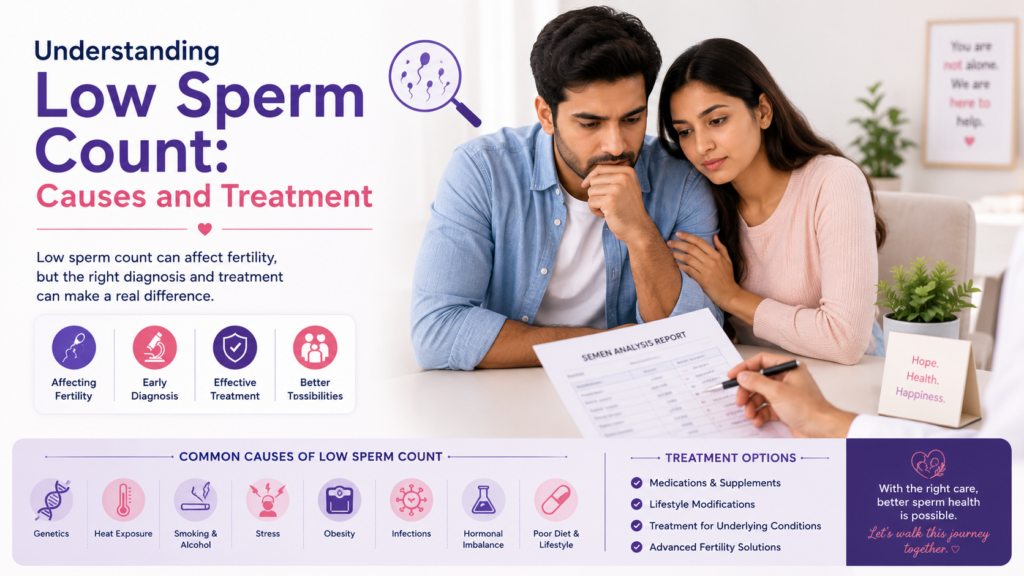
Understanding Low Sperm Count: Common Causes and Effective Treatment Options
Trying to start a family is a beautiful dream, but when the journey takes longer than expected, it can become emotionally overwhelming. If you and your partner have been struggling to conceive, you are not alone. Male infertility plays a role in nearly half of all infertility cases, and a low sperm count is one of the most common reasons behind it.
Hearing that your sperm parameters are below average can feel discouraging, but it is important to remember that medical science has advanced incredibly. Today, a low count does not mean you cannot become a father.
In this comprehensive guide, we will explore the root causes of this condition, how it is diagnosed, and the highly effective treatment options available today—including advanced fertility solutions that can help you achieve your dream of parenthood.
What is a Low Sperm Count? (Featured Snippet)
Low sperm count, medically known as oligospermia, means that the fluid (semen) you ejaculate contains fewer sperm than normal. A healthy sperm count ranges from 15 million to over 200 million sperm per milliliter of semen. Counts below 15 million are considered low and can significantly decrease the chances of natural conception.
Common Signs and Symptoms
For most men, the only visible sign of a low sperm count is the inability to conceive a child after a year of regular, unprotected intercourse. You usually will not experience feeling sick or notice any obvious physical changes.
However, in some cases, an underlying issue—such as an inherited chromosomal abnormality, a hormonal imbalance, or a blockage in the testicles—can cause signs and symptoms. These may include:
- Problems with sexual function, such as difficulty maintaining an erection (erectile dysfunction) or low sex drive.
- Pain, swelling, or a noticeable lump in the testicular area.
- Decreased facial or body hair (a sign of chromosomal or hormonal abnormality).
- Recent surgeries or history of testicular issues.
Primary Causes of a Low Sperm Count
Sperm production is a highly complex process. It requires normal functioning of the testicles, as well as the hypothalamus and pituitary glands in the brain. Once sperm are produced, delicate tubes transport them until they mix with semen and are ejaculated. A problem in any of these systems can affect your fertility.
Medical Causes
- Varicocele: This is a swelling of the veins that drain the testicle. It is the most common reversible cause of male infertility, as it disrupts the normal cooling of the testicle, reducing sperm quality.
- Infections: Certain infections can interfere with sperm production or cause scarring that blocks sperm passage. These include inflammation of the epididymis (epididymitis) or testicles (orchitis), and some sexually transmitted infections.
- Ejaculation Issues: Retrograde ejaculation occurs when semen enters the bladder during orgasm instead of emerging out the tip of the penis.
- Hormonal Imbalances: The testicles, pituitary, and hypothalamus alter hormones that create sperm. Alterations in these hormones can impair production.
Environmental Causes
Overexposure to certain environmental elements can drastically reduce sperm production.
- Industrial Chemicals: Prolonged exposure to benzenes, toluene, xylene, pesticides, herbicides, and organic solvents.
- Heavy Metal Exposure: Exposure to lead or other heavy metals.
- Radiation or X-rays: With high doses of radiation, sperm production can be permanently reduced.
Lifestyle Causes
- Stress: Severe or prolonged emotional stress can interfere with hormones needed to produce sperm.
- Alcohol and Tobacco: Heavy drinking can lower testosterone levels, while smoking is directly linked to decreased sperm counts.
- Weight: Obesity can impair fertility in several ways, including directly impacting the sperm themselves and causing hormone changes that reduce male fertility.
Risk Factors to Keep in Mind
Certain factors make a person more susceptible to fertility issues. Recognizing these early can help you make necessary lifestyle adjustments. Risk factors include:
- Being over the age of 40
- Having a history of undescended testicles
- Current or past use of illicit substances
- Prolonged cycling or horseback riding (which applies friction and heat to the testicles)
- Having chronic illnesses or taking certain medications long-term.
How is it Diagnosed?
If you are experiencing trouble conceiving, your fertility specialist will conduct a thorough evaluation. The most crucial diagnostic tool is the Semen Analysis.
During this simple test, a sample is evaluated in a laboratory to check the volume of semen, the total sperm count, sperm motility (how well they move), and morphology (their shape).
If the count is low, your doctor may recommend further testing, such as:
- Scrotal ultrasound to check for varicoceles.
- Hormone testing through blood work.
- Genetic tests to rule out chromosomal abnormalities.
- Post-ejaculation urinalysis to check for retrograde ejaculation.
Effective Treatment Options for Low Sperm Count
The right treatment depends on the exact cause of your condition. Fortunately, modern medicine offers numerous pathways to fatherhood.
Surgical Treatments
If a varicocele is present, it can often be surgically repaired. Similarly, obstructed vas deferens (the tubes that carry sperm) can be repaired. In cases where no sperm are present in the ejaculated semen, sperm can sometimes be retrieved directly from the testicles or epididymis using precise sperm retrieval techniques.
Non-Surgical Treatments
For many men, non-invasive approaches are highly effective:
- Treating Infections: A course of antibiotics can cure an infection of the reproductive tract, though it doesn’t always guarantee fertility restoration.
- Medications and Hormone Treatments: If infertility is caused by high or low levels of certain hormones, your doctor might recommend hormone replacement medications.
- Lifestyle Optimization: Weight loss, quitting smoking, and optimizing your diet with fertility-friendly vitamins (like Zinc, Folic Acid, and Vitamin C) can yield significant improvements.
Assisted Reproductive Technology (ART)
If natural conception remains difficult after primary treatments, Assisted Reproductive Technology is the gold standard.
When searching for the Best IVF Centre in Hyderabad, it is crucial to find a clinic equipped with advanced embryology labs. For men with a low count, a specific type of IVF called ICSI (Intracytoplasmic Sperm Injection) is revolutionary. During ICSI, a single, healthy sperm is carefully selected and injected directly into the egg, bypassing the need for millions of sperm to achieve fertilization naturally.
Whether you are visiting our primary clinic or looking for the Best IVF Centre in Kondapur, our team specializes in these precise micro-manipulation techniques to maximize your chances of success.
Prevention Tips: Dos and Don’ts
While not all causes of male infertility can be prevented, adopting a healthy lifestyle can protect your reproductive health.
Do | Don’t |
|---|---|
Maintain a healthy BMI through regular exercise. | Wear excessively tight underwear. |
Eat a diet rich in antioxidants (berries, nuts, greens). | Use hot tubs, saunas, or keep laptops directly on your lap. |
Manage daily stress through yoga or meditation. | Smoke or consume excessive amounts of alcohol. |
Get 7–8 hours of quality sleep every night. | Ignore chronic pain or long-term medication side effects. |
A Note on Chronic Pain Medications and Fertility
Many patients do not realize that managing chronic bodily pain can occasionally impact fertility. Prolonged use of certain strong pain medications, muscle relaxants, or nerve drugs can alter hormone levels or affect sexual function.
If you are currently undergoing Back Pain Treatment, Neck Pain Treatment, or participating in specialized Spine Care programs, discuss your fertility goals with your doctor. Even common treatments like Migraine Treatment, Sciatica Treatment, or Knee Pain Treatment may involve medications that temporarily lower sperm quality. A coordinated approach between your pain management specialist and your fertility doctor ensures your health and your family-planning goals are both protected.
(Note: Click the links above to learn more about safe, holistic pain management approaches.)
When to See a Doctor?
You should consult a fertility specialist if you have been having regular, unprotected sex for a year without success. However, you should book an appointment sooner if you have:
- A known history of testicular, prostate, or sexual problems.
- Undergone groin, testicle, or penis surgery.
- Pain, discomfort, or swelling in your scrotal area.
The Benefits of Early Treatment
Time is a critical factor in fertility. Seeking an early diagnosis offers several major benefits:
- Higher Success Rates: Early intervention often means milder treatments are needed, and IVF/ICSI success rates are higher when both partners are younger.
- Less Emotional Strain: Waiting and wondering causes severe anxiety. A clear diagnosis gives you an actionable roadmap.
- Better Planning: Identifying the root cause early allows you and your partner to make informed financial and emotional decisions regarding your treatment journey.
Why Choose Sree Swapna Fertility Centre?
At Sree Swapna Fertility Centre, we understand that male infertility can be a sensitive topic. We approach every patient with utmost respect, privacy, and clinical excellence.
As a highly rated facility, recognized by many as the Best IVF Centre in Attapur and across Hyderabad, we bring together expert fertility specialists, state-of-the-art embryology labs, and compassionate counselors. We don’t just treat numbers on a lab report; we treat people. From advanced semen analysis to expert ICSI procedures, we hold your hand through every step of the journey to parenthood.
FAQs About Low Sperm Count
1. Can a man with a low sperm count still get a woman pregnant?
Yes. While a low count decreases the statistical odds of natural conception, it only takes one healthy sperm to fertilize an egg. Medical treatments and procedures like ICSI can drastically improve these odds.
2. What foods help increase sperm count?
Foods rich in antioxidants, Vitamin C, Zinc, and Folate are excellent for sperm health. Incorporate walnuts, citrus fruits, leafy greens, dark chocolate, and fatty fish into your diet.
3. Does stress actually affect male fertility?
Yes. High levels of stress elevate cortisol, which can negatively interfere with testosterone levels and sperm production. Stress management is a vital part of fertility treatment.
4. How long does it take for lifestyle changes to improve sperm quality?
The life cycle of new sperm is roughly 72 to 90 days. Therefore, if you change your diet, stop smoking, or start supplements today, you will likely see the benefits in your semen analysis in about two to three months.
5. Is ICSI safer and more effective than traditional IVF for male infertility?
For cases of severe male infertility, ICSI is the standard of care. Because the embryologist directly injects the best-quality sperm into the egg, it overcomes issues related to low count, poor motility, and poor morphology, resulting in excellent fertilization rates.
Conclusion
A diagnosis of a low sperm count is not the end of your parenting journey—it is simply a pivot in the road. With a clear understanding of the underlying causes, targeted lifestyle adjustments, and the incredible advancements in Assisted Reproductive Technology, your dream of having a baby is highly achievable. Taking that first step to get tested can feel daunting, but it is the most empowering thing you can do for your future family.
Ready to Take the Next Step Toward Fatherhood?
Do not let uncertainty dictate your future. If you are concerned about your fertility or have been struggling to conceive, our expert male infertility and IVF specialists are here to provide clear answers and compassionate care.
Book a private consultation today at Sree Swapna Fertility Centre, your trusted partner in reproductive health.
Call us now to schedule your appointment and get all your queries answered:
📞 7670804424
