
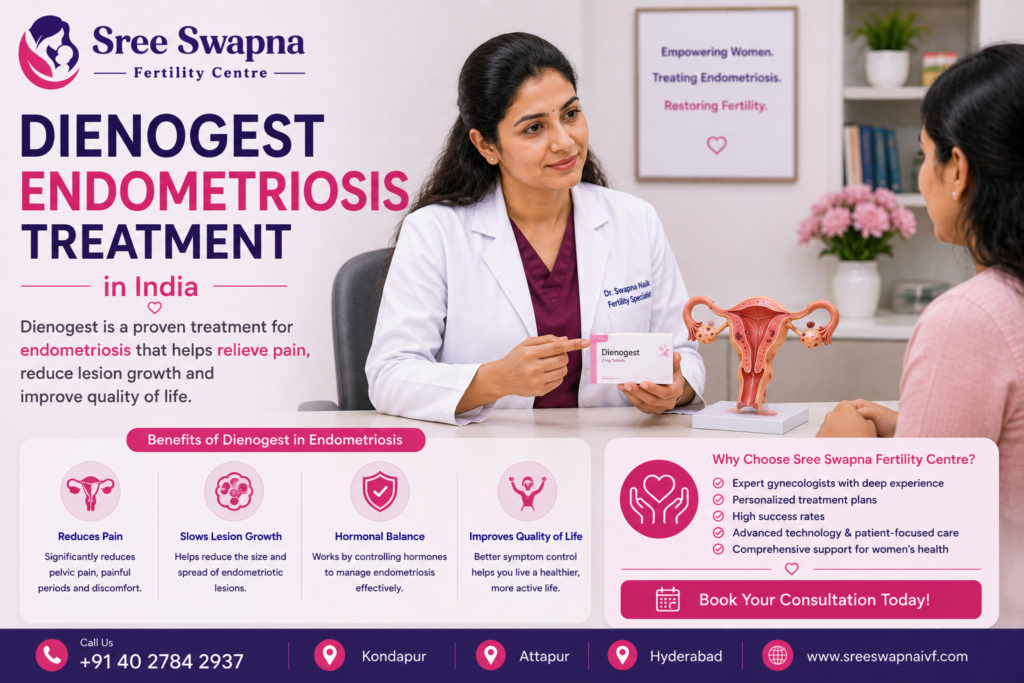
If you’ve been prescribed dienogest for endometriosis, you might be wondering how a single daily tablet is meant to manage a condition as complex as endometriosis. It’s a fair question, and the answer lies in how specifically this medication targets the biology of endometriosis tissue.
This guide explains how dienogest works, what results you can realistically expect, and the side effects worth knowing about.
What Is Dienogest?
Dienogest is a fourth-generation progestin, specifically studied and approved for the treatment of endometriosis-associated pain. Unlike combined hormonal contraceptives (which contain both oestrogen and progestin), dienogest is a progestin-only medication, typically taken as a 2mg tablet once daily.
How Does Dienogest Work?
Dienogest works through several mechanisms that specifically target endometriosis tissue:
- Reduces hormonal stimulation: It mildly suppresses FSH and LH (reproductive hormones), reducing ovarian activity without fully shutting down hormone production
- Shrinks endometrial tissue: It induces a process where endometrial-like tissue first changes (decidualises) and then gradually atrophies (shrinks)
- Reduces inflammation: It inhibits several inflammatory pathways involved in endometriosis-related pain
- Limits blood supply to lesions: It reduces angiogenesis (new blood vessel formation) that endometriosis tissue depends on to grow
- Promotes cell death in lesions: It increases apoptosis (programmed cell death) specifically in endometriotic tissue
This multi-pronged action is why dienogest can meaningfully reduce both pain and, over time, the size of certain endometriosis-related growths like ovarian endometriomas.
What Results Can You Expect?
Research on dienogest shows consistent, meaningful improvement across multiple endometriosis symptoms:
- Significant reduction in period pain (dysmenorrhoea)
- Reduced pain during intercourse (dyspareunia)
- Improvement in painful bowel movements and chronic pelvic pain, including in deep infiltrating endometriosis
- Gradual shrinkage of ovarian endometriomas over 6–12 months of treatment in some studies, with continued reduction over longer-term use
- High treatment continuation rates — around 80% of patients continuing treatment at 12 months in some studies, with many continuing well beyond that
Importantly, these benefits tend to build over time rather than appearing immediately, so dienogest is generally considered a longer-term management strategy rather than a quick fix.
How Does Dienogest Compare to Other Hormonal Options?
- Compared to GnRH agonists (another common endometriosis treatment): research has found dienogest similarly effective for pain relief, but without the more significant hypoestrogenic side effects (like bone density loss) that limit GnRH agonists to short-term use
- Compared to combined hormonal contraceptives: dienogest doesn’t carry the same thrombosis (blood clot) risk associated with oestrogen-containing options, making it a suitable choice even for women over 40
This is one of dienogest’s genuine advantages — it’s generally considered appropriate for longer-term, continuous use, sometimes until menopause, without the same restrictions seen with other hormonal treatments.
Common Side Effects
- Irregular or abnormal uterine bleeding — the most commonly reported side effect, which tends to decrease as treatment continues
- Headache
- Weight gain
- Reduced libido
- Mood changes, in some patients
- Decreased bone mineral density, reported in a subset of patients with longer-term use, which is why some doctors monitor bone density periodically during extended treatment
Most side effects that lead to discontinuation tend to occur during the first year of treatment, with better tolerability generally seen in those who continue beyond that point.
Does Dienogest Affect Future Fertility?
Ovulation typically resumes fairly quickly after stopping dienogest, which is relevant if you’re using it for symptom management now but planning pregnancy later. That said, dienogest itself isn’t a fertility treatment — it manages symptoms and disease activity, and a separate conversation about fertility timing is worth having with your doctor if pregnancy is part of your plans.
Who Might Not Be a Good Candidate for Dienogest?
Your doctor will consider your full medical history before prescribing dienogest, including any history of blood clotting disorders, liver conditions, or other contraindications specific to progestin-only medications. This is a decision made individually with your specialist, not a one-size-fits-all recommendation.
Dienogest Treatment at Sree Swapna Fertility Centre
Dr. Swapna Naik, Clinical Director at Sree Swapna Fertility Centre, brings over 15 years of experience in gynaecology and reproductive medicine, and considers dienogest as one option within a broader endometriosis management plan — alongside other hormonal options, and surgical treatment when medication alone isn’t sufficient.
At both our Kondapur and Attapur clinics, treatment decisions are individualised based on your specific symptoms, endometriosis type, and fertility plans, with regular follow-up to monitor how you’re responding and adjust the approach if needed.
Frequently Asked Questions
1. What is dienogest used for?
It’s a progestin specifically studied and used for managing endometriosis-associated pain and related symptoms.
2. How is dienogest typically taken?
It’s usually taken as a 2mg tablet once daily, though your doctor will confirm the right dosing for your specific situation.
3. How does dienogest reduce endometriosis symptoms?
It reduces hormonal stimulation of endometrial tissue, decreases inflammation, limits blood supply to lesions, and promotes shrinkage of endometriotic tissue over time.
4. How long does it take to see results with dienogest?
Benefits generally build over months rather than appearing immediately, with continued improvement often seen over 6–12 months or longer.
5. Can dienogest shrink ovarian endometriomas (chocolate cysts)?
Yes, some studies show gradual reduction in endometrioma size over 6–12 months of treatment, with further reduction over longer-term use.
6. What are the most common side effects of dienogest?
Irregular uterine bleeding is the most commonly reported side effect, along with headache, weight gain, and reduced libido in some patients.
7. Does dienogest carry a blood clot risk like combined birth control pills?
No, dienogest doesn’t carry the same thrombosis risk associated with oestrogen-containing hormonal contraceptives.
8. Can women over 40 use dienogest?
Yes, since it doesn’t carry the same thrombotic risk as combined hormonal contraceptives, it’s often considered a suitable option for this age group.
9. How does dienogest compare to GnRH agonists for endometriosis?
Research suggests comparable pain relief efficacy, but dienogest doesn’t cause the same degree of bone density loss that limits GnRH agonists to shorter-term use.
10. Can dienogest be used long-term?
Yes, studies have followed patients on dienogest for several years, showing continued efficacy and generally manageable side effects with ongoing use.
11. Does dienogest affect bone density?
A subset of patients using dienogest long-term have shown some reduction in bone density in certain studies, which is why periodic monitoring may be recommended for extended use.
12. Will I be able to get pregnant after stopping dienogest?
Ovulation typically resumes fairly quickly after stopping, though dienogest itself isn’t a fertility treatment — a separate conversation about conception timing is worthwhile.
13. Does dienogest stop periods completely?
Many patients experience reduced bleeding or amenorrhea (absence of periods) with continued use, though irregular bleeding, especially early in treatment, is common.
14. Is dienogest effective for deep infiltrating endometriosis specifically?
Yes, research has shown significant symptom improvement with dienogest across endometriosis types, including deep infiltrating disease.
15. What happens if I miss a dose of dienogest?
Follow your doctor’s specific guidance on missed doses, since consistency matters for its effectiveness in managing symptoms.
16. Can dienogest be taken vaginally instead of orally?
In some cases, particularly for patients with gastrointestinal symptoms, vaginal administration has shown similar efficacy and tolerability to oral use, though this should be discussed with your doctor.
17. Is dienogest the same as birth control pills?
No, dienogest is a progestin-only medication specifically studied for endometriosis, different from combined oestrogen-progestin birth control pills.
18. Can dienogest cause weight gain?
Yes, weight gain has been reported as a side effect in some patients, though it doesn’t occur in everyone.
19. Is dienogest safe for adolescents with endometriosis?
Some research supports its use in adolescents, including at lower doses, with studies showing it’s generally well tolerated without significant impact on bone turnover during short-term use.
20. Do side effects typically improve over time on dienogest?
Yes, particularly irregular bleeding, which tends to decrease the longer treatment continues, and side effects severe enough to stop treatment are more common in the first year.
21. Can dienogest be combined with surgery for endometriosis?
Yes, it’s often used alongside surgical treatment, either before surgery, after surgery to reduce recurrence risk, or as an ongoing management option when surgery isn’t immediately needed.
22. Where can I get a personalised endometriosis treatment plan including dienogest in Hyderabad?
Sree Swapna Fertility Centre offers comprehensive endometriosis evaluation and individualised treatment planning, including hormonal options like dienogest, at both our Kondapur and Attapur clinics.
Conclusion
Dienogest offers a genuinely effective, well-studied option for managing endometriosis symptoms, with the advantage of being suitable for longer-term use without some of the restrictions seen with other hormonal treatments. Like any medication, it comes with side effects worth understanding and monitoring — and it works best as part of a broader, personalised treatment plan rather than a stand-alone solution.
Discuss Whether Dienogest Is Right for You
Dr. Swapna Naik and the team at Sree Swapna Fertility Centre can help determine whether dienogest fits into your personalised endometriosis treatment plan.
📞 Call: +91 76708 04424 / +91 40 4995 3719 💬 WhatsApp: Message us directly 📧 Email: sreeswapna.fertility@gmail.com 📍 Visit us at: Kondapur (flagship centre) or Attapur, Hyderabad 🌐 Book an appointment: sreeswapnaivf.com/contact-us
